02

SWIM / HIGH SCHOOL / ROCKWALL

Valentina


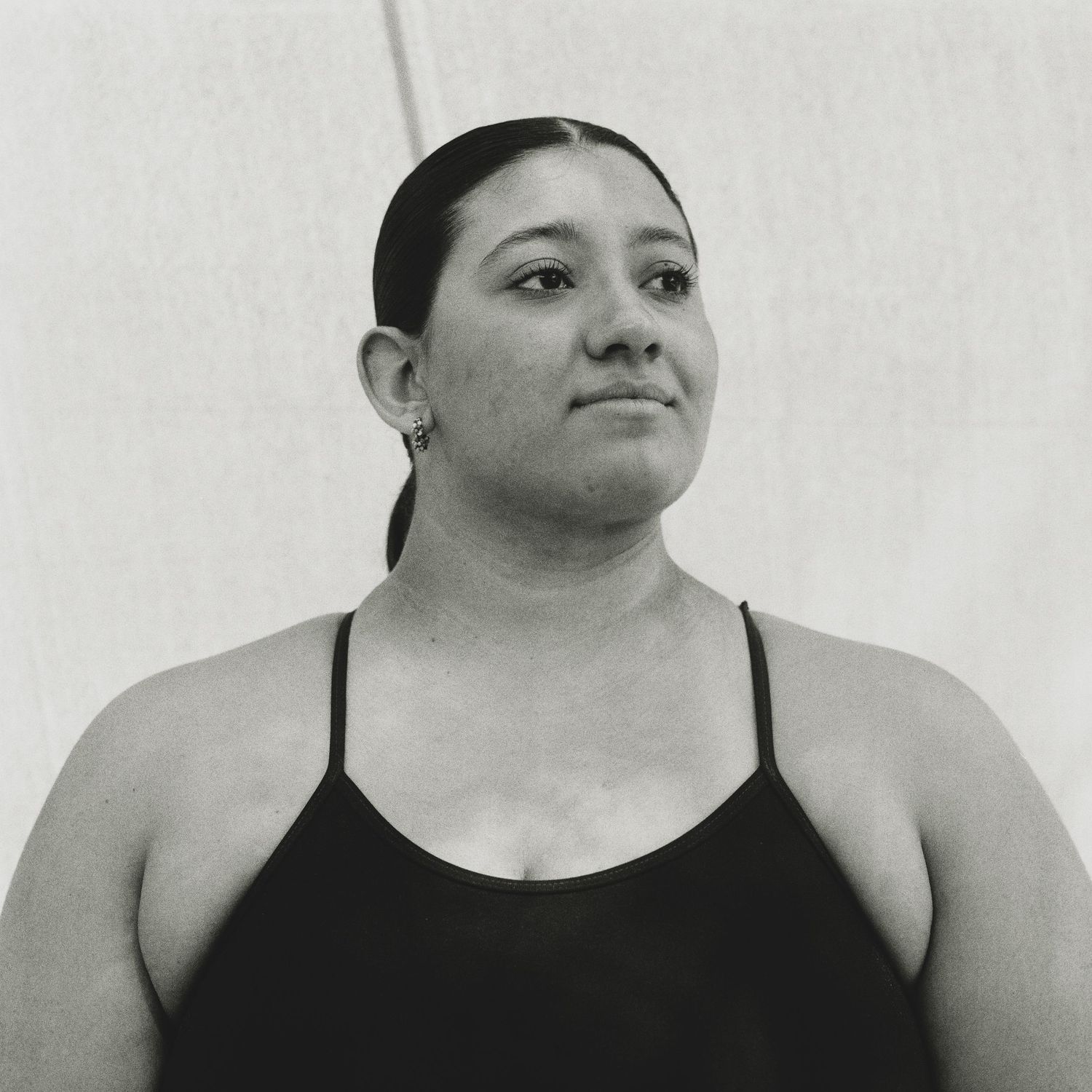


MAMIYA c220 / TRI-X 400 FILM
Where she needs to be
AN INTERVIEW WITH VALENTINA
by
Respect Their Game
Welcome to the Respect Their Game — a collection of conversations with women athletes about commitment, identity, discipline, and the interior life of sport. These interviews are part of the ongoing portrait project documenting women in sport through film photography and their own words. Today’s conversation features Valentina, a former high school swimmer who reflects on her experiences and life lessons learned as a competitive athlete.
How old were you when you first started playing your sport?
When I first started swimming competitively, I believe I was around nine.
And what made you stick with it?
I enjoyed the community around it, the family, the friends, you see them every single day, so it’s just they become family and just getting to be with them, going through the workouts and everything, it just, it’s so fun and it's refreshing. I love being near the water and so just being in there, it’s just calming.
Where was this?
When I first started swimming competitively, I was swimming for Bachman Lake swim team. That was the first team I was with. And then I moved to the YMCA.
And who first encouraged you to play seriously?
It was my dad, my mom, she wanted me to be a dancer and wanted me to do all how kind of the dance that she did growing up. But my dad, he was more of the athlete and when I decided that I wanted to do swim, I had tried gymnastics, I tried dance and I didn’t really like it. And then when I tried swim, my dad, he just encouraged it. He kept pushing it. He’s like, no, let’s go to practice. You’ll enjoy it, you’ll like it. And it was my dad.
What did a normal training day look like for you?
A normal training day for me would be when I was doing club swim. It would be after school, go to practice, head to the pool at 6:00 PM and then not be done until 8:30 or 9:00 PM at night. Depending on the day, we’d have a harder set or an easy day, or if it was before competition, we’d do taper, which would be just kind of an easy relaxing practice before the big race.
What was the hardest part of training?
I think the hardest part of training is getting through that mental block that sometimes you’ll get, especially with swim, it's like if you’re seeing that you’re not dropping time within a certain amount of time, but everyone else is, you kind of start to get in your head a little bit about it and you’re like, well, they’re all doing it. We’re all doing the same thing. What am I doing? That’s kind of, why am I not dropping? So it was kind of that. I think it’s just a mental block trying to get past that and trying to see everyone learns at their own pace and eventually you’ll get there. It just takes time.
What's something people don’t see or realize about how much work this takes?
I think a lot of people don’t realize how difficult of a sport it actually is. It’s very hard and a lot of people tend to be like, oh, well it’s just swim. It can’t be that hard. No, it definitely is. It’s a full body workout. It’s you underwater, you have to control your breath. You don’t want to get too tired. So I think a lot of people underestimate how difficult of a sport it can be.
And then after the club, did you swim for your school?
I did. I started high school swimming my sophomore year of high school when I moved, and I joined the varsity team when I started and it was a lot of fun. The community there, it’s great. It’s a lot of fun.
Was there any weight training in swim?
Sometimes we would do some weight training. One of the drills that our coach he’d have us do was pulling buckets. It’s like this pulley system where we tie a rope around our waist. We jump in the pool and then we fill a bucket full of the water and we try to pull all of that and lift it all the way up to the top.
How did you feel right before a competition started?
I was very nervous. Depending on the event that it was, I would get nervous. I would just kind of get in the zone. I wouldn’t talk to anybody. I would just kind of sit and stare at the water and just kind of go through the motions of it in my head of how I would like it to go.
And what did you tell yourself when things weren’t going well?
That it’s just a race that if I’m not doing it for anybody but myself and that I’ll see the improvement and I’ll just see whatever I need to work on and I’ll work on it and I’ll get better.
Did you feel like at school you were known as an athlete?
Yeah, I think I was known to be part of the swim team because that was my whole friend group. It was just the swim team. I had two other friends outside of swim, but yeah, I was known for that. We were out in the yearbook a lot. They talked about us a lot on the announcements and just the school in general.
How did you feel about being known as an athlete?
I liked it. It was nice. It was really fun because it’s like you’re doing something for the school, and just the school spirit in general was so fun. So I did like being known as an athlete, it made me feel good about myself as well.
Who do you lean on the most when things get tough?
My mom. My mom has always been there for me, and when things got hard with swim with the coach, my mom was really much there for me. She also saw how she was with me and some athletes, so my mom was a very big support for me going through that.
Was there a coach, teammate, family member, or friend who really shaped how you played your sport or performed your sport?
I would say there were two coaches. It was my first coach, coach Ross. He was is a very good coach, very supportive. And coach Matt, who was my original coach in high school before he retired, he was also an incredible coach and just he made you feel like you were like what you were doing and all your hard work was actually worth something.
That’s interesting that you chose two men and you had a women coach. For you as a woman athlete, does it matter what gender your coach is? Is there a difference? Is one better than other? Do you have any thoughts on that?
I don't think there’s really much of a difference. I think honestly it’s just the person itself, because I’ve had some really good female coaches like Coach Alex on the YMCA team. She is great. She’s amazing. Sometimes we’ll still talk even now, and she supported me through it all as well. Coach Matt and Coach Ross you can just tell that they do this out of love and they really do care about their athletes.
Have you ever felt underestimated in your sport?
Yeah, I have. There were a couple of teammates on the high school team that were males, and they definitely underestimated a lot of the girls, which honestly, it’s sad to see because a lot of these girls are great. We have one of my closest friends, she went to D1 and a lot of the swimmers who are females were so good and have so much potential, but I think some of the guys on the team definitely made a lot of them feel bad and made them feel like they weren’t going to get anywhere. When on the contrary, they made it and they’re going places with it.
What do you wish people understood better about women and girls in your sport?
I think that one, to not underestimate us, we’re strong, we’re hardworking. We don’t just swim around and frolic in the water. We actually go to train and we do work hard to get to where we are now. I think people need to just kind of try it and see, do just one workout that we would do. And then I think a lot of people would understand that it’s not that easy.
What do you think that your sport and your experience gave you?
I think it gave me a lot of friendships. It definitely gave me that, it gave me family as well, and it just also made me realize that it’s okay to retire and retire on a good note. Knowing that you had a system, you have friends there that at the end of the day you still talk to, even after graduating two years ago. It’s definitely gave me a lot of that and just respect for the sport and all the women in it as well.
Was there anything your sport gave you that nothing else did?
Yeah, it gave me a sense of hope because I was given offers to go swim for colleges, and so it did give me a sense of hope, and that’s something that I will never take for granted.
If someone saw these photos years from now, what would you want them to understand about you as an athlete?
Hopeful. I think also strength in your own way. I mean, I know Valentina from a couple years ago was a lot more physically felt stronger, but I think now I want people to see that she used to be physically stronger, but now she's also mentally strong and she’s good. She’s in a good place. She's where she needs to be.
Thank you to VALENTINA for her time and trust. If you know an athlete whose story deserves documentation learn more about the project here. Respect Their Game remains reader-supported. If you value this work, consider pledging support to help expand the archive.