13
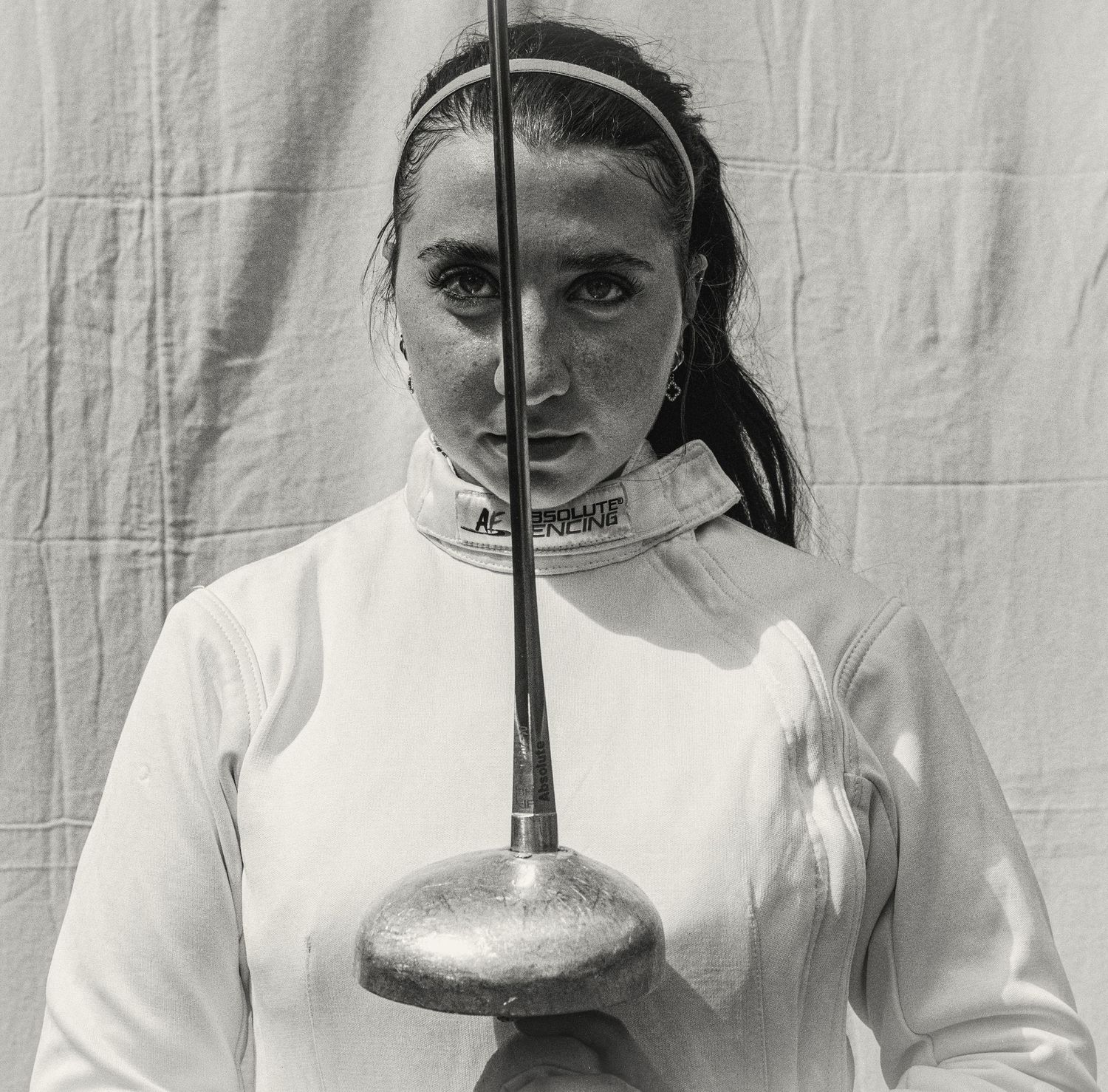
FENCER / COLLEGIATE / ÉPÉE
Eliana
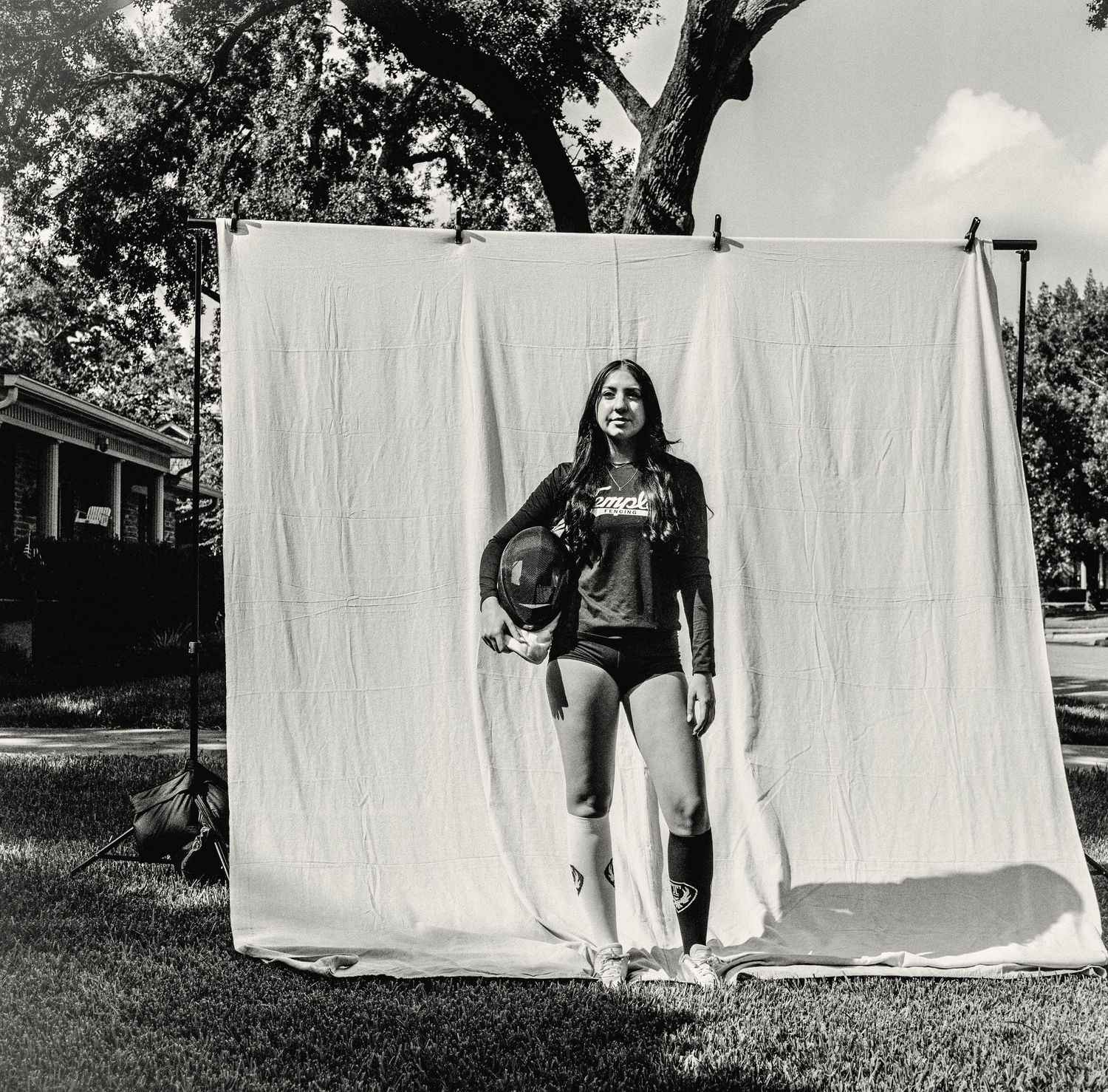
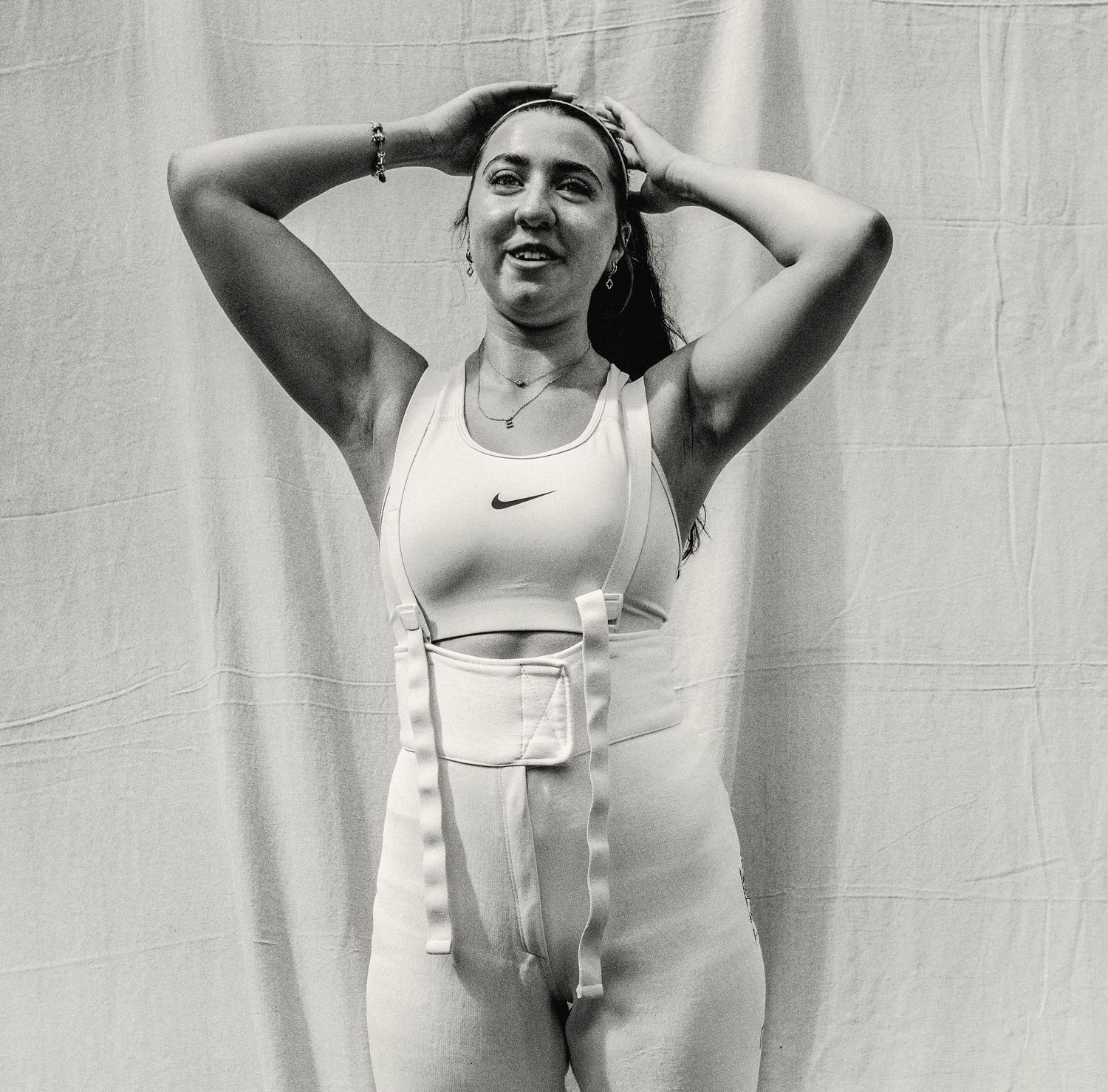

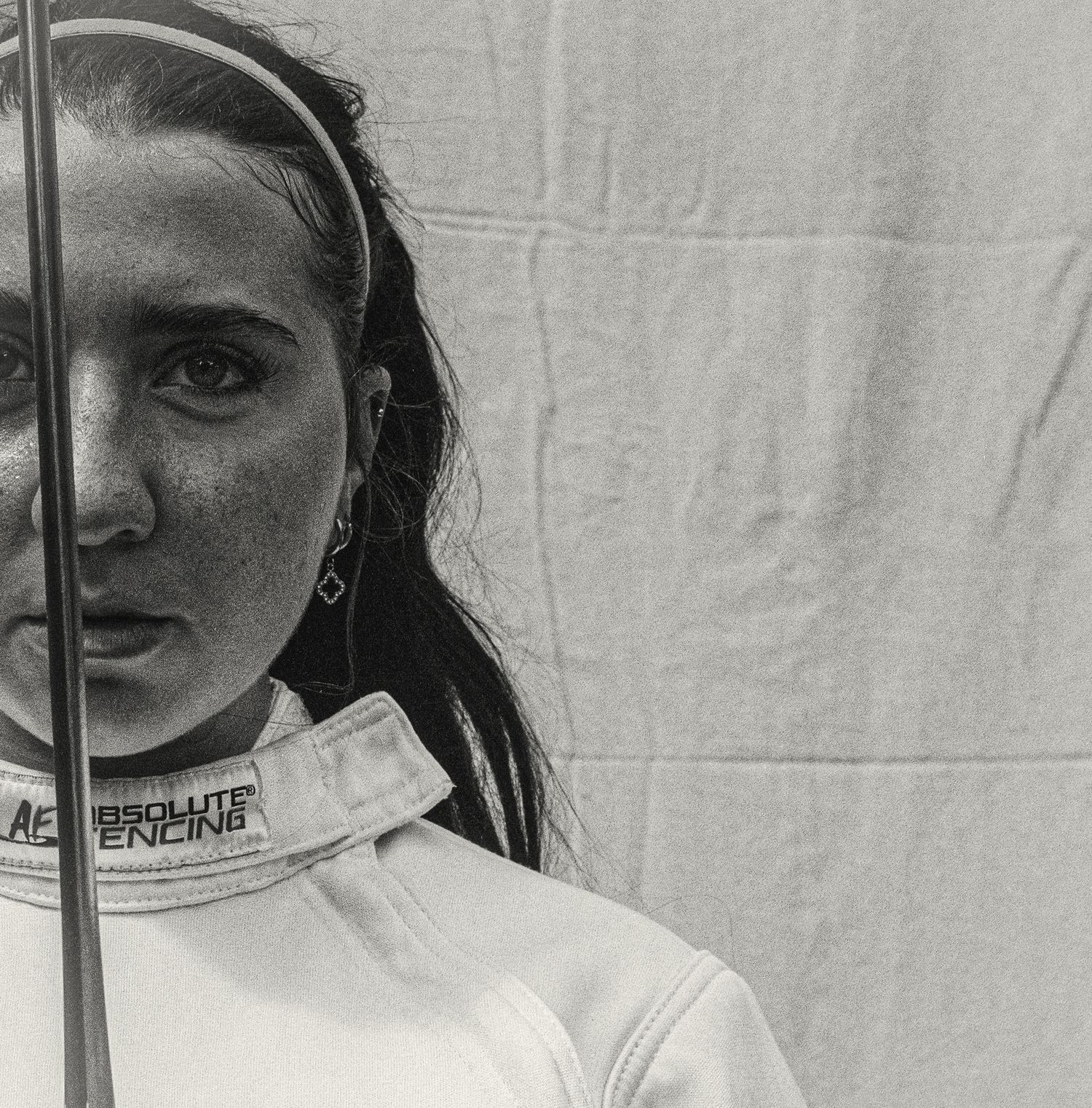
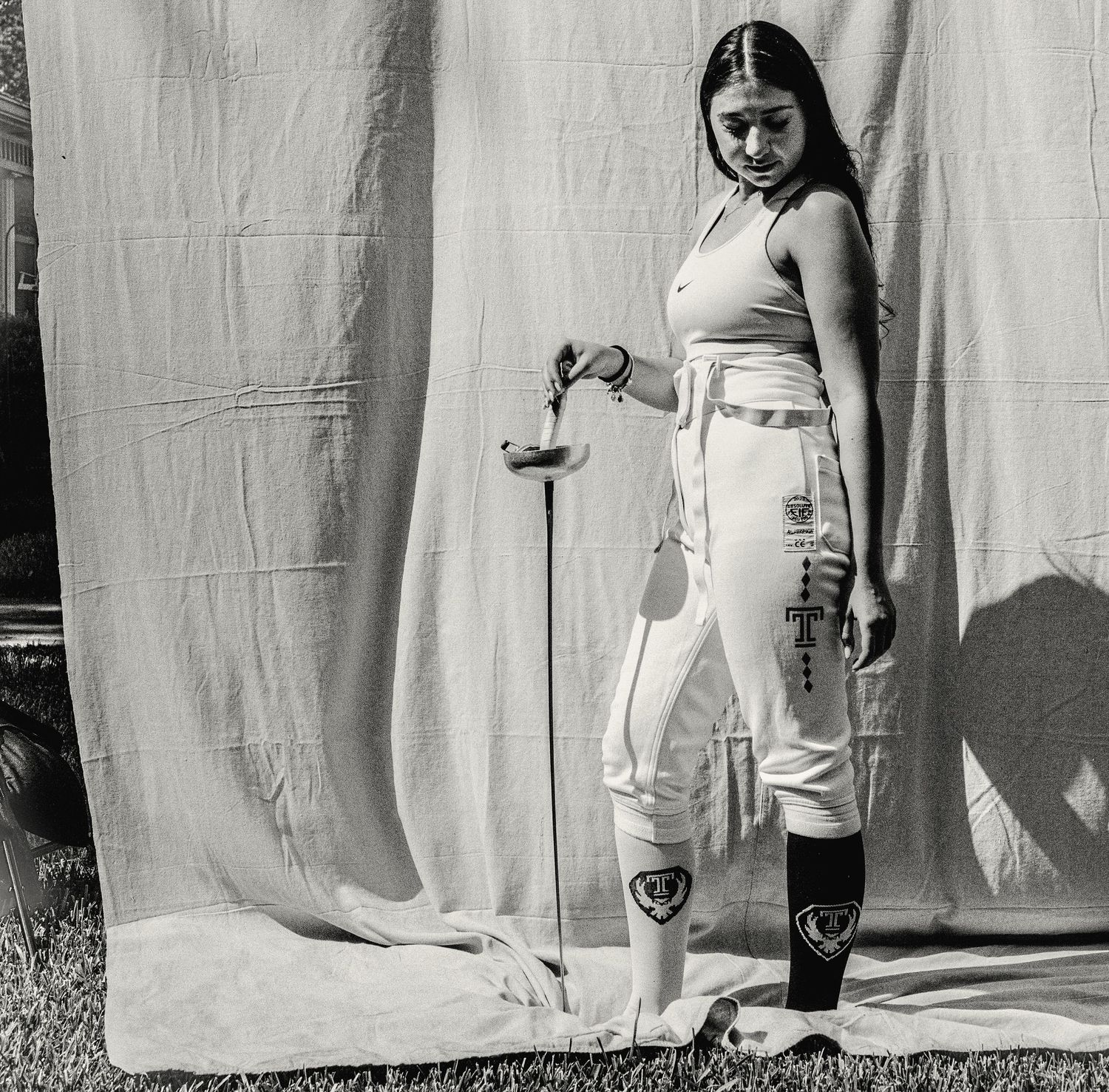
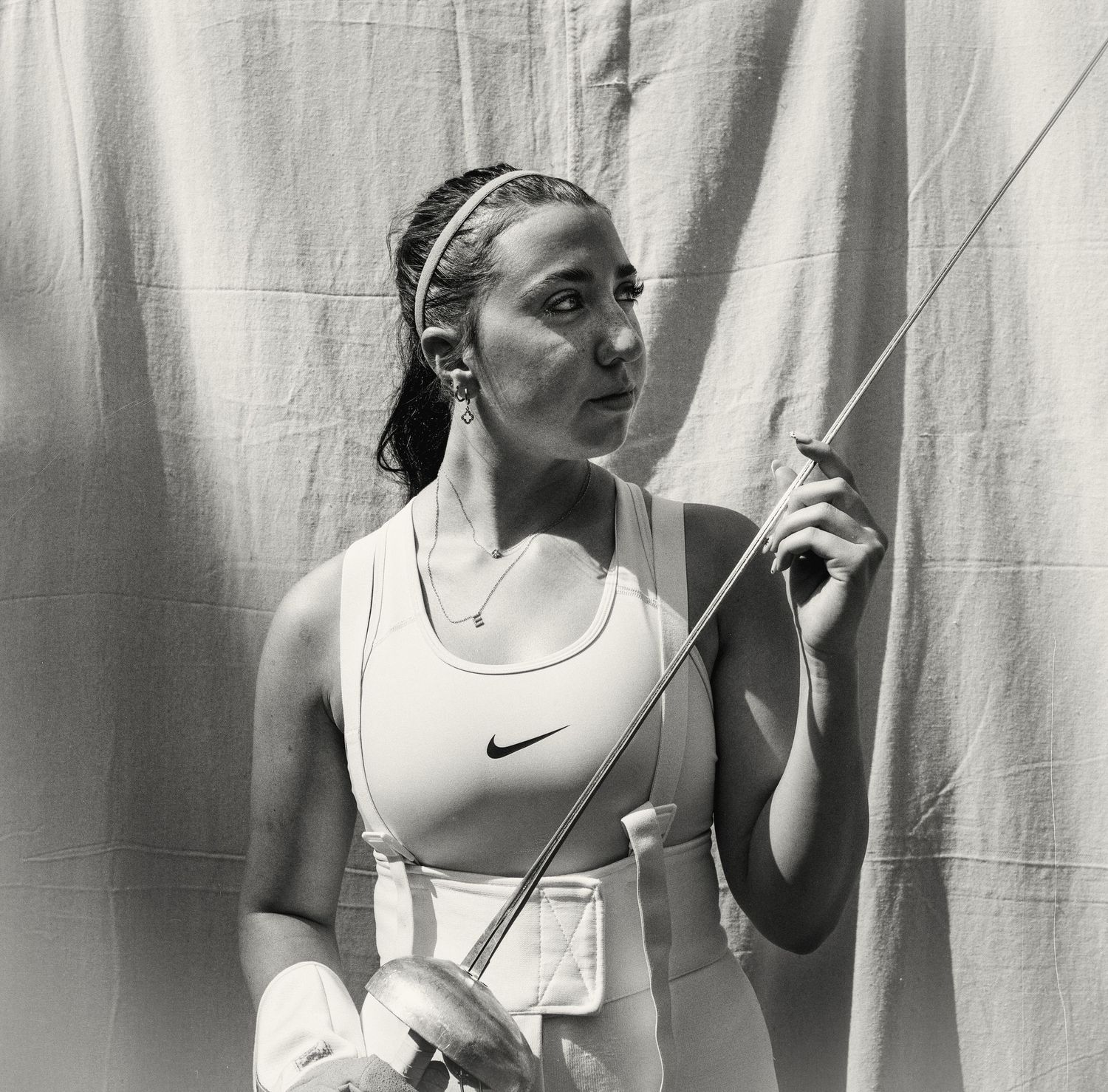
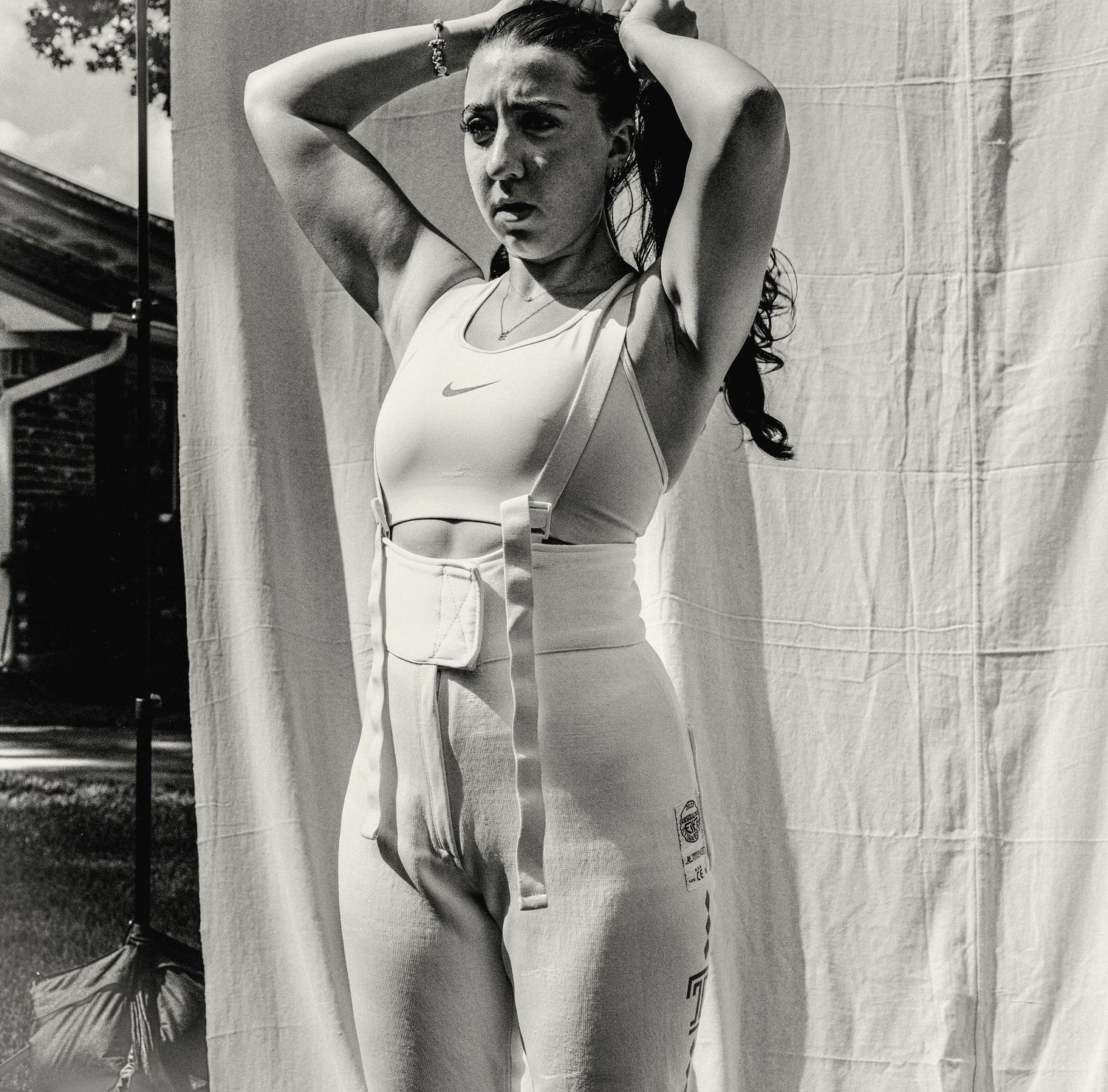
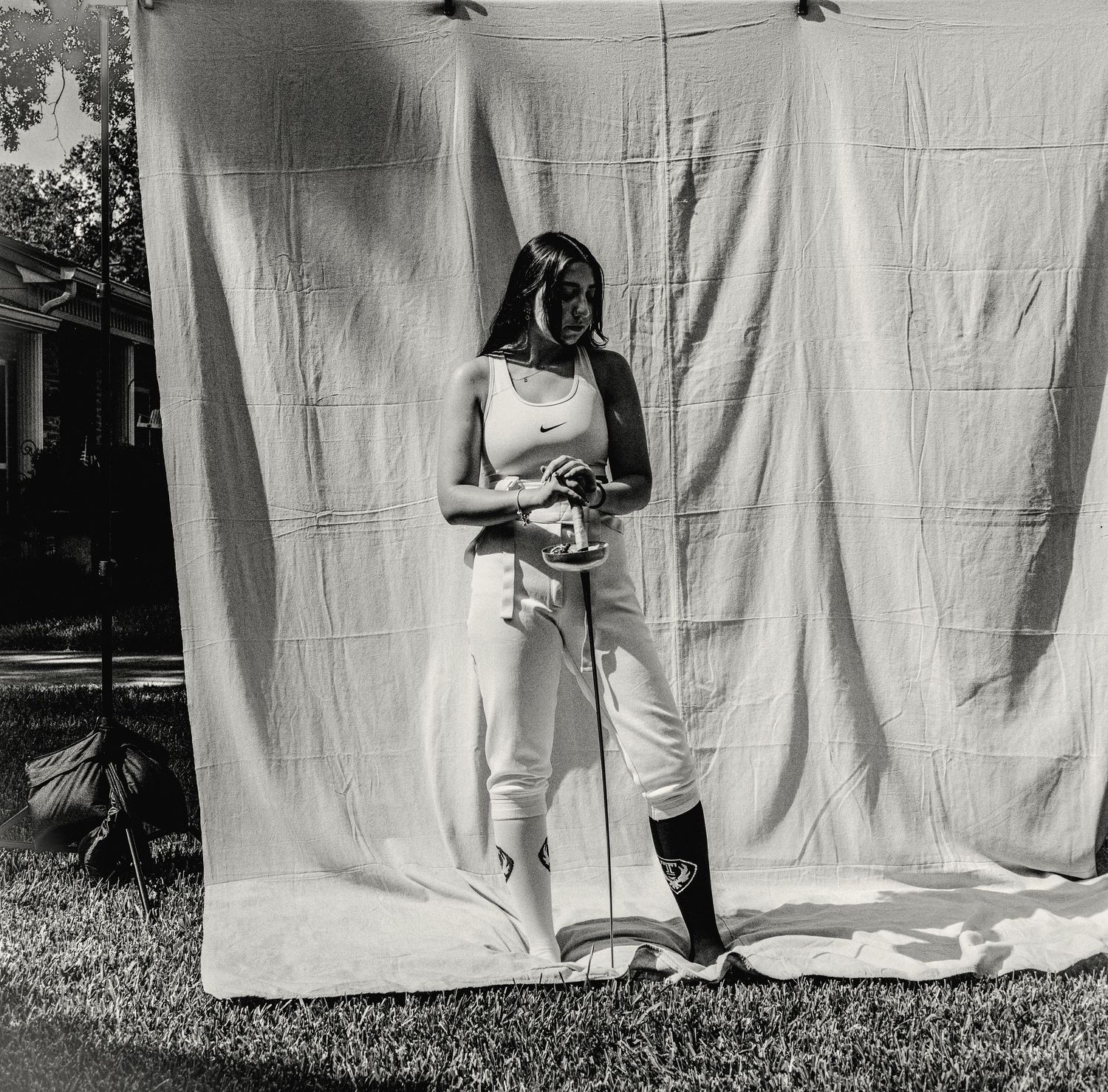
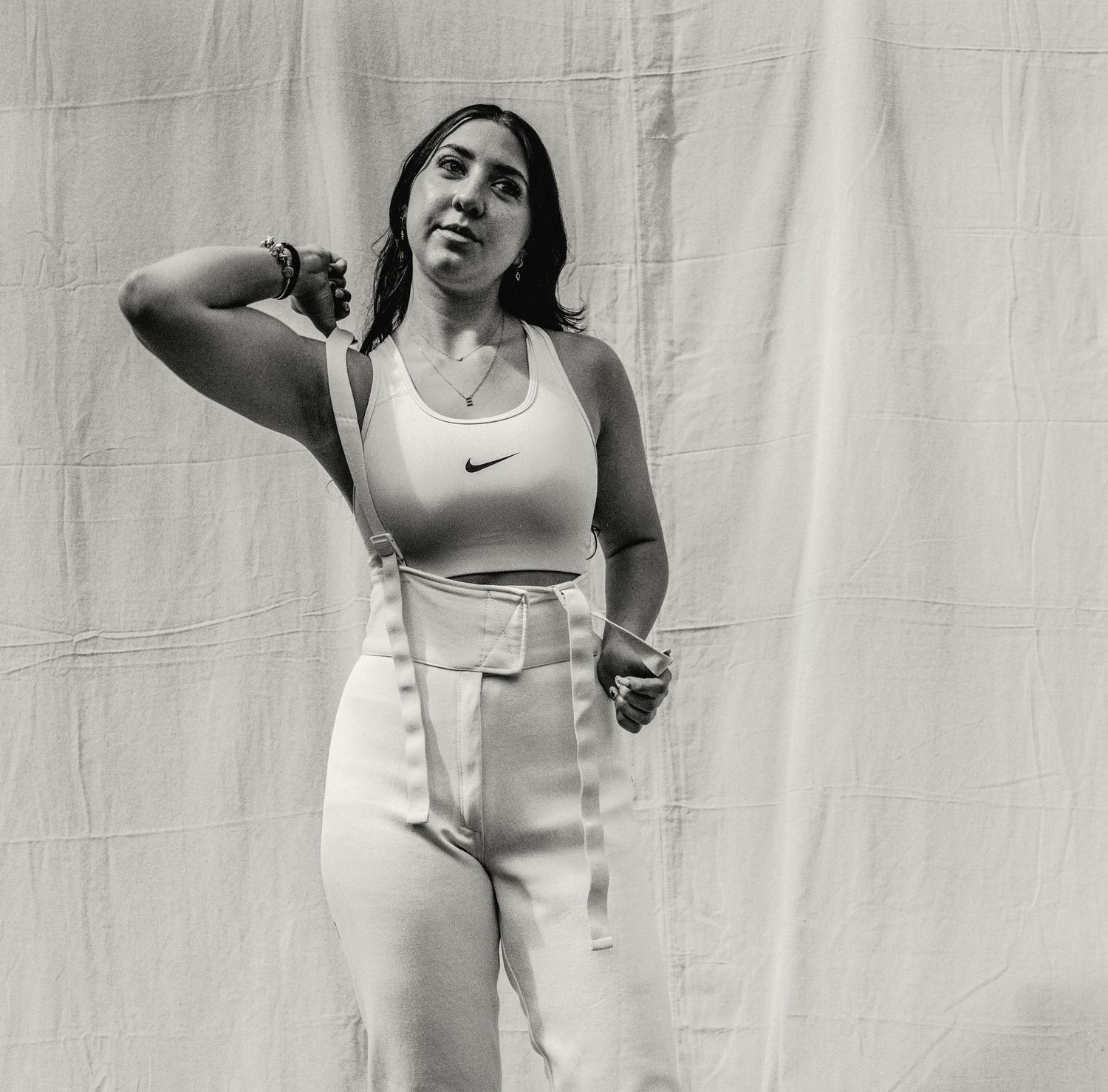

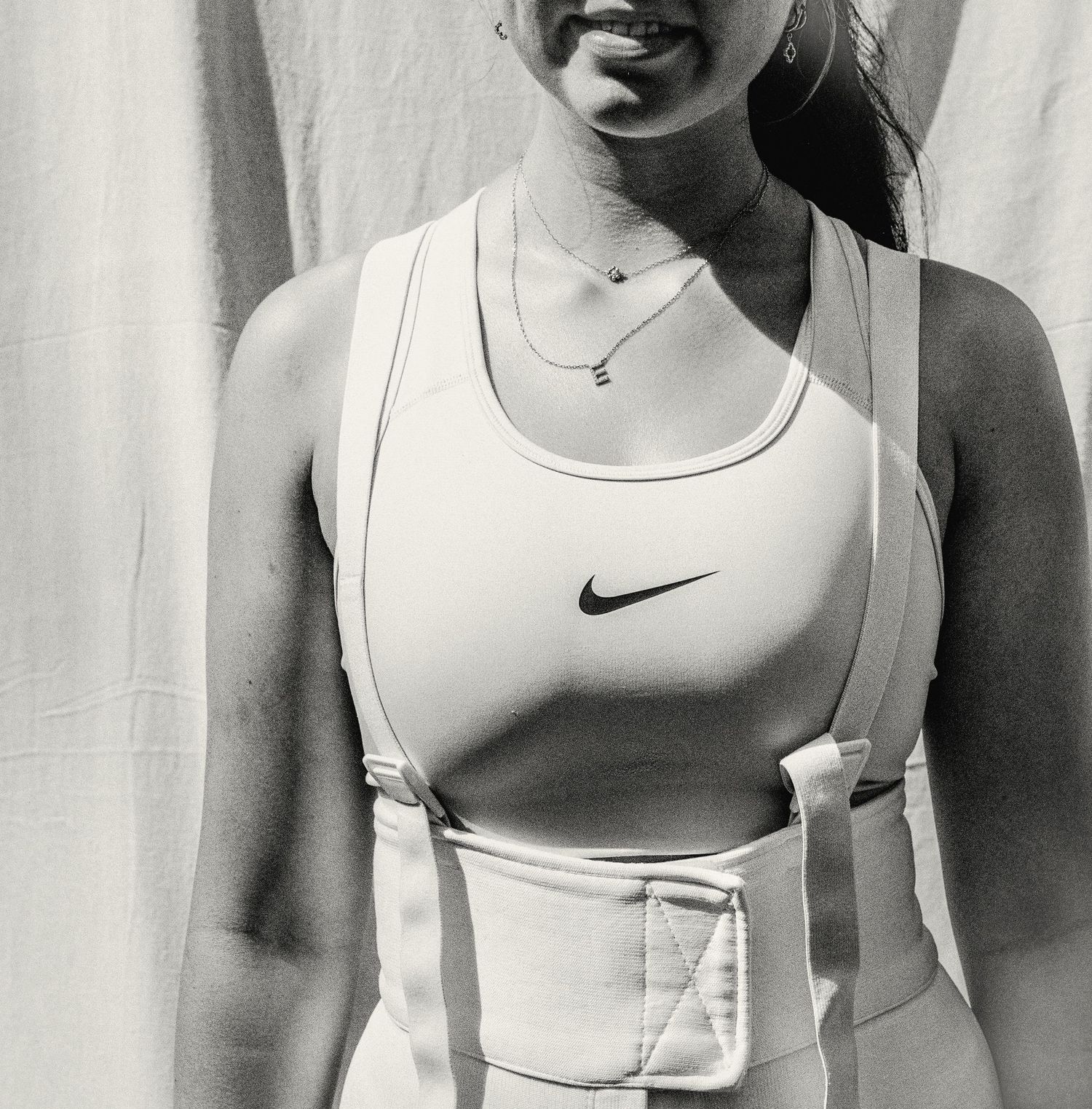
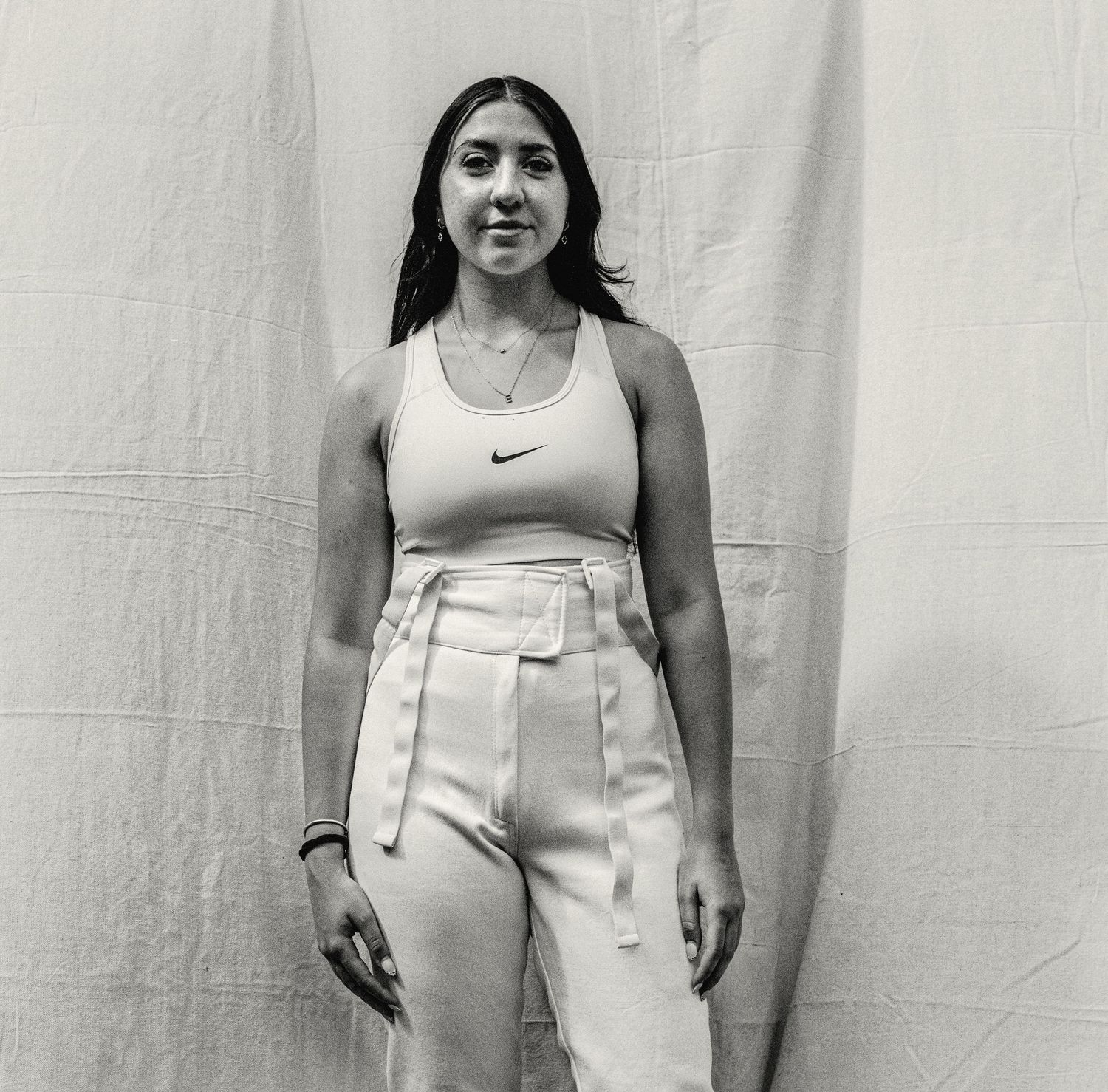

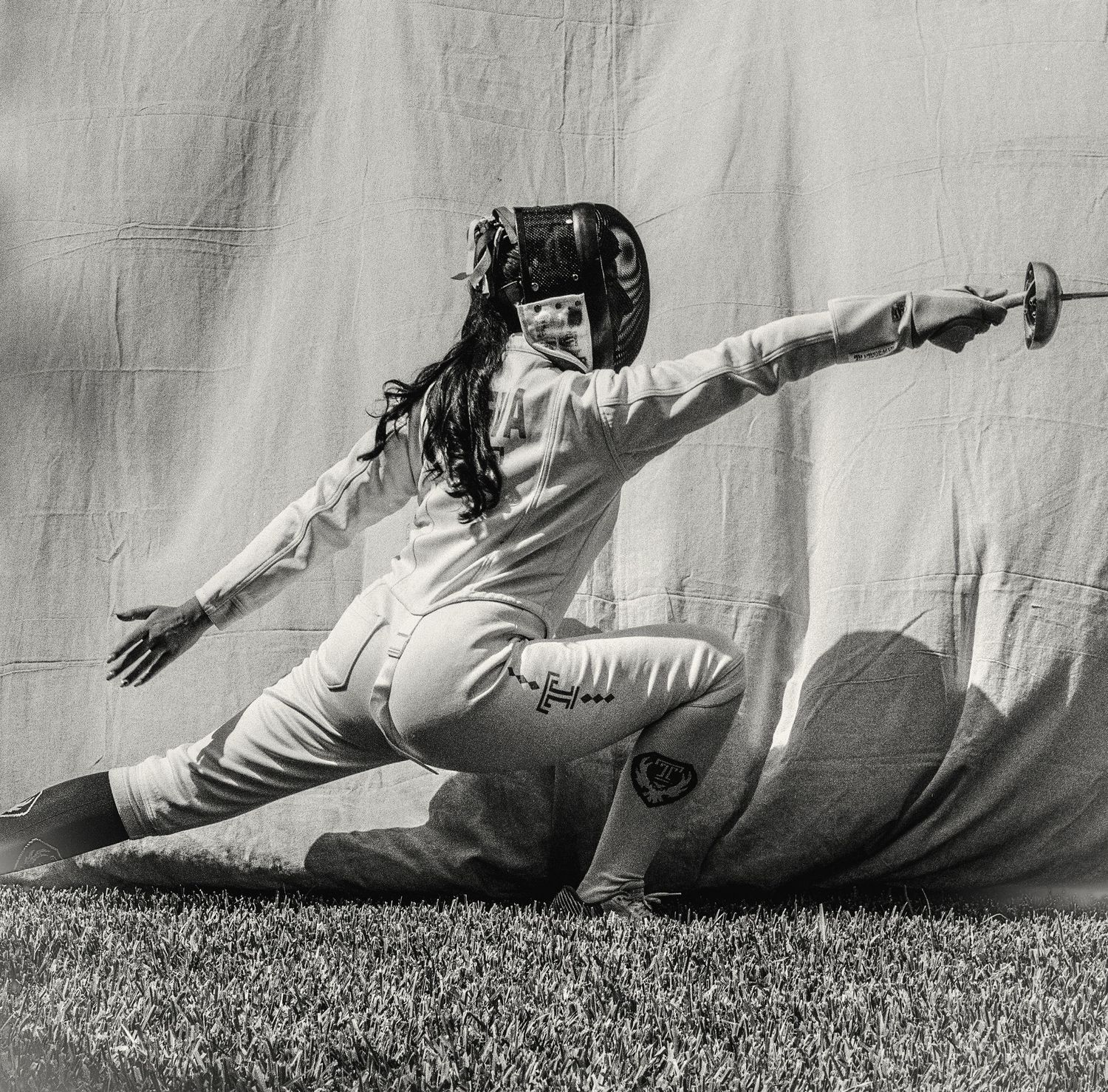
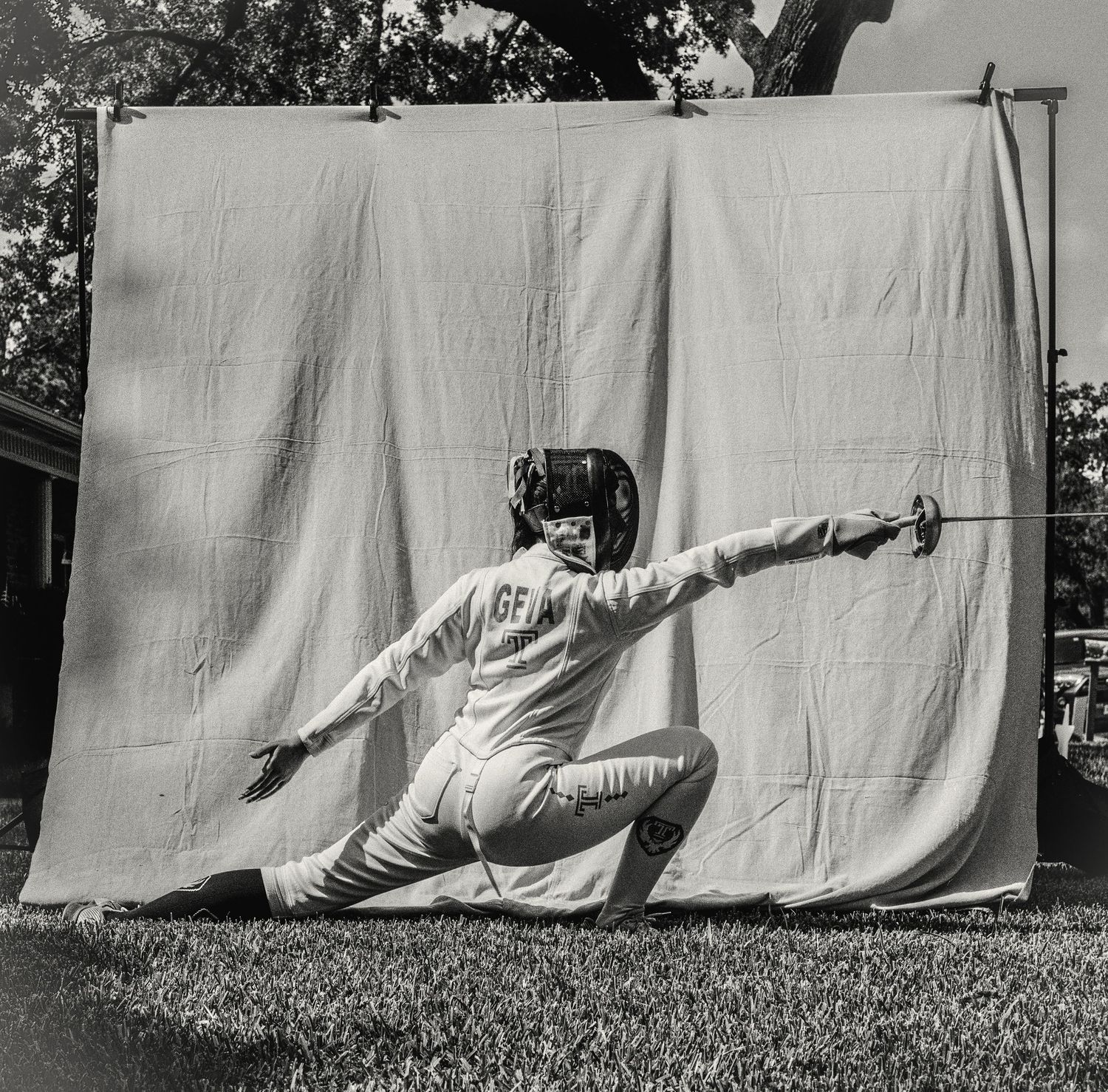
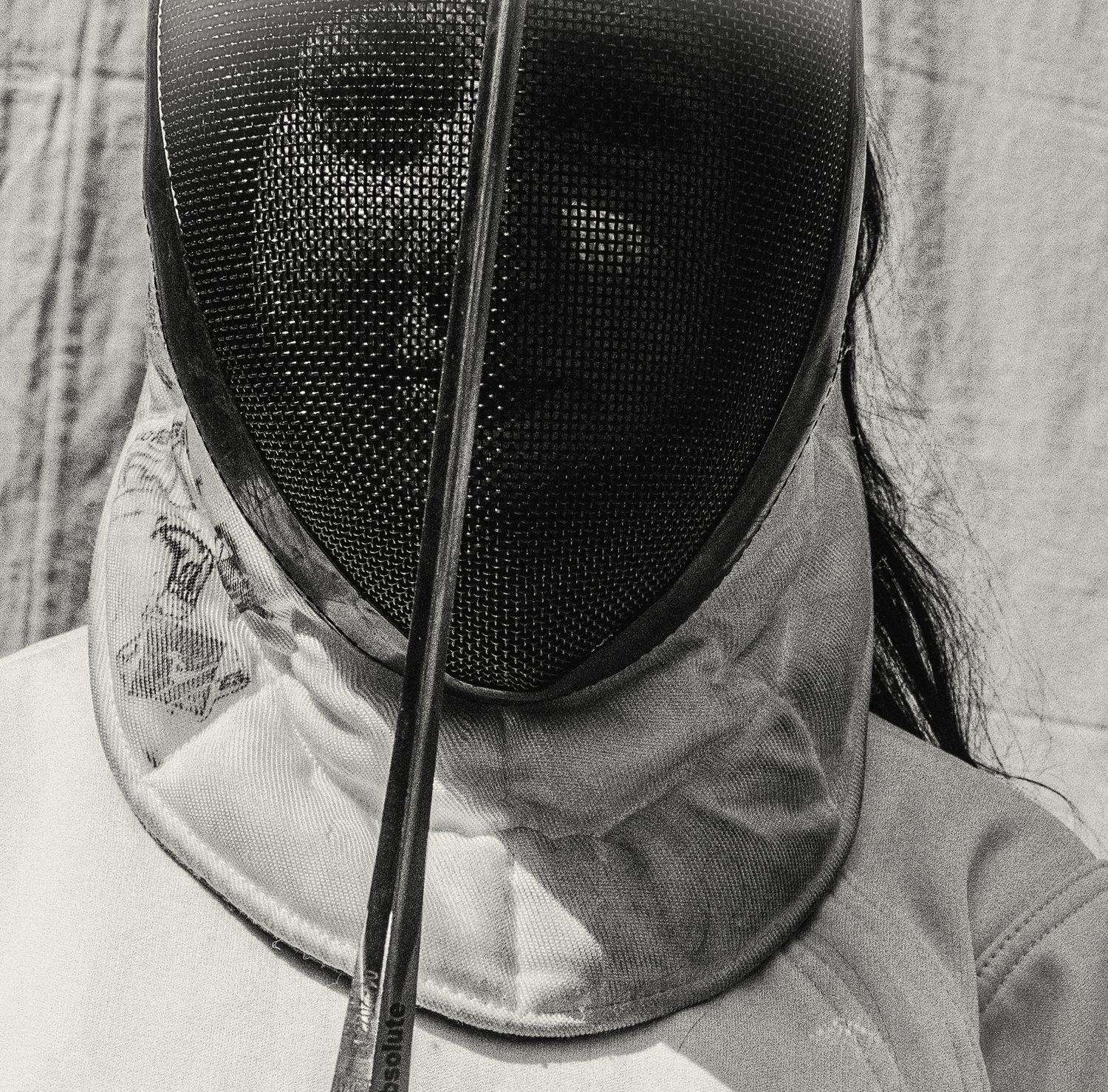

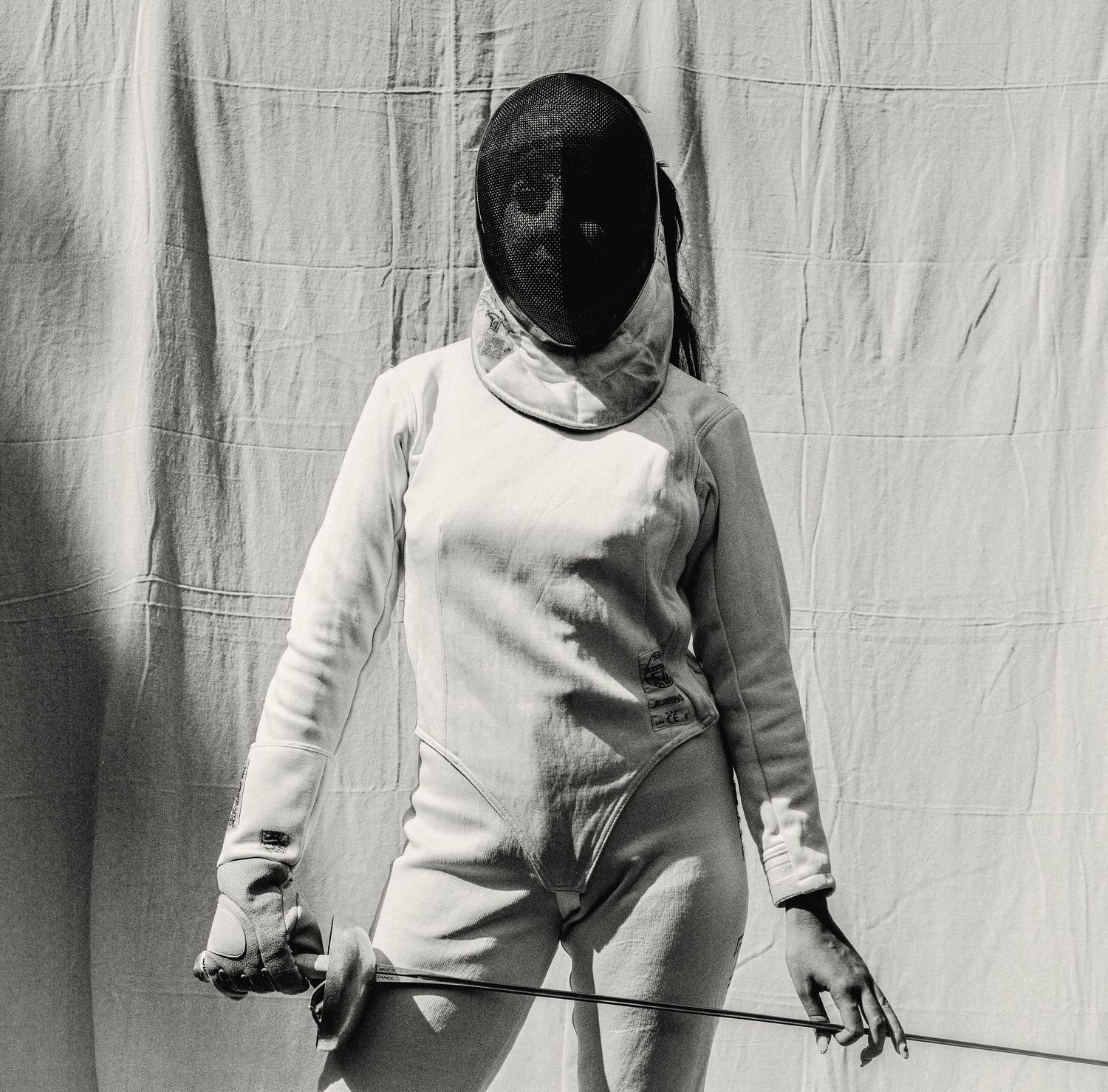
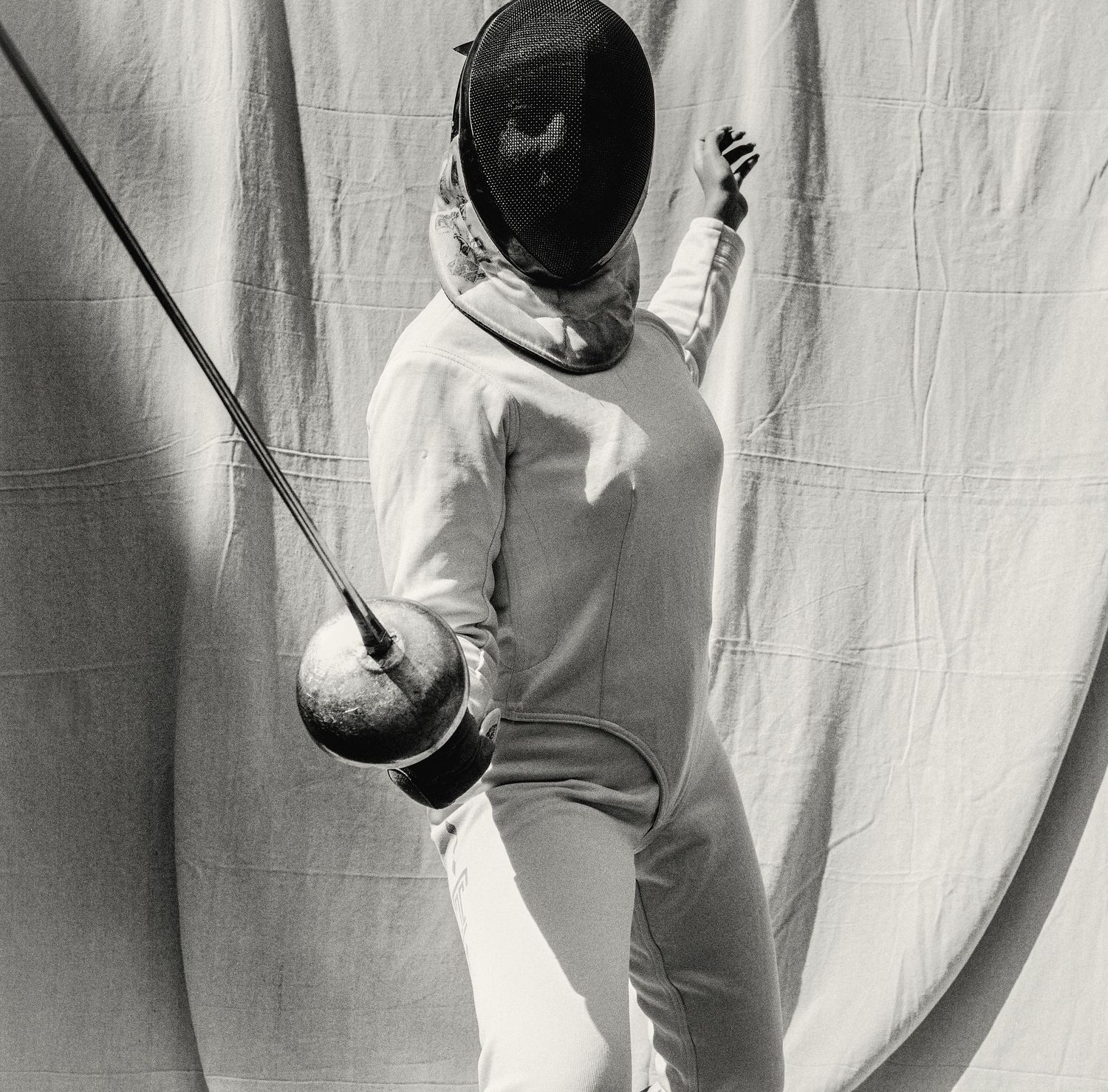
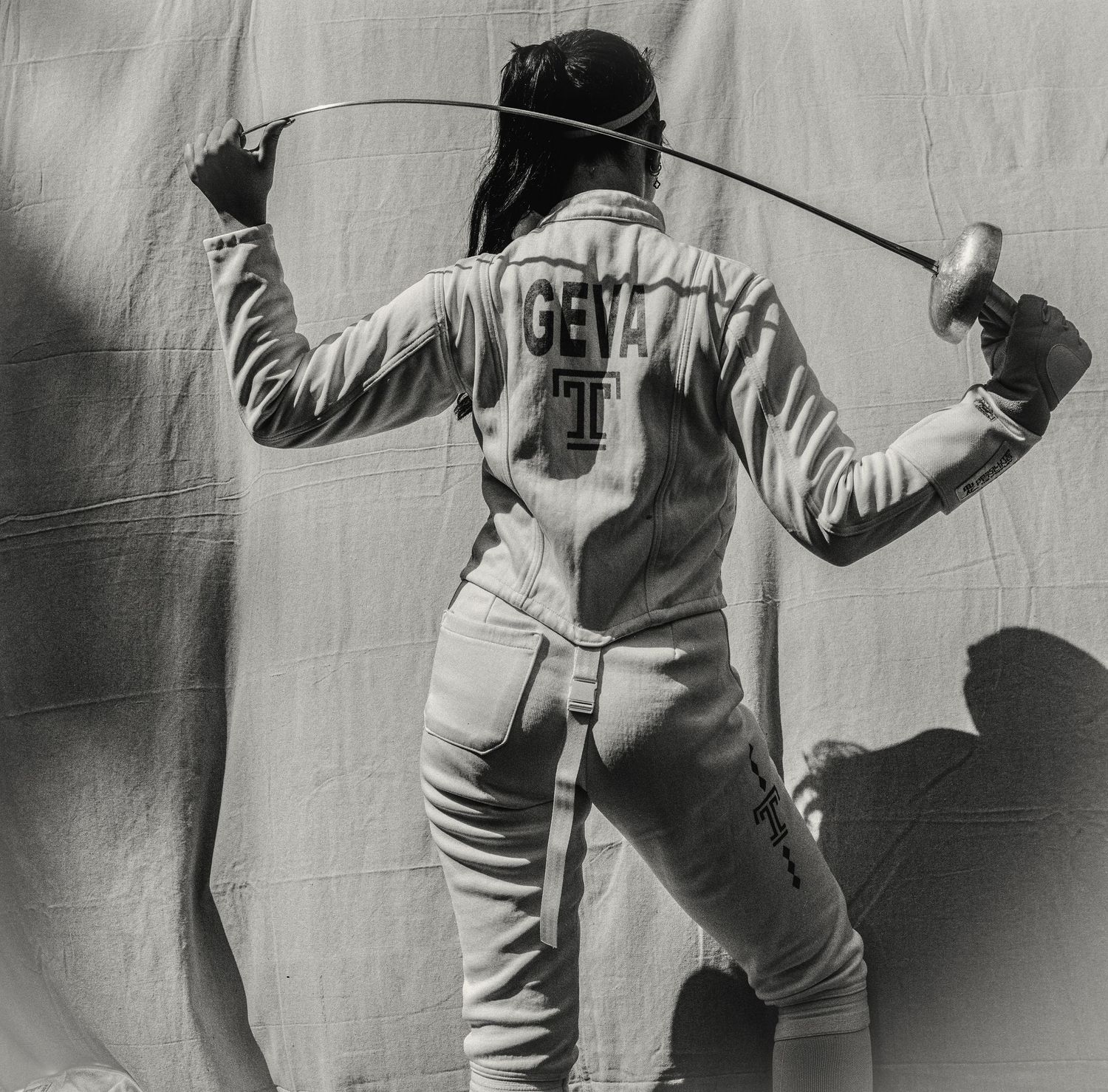
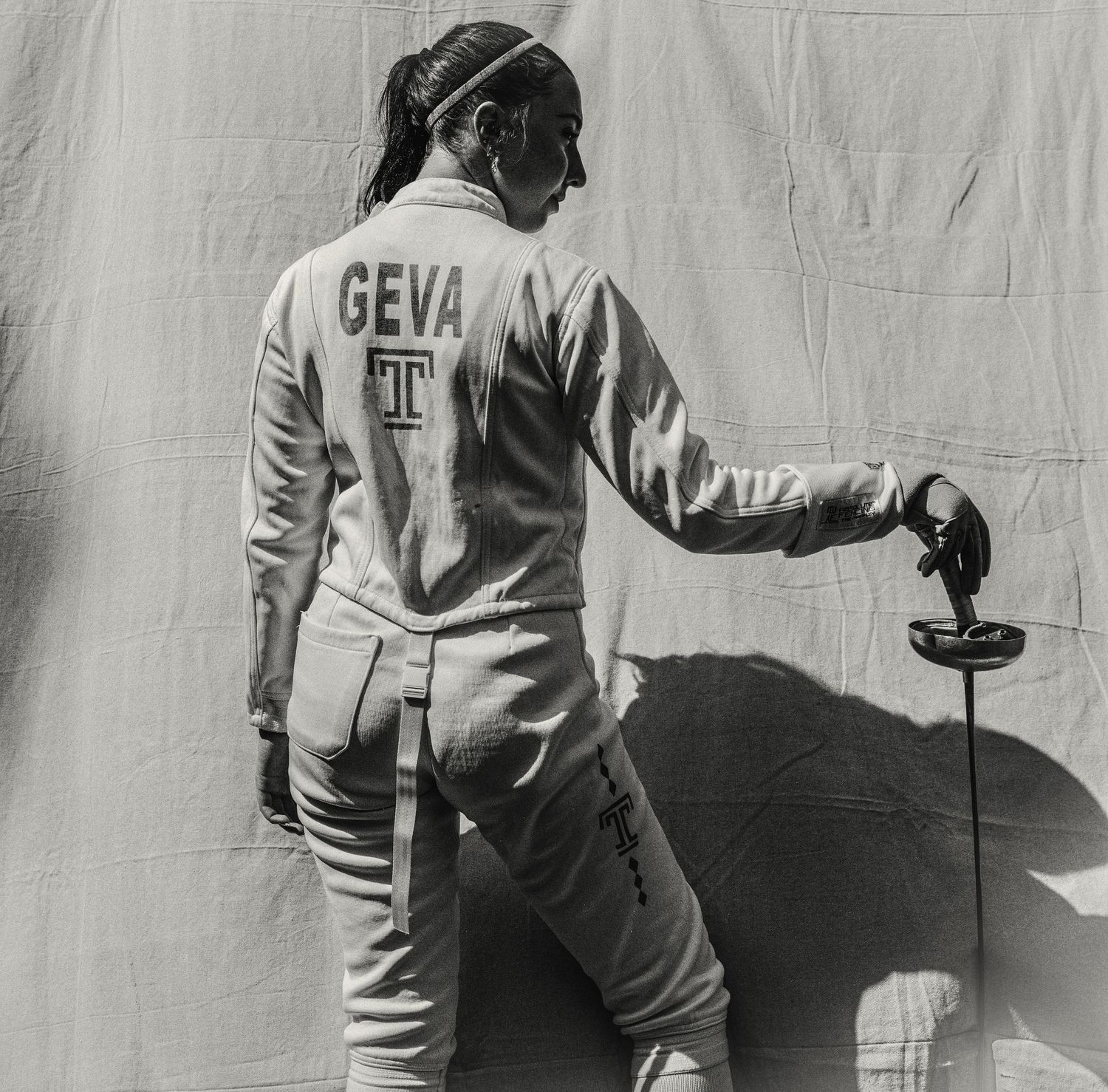
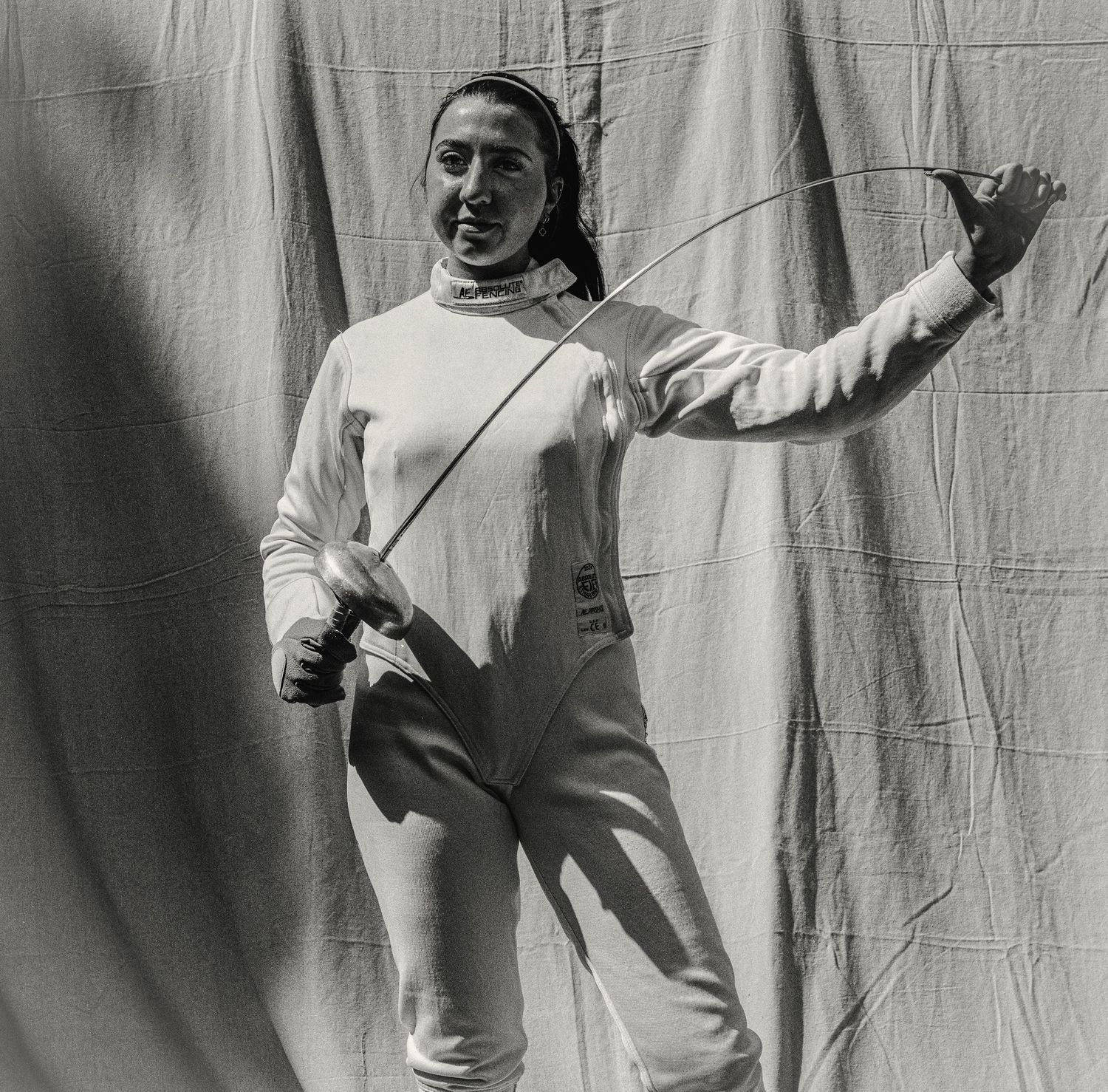
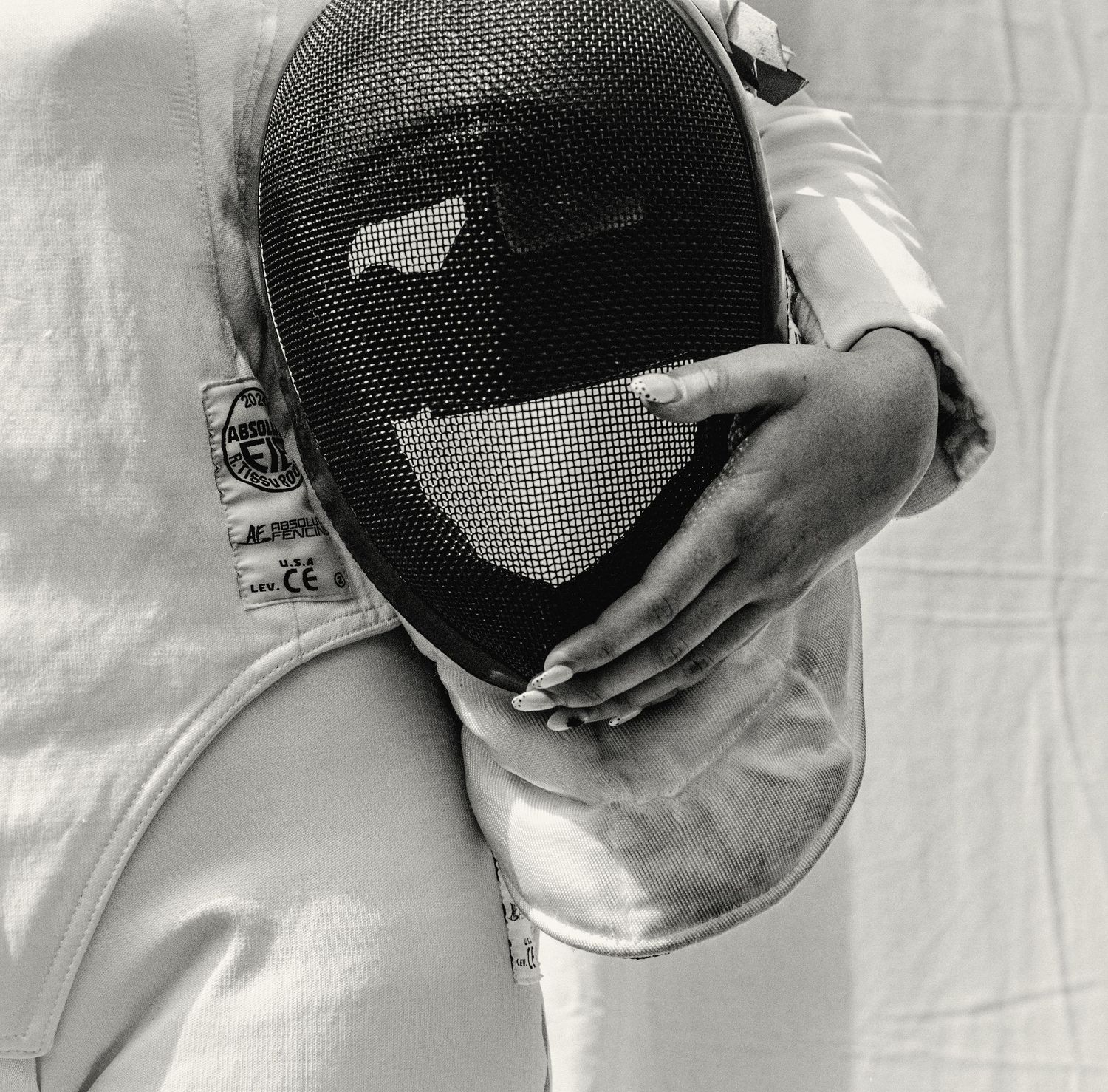
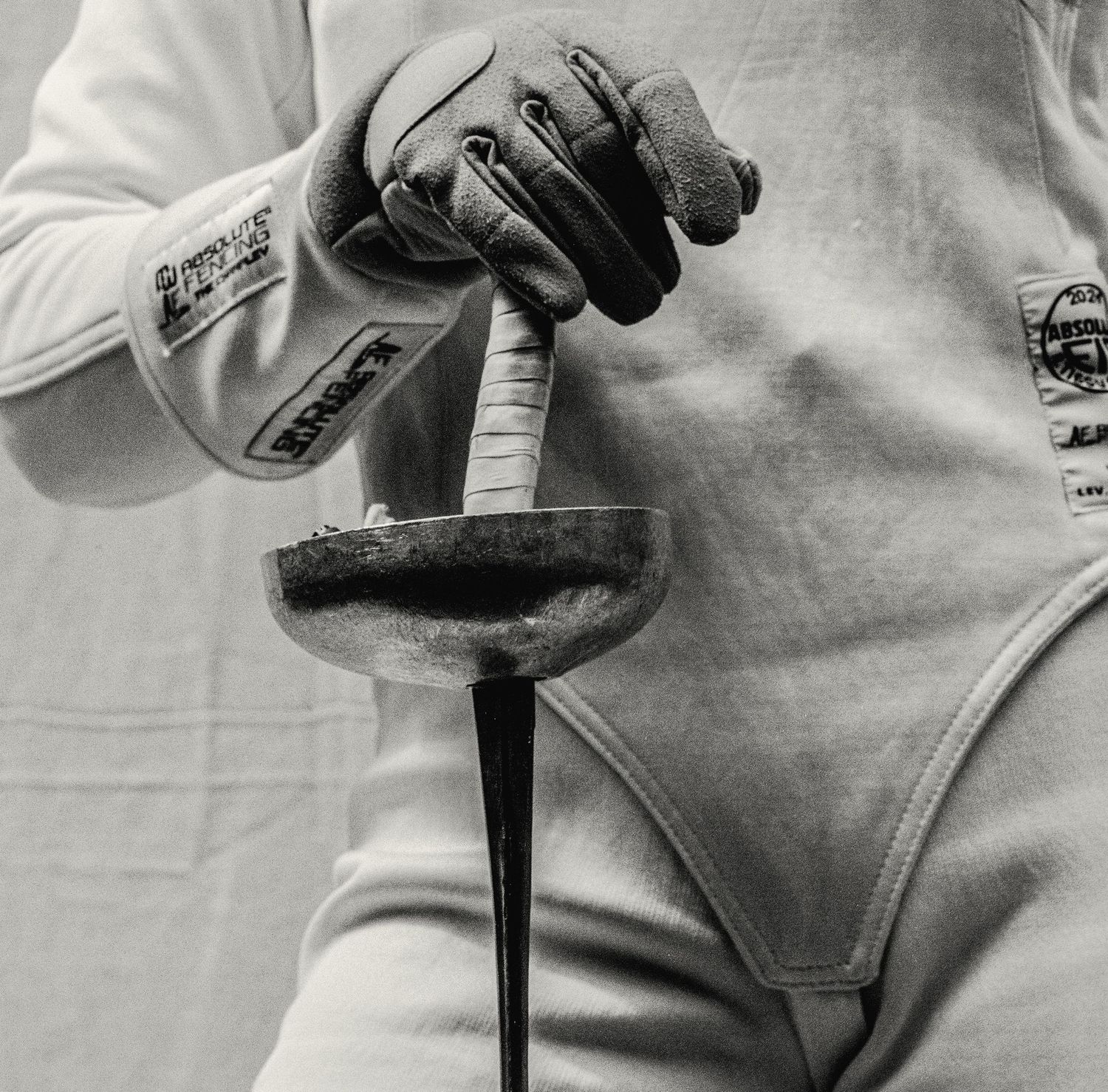
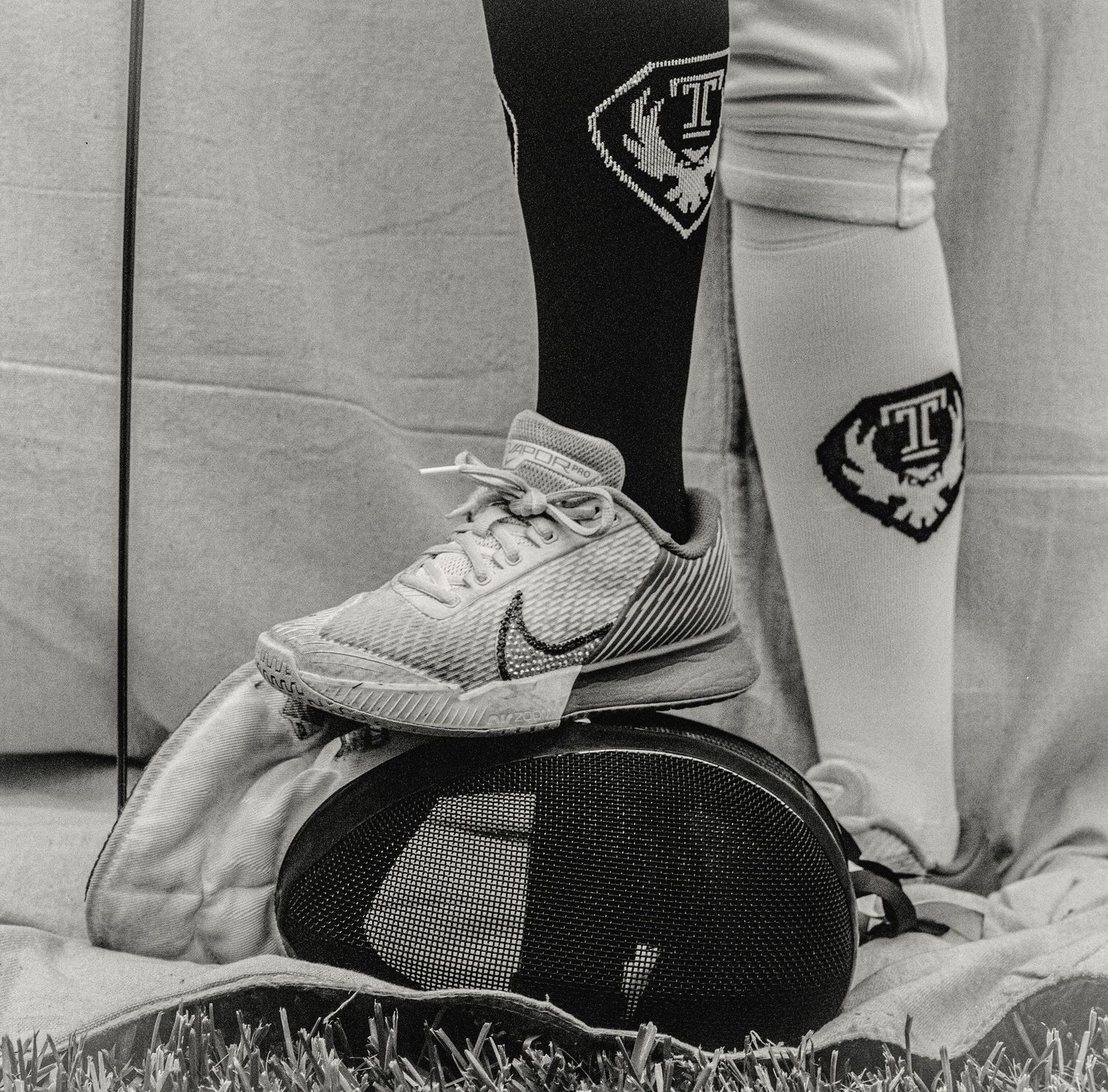
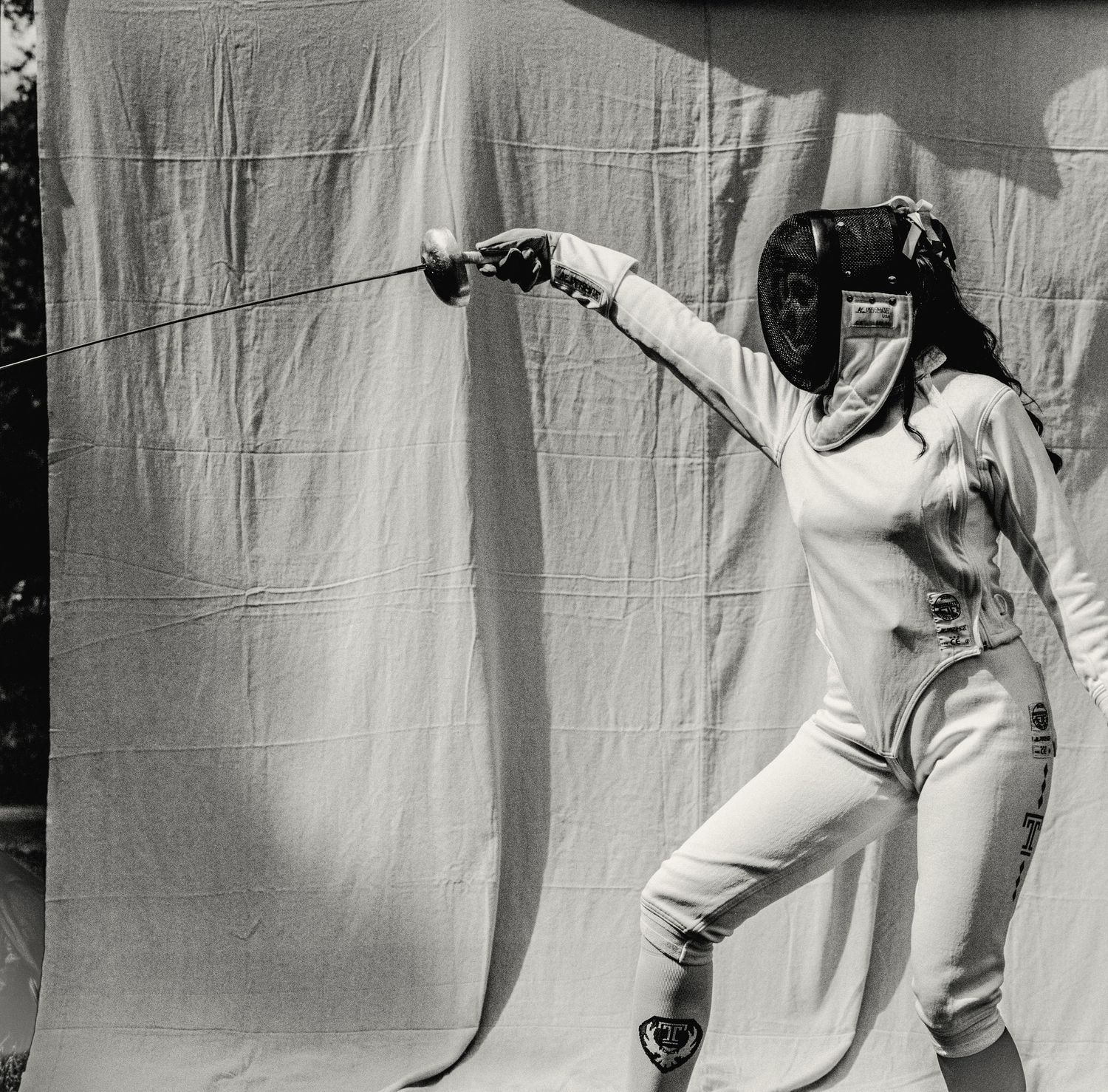
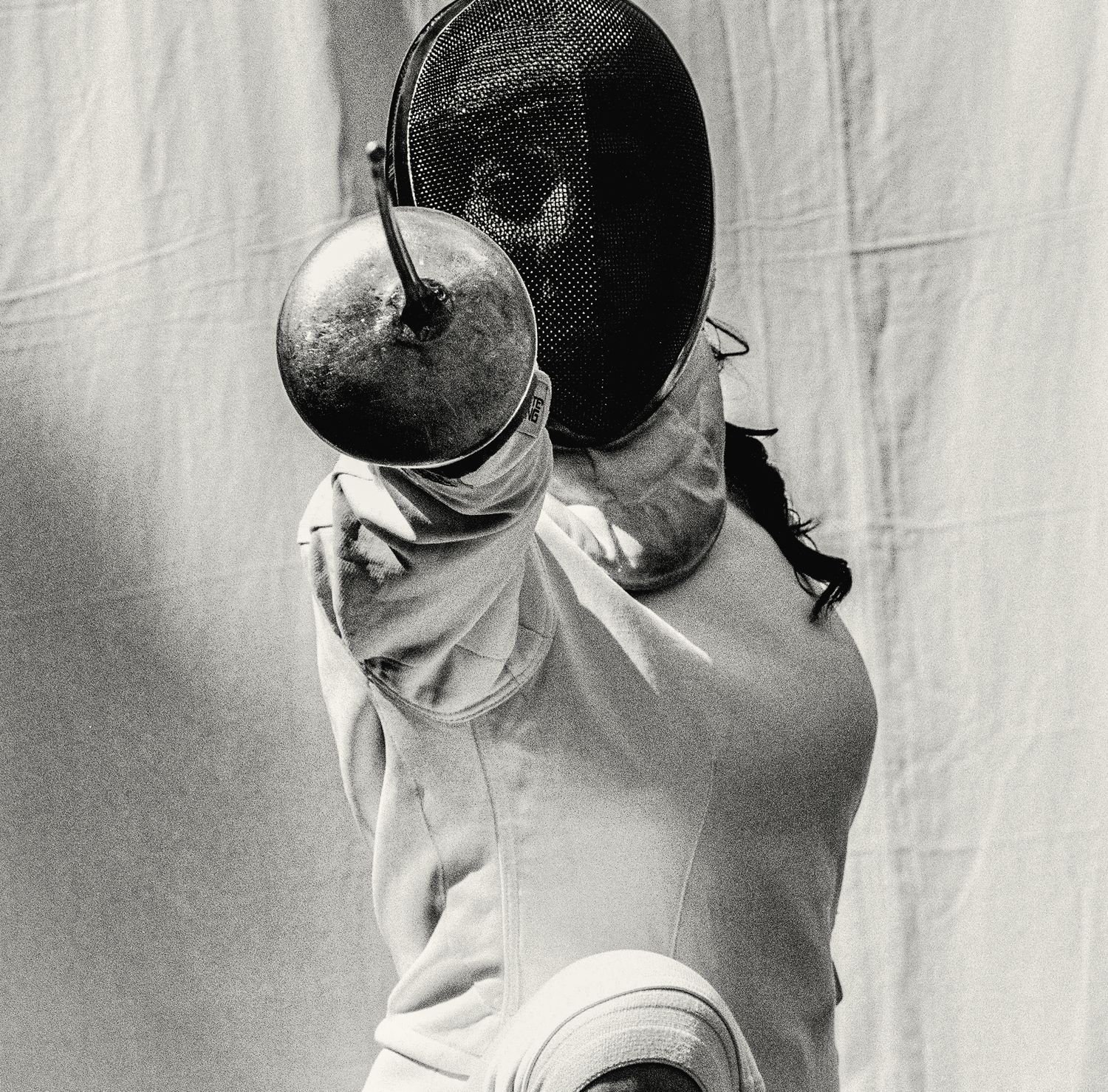
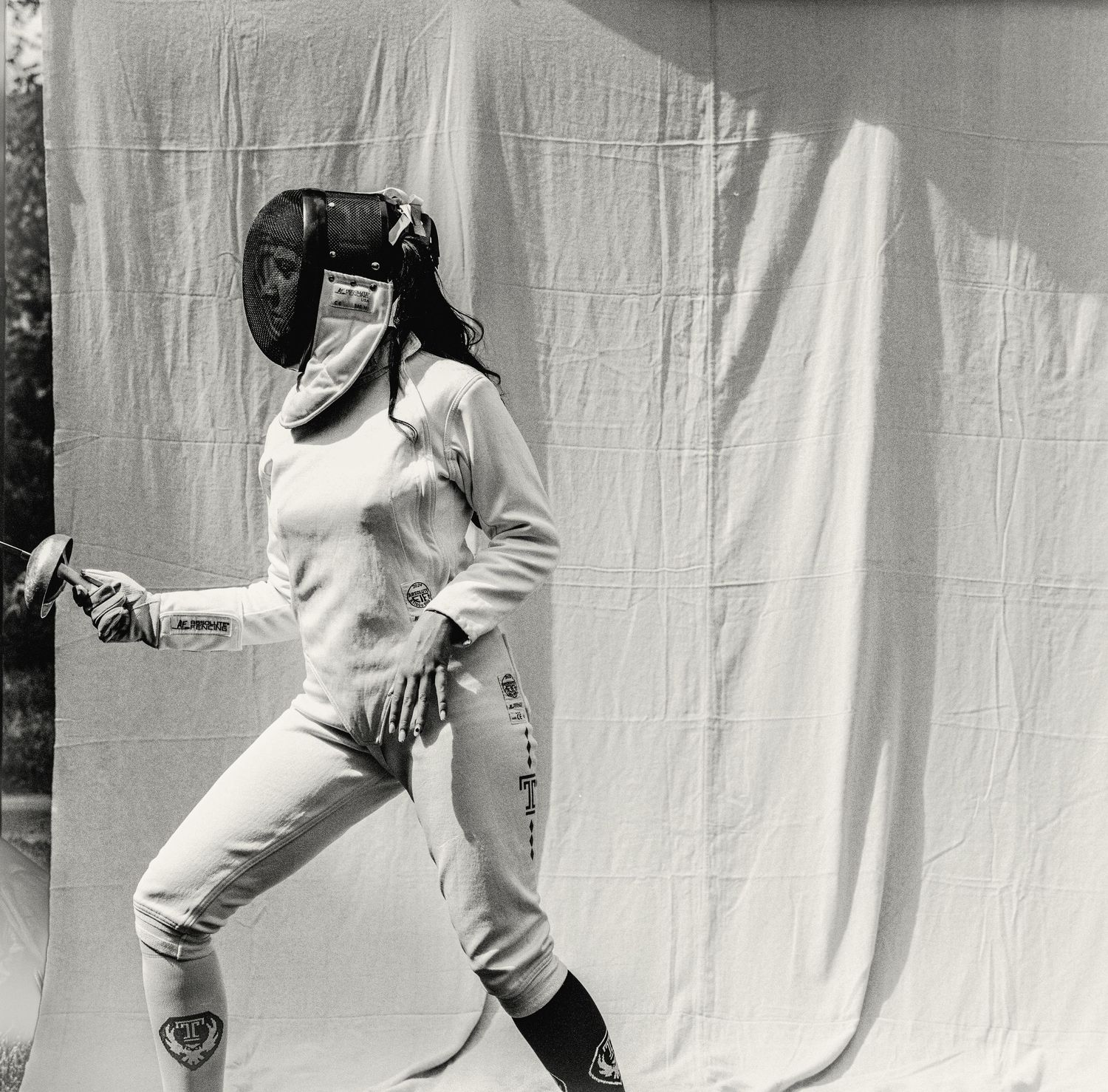
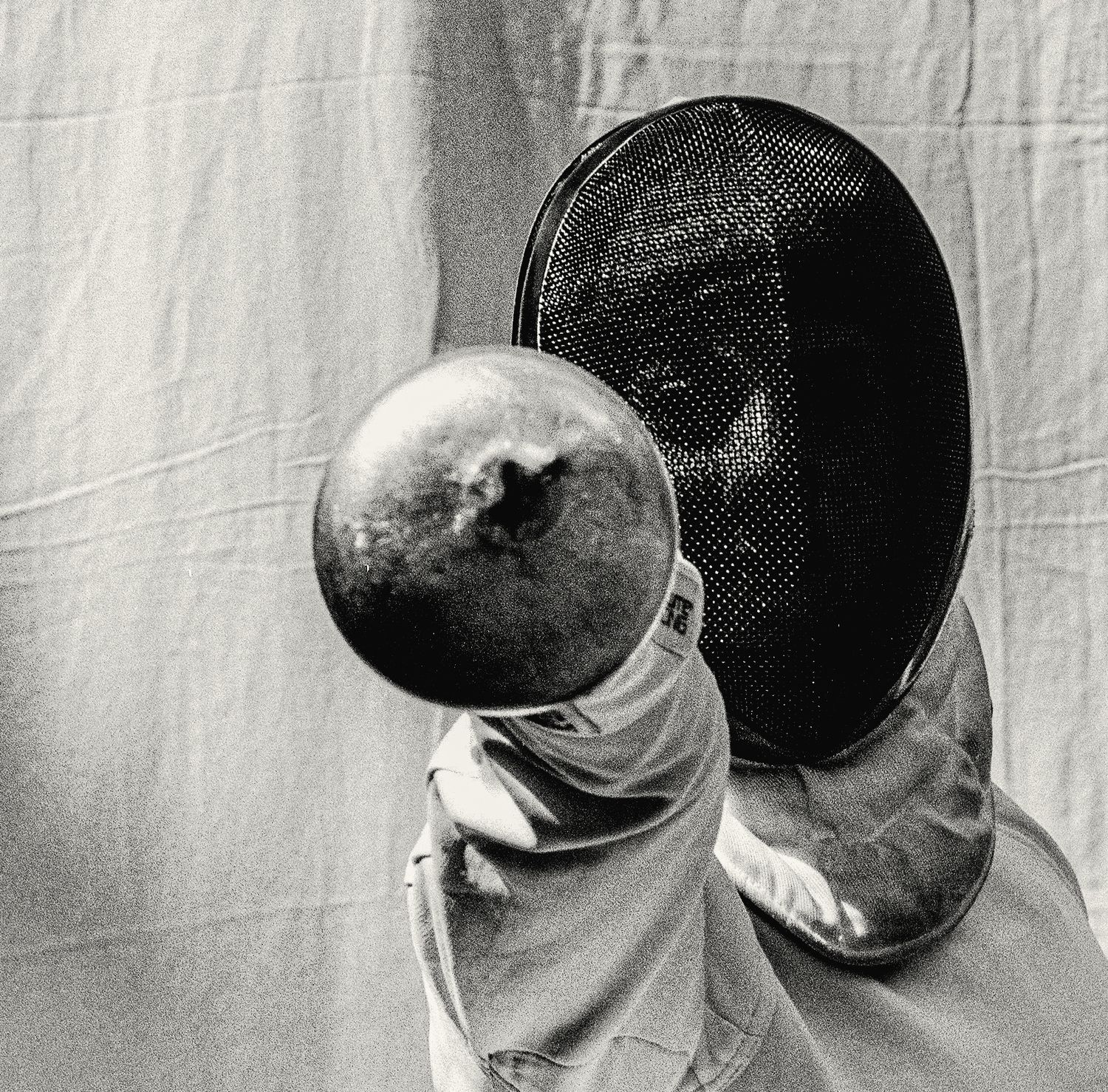
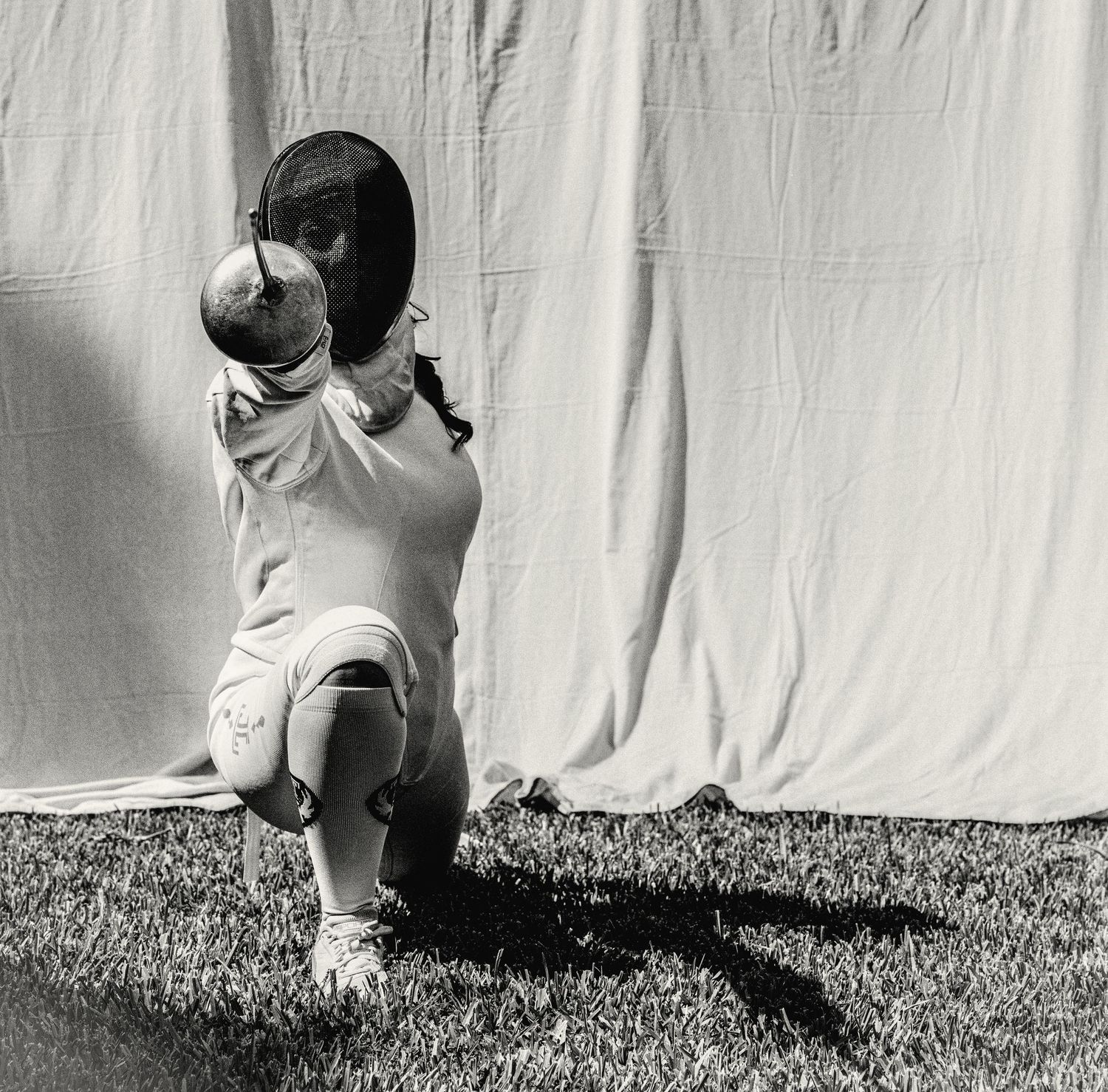
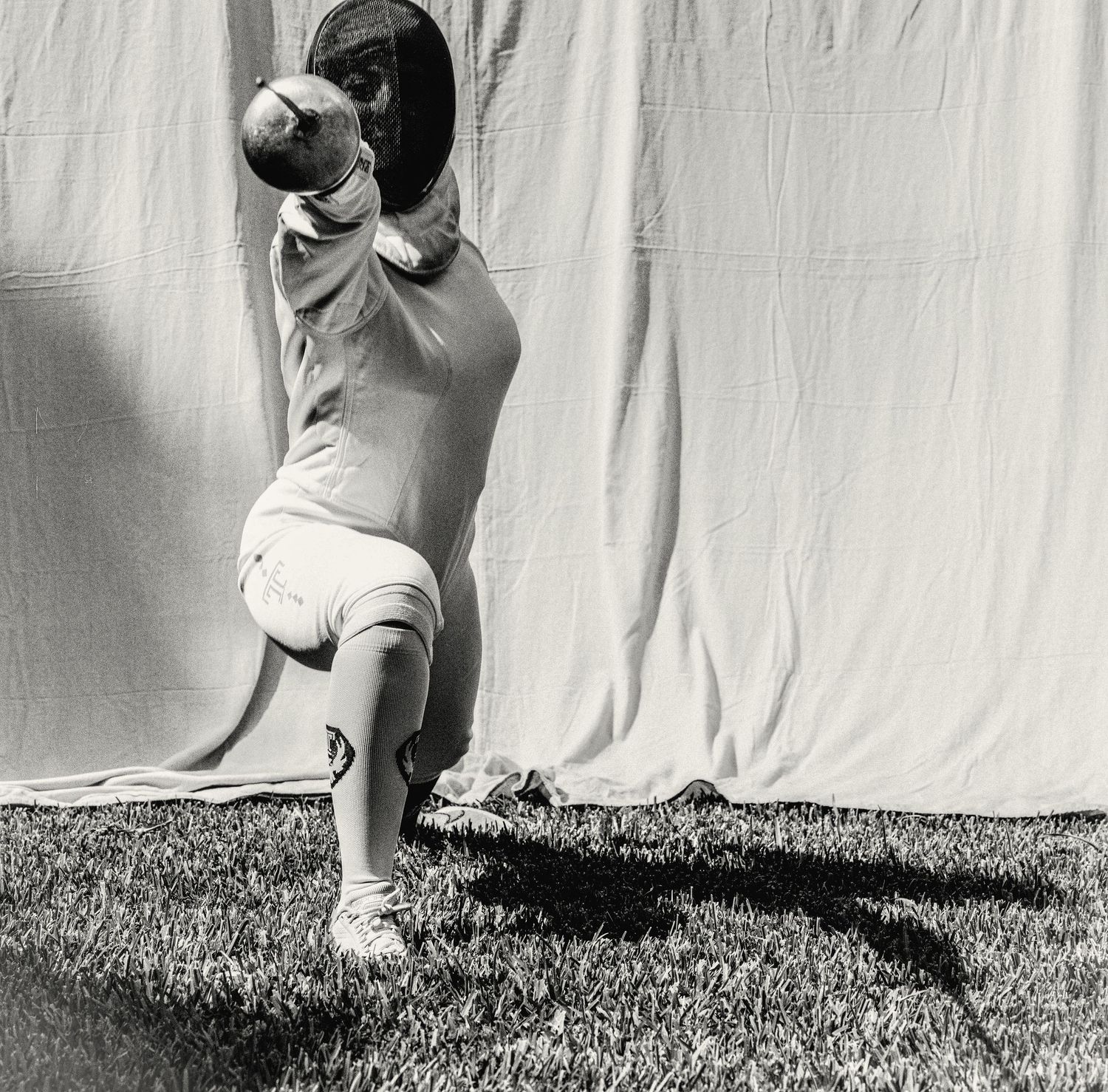
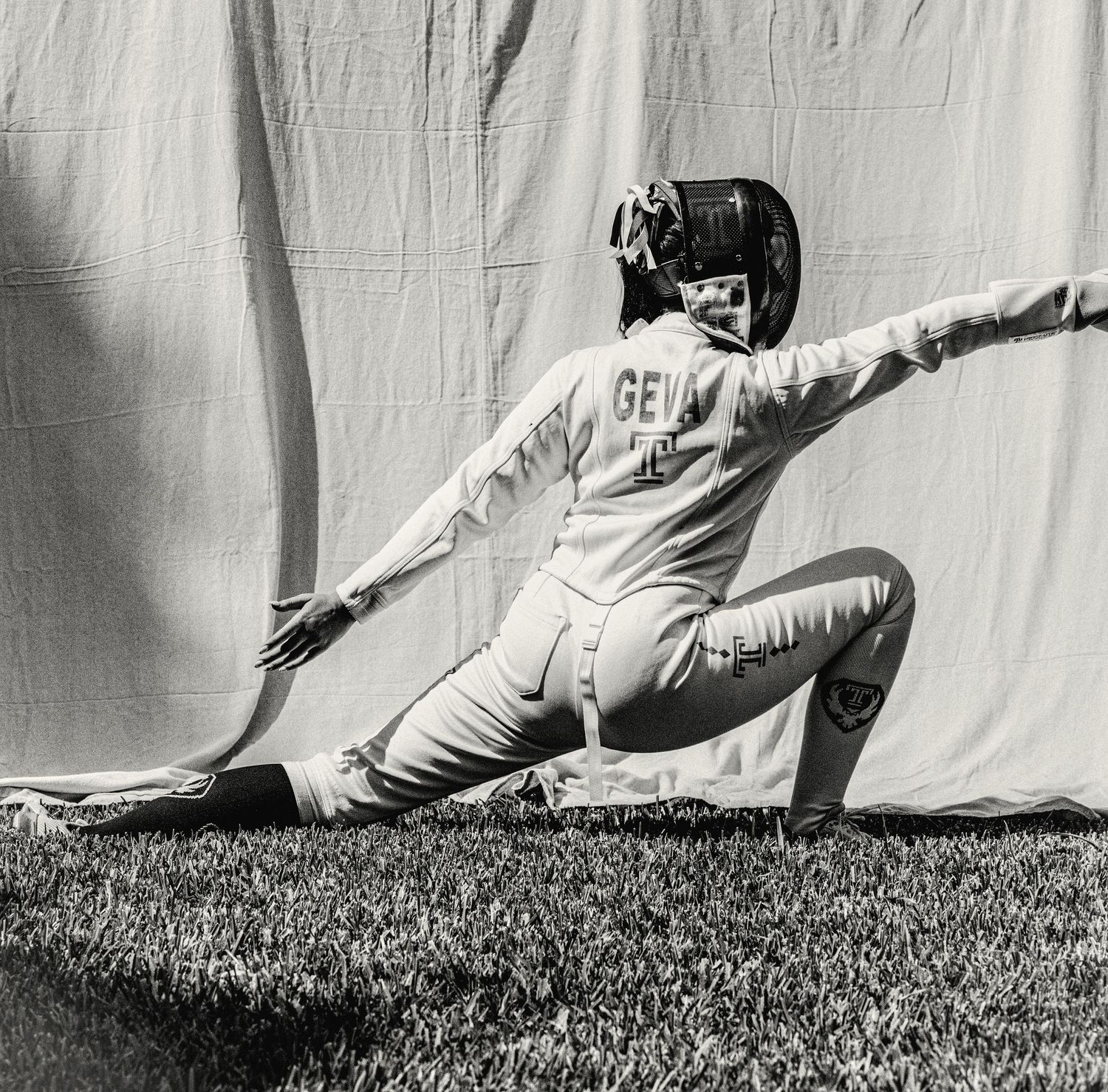
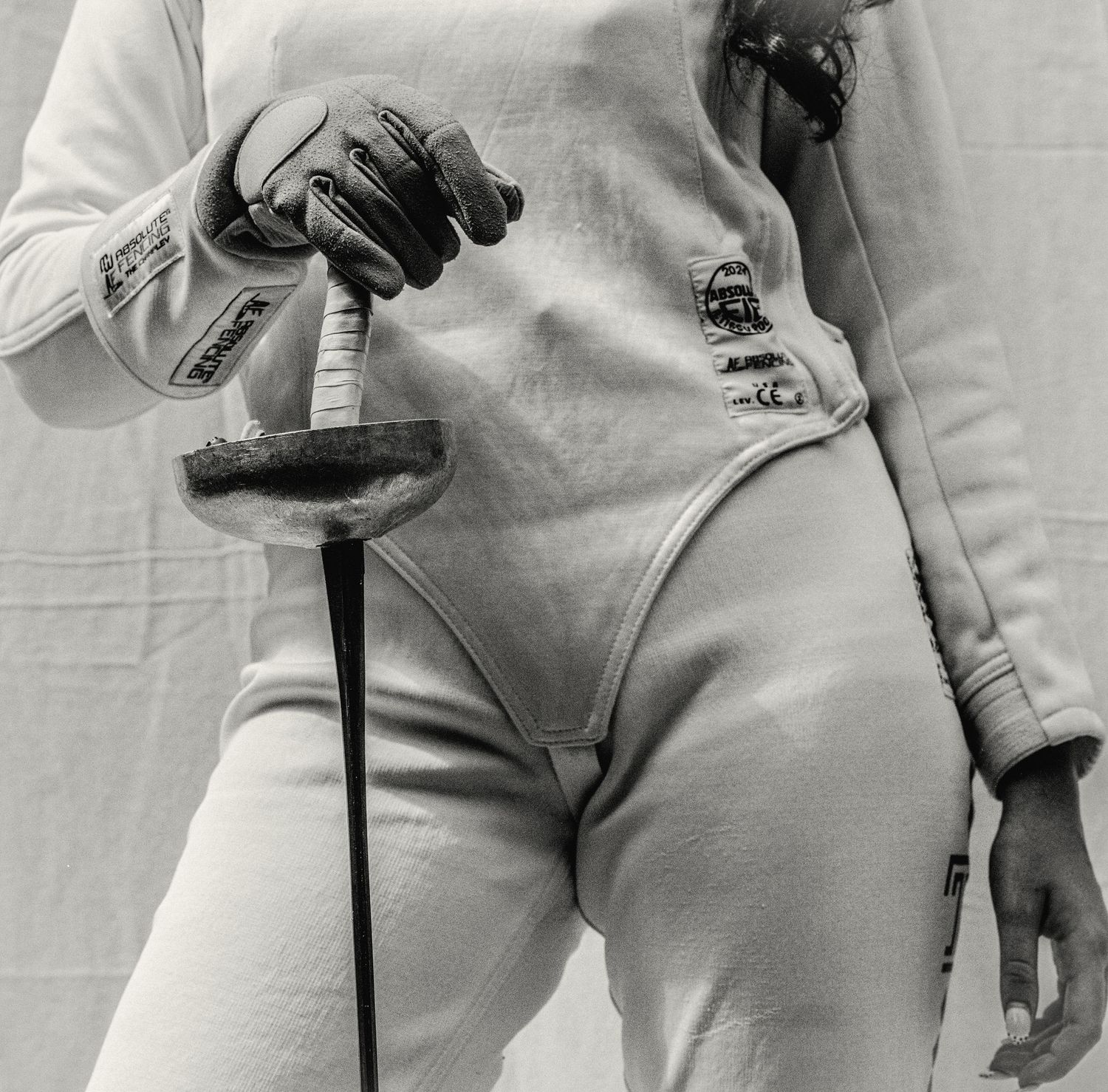
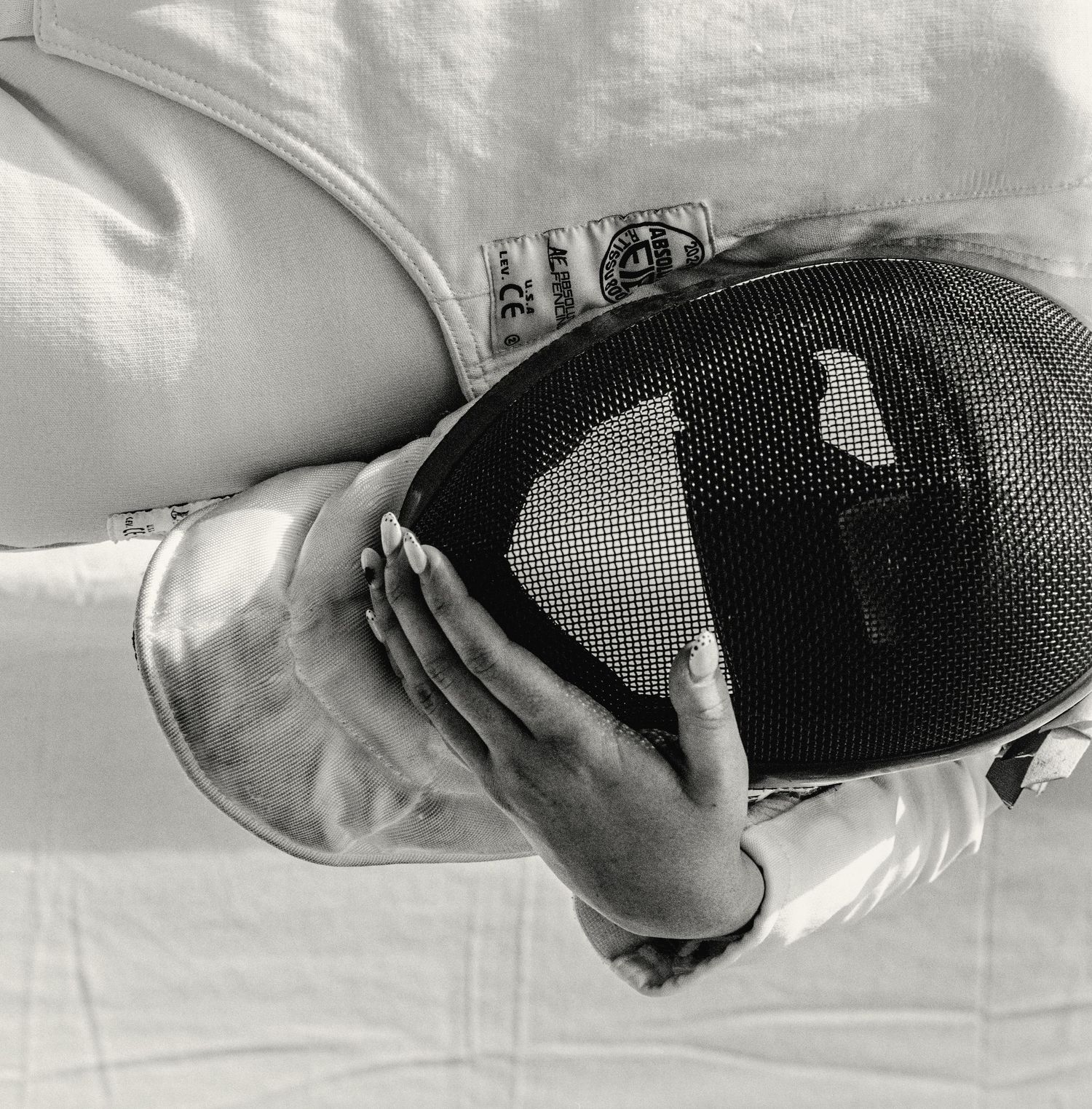
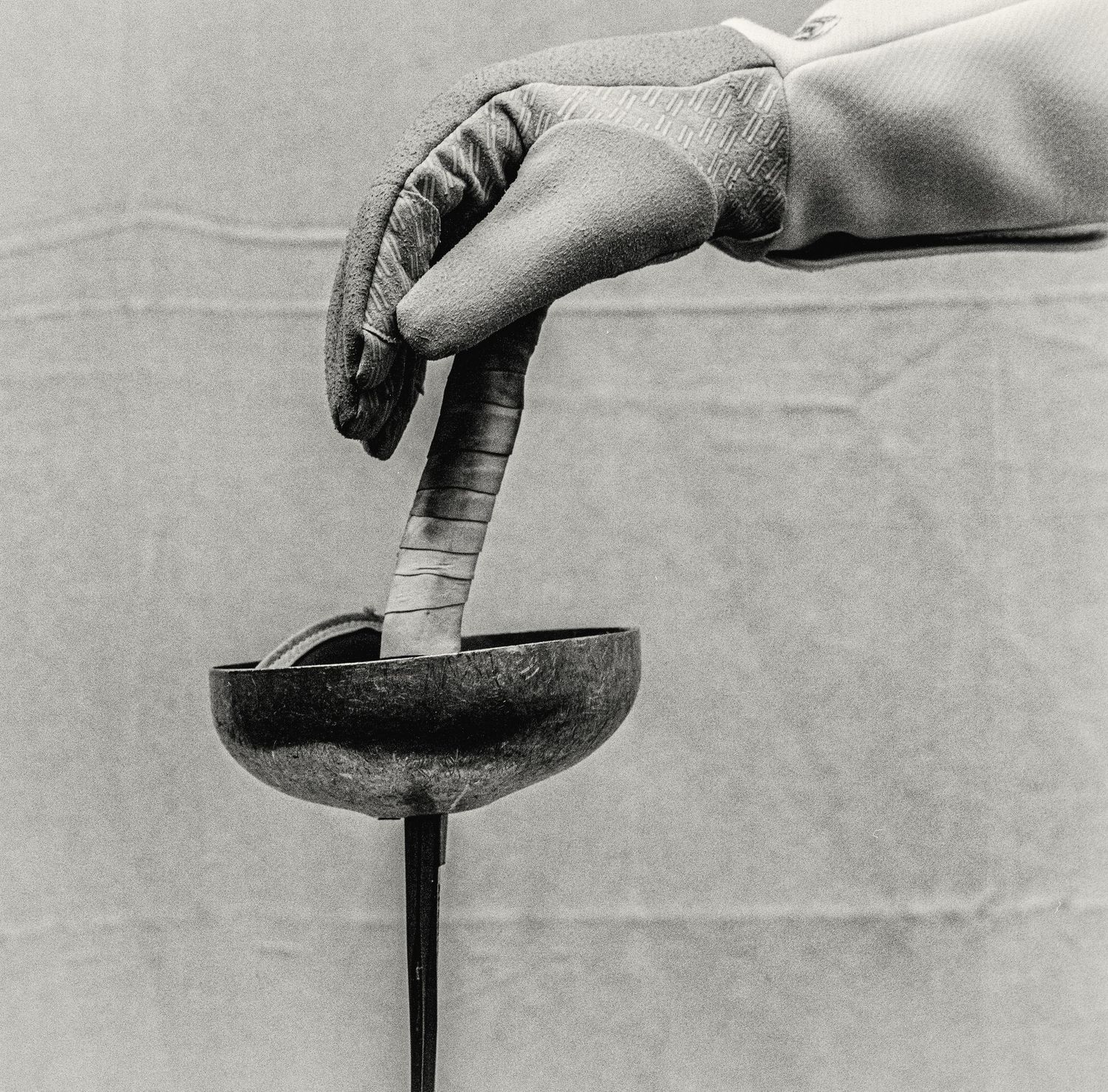
MAMIYA c220 / TRI-X & T-MAX 120 FILM
The Dragon Scream of Triumph
AN INTERVIEW WITH ELIANA GEVA
by
Respect Their Game
Welcome to the Respect Their Game — a collection of conversations with women athletes about commitment, identity, discipline, and the interior life of sport. These interviews are part of the ongoing portrait project documenting women in sport through film photography and their own words. Temple University épée fencer Eliana Geva shares how growing up in a fencing family, and overcoming doubt, criticism, and a concussion shaped her distinctive “physical chess” style, empowering all-women team culture, and the confidence and patience she carries on and off the strip.
Hi, could you start by introducing yourself?
My name is Eliana Geva. I’m 19. I fence on the women’s fencing team at Temple University.
How did you first discover and get into fencing, and what made you stick with it?
My dad is actually a fencing coach, and my two older brothers were also college fencers. So it was kind of obvious that I was going to go into fencing when I was young. I started when I was 6, but I don’t think I actually started enjoying it until I was 14. So I did it all throughout my childhood. It was very fun. I had really amazing memories, but I never like took it so seriously, I would say. I have a lot of really great friends from when we all started at like six years old. And then I think when I was going into high school, I kind of fell in love with the sport in a new way. And I realized like this is something I want to do maybe even in college.
How did you kind of find your own love for it and make it your own and stick with it because of your own passion about it rather than because it was like kind of a family thing?
It was obviously a lot of pressures because my dad was my coach, and he’s my sole coach. So there was definitely a lot of pressure from him. And I think maybe it was after COVID or something, I kind of just started really thinking about it, and I was like, “okay, well why do I like fencing?” And then I kind of broke it down. And I remember there was this one practice that I went to, and I think I was a freshman in high school, I was like, wow. I enjoyed every single part of that practice. Like I just unlocked this one day and was just like, wow, I love this. And then, yeah, I started to kind of fencing for myself.
What made you realize that you were good enough to go to that next level of collegiate fencing, and how did you start to pursue that? Did you have like scouts come to your club?
So fencing’s not big enough for scouts—isn’t really a thing at all. So I think honestly, up until the day that I got a call from my coach saying that I was offered a spot, I didn’t know whether or not I would get in. I started recruiting a little bit later, going into my senior year of high school, because I didn’t have that many results. And college coaches want to see your results on your resume, and I didn’t have the best results. Luckily then in my junior year, like right before I started reaching out, I did get some really good results. So I was able to use that. But yeah, I went into it with: I have no idea what’s gonna happen. And really after I visited Temple, I was like, no, I need to go here. And my thought process was: if I don’t go here, then I’m not fencing.
I don’t know why I gave myself an ultimatum like that, but I did. I think it was just pure delusion, honestly, because with our fencing club, it’s really big. And our fencing club that’s right here, it’s the number one club in the country. Which means there’s a lot of really good fencers that go to Notre Dame and that go to all these top Ivy League schools and this and that. So sometimes when you aren’t necessarily like on the world team and going to all these international tournaments, you could sometimes feel like you’re not good enough or that your results aren’t there. So that’s why me recruiting for college was genuinely pure delusion because I was like, you know what? No, I’m just gonna try because I wanna do it. Yeah. And then it worked out, thankfully.
Or even just like the belief in yourself that eventually you'll get there. Like faking it till you make it in terms of a mentality.
Yeah. Especially going into my senior year when I visited Temple, I was just like, no, I’m going here. I don’t care what anyone says. People at my club were also saying like, oh, well you’re never gonna get in. You’re not good enough. They don’t want you for your fencing, this and that. Which was really like sad because yeah, I know that I’m a good fencer, but sometimes in comparison it can seem like I'm not.
But I didn't care. I was like, I’m going to temple. I’m going to temple. And even after I got in, the same people were saying, oh, well, they’re just taking you because your dad’s a coach, which was obviously frustrating to hear. But then in my freshman season I ended up doing the best out of my squad, and it’s sometimes just the environment that allows for that success. Temple’s a very, very positive environment. So I think that really helped me thrive and grow.
Is that why your eyes were set on Temple because of the fencing culture, or did you also like the school in general?
The fencing culture definitely. When I visited like the team, everyone says that Temple has a really good team culture, but I think like it’s even more than anyone could ever say out loud. We have a women’s-only team, which really helps. That’s amazing. And it’s a group of the most most 18 supportive girls I’ve ever met in my life. We genuinely build each other up. We’re all very close. I can say I know everyone on my team on a personal level, you know? And of course there can be like little tiffs or whatever with teammates, but we genuinely do have a really good team culture—and that’s what really drew me to the school because I wanted to be a part of this… this is empowerment.
This is what women’s sports should be like, you know?
For people who have never fenced, what do you think would surprise them most about the sport?
I think that the weapons aren’t sharp. That’s always a question that we get: are the weapons sharp? No, they’re not sharp. It’s like a little button at the end. We do get a lot of bruises and a lot of scrapes and stuff from getting hit. I would also say that it’s a really intellectual sport. People think it’s a sword fight, like messing around, but fencing is like physical chess. Because you are calculating every single move you’re making, and they’re making, and it’s all unpredictable. You have no idea what’s happening next. It’s more of a mind game than a physical game. If that makes sense.
Do fencers "watch tape" of competitors or upcoming opponents?
Yeah. We do that a lot. We film at every single meet, we film every single bout. And we have them in organized folders. It’s actually pretty cool. Before we go to meets where we know we’re gonna fence top schools, we look through videos, and we look at who’s on the roster. And who they’re probably gonna put against us. And we’ll watch the videos of them fencing. Because even though it’s so unpredictable, you can sense a person’s general style. So my fencing style, the blade, the weapons that I have, they don’t look like normal weapons. I fence with a French grip and that’s why it was so long. <points to handle> It’s a completely different style. And it’s the same weapon. I’m not doing the parrying and this and that. I keep my blade out, and I wait for them, and I’ll hit them on the foot, or I’ll hit them with a hand, or I’ll do the duck or something.
A little bit of a defensive style in a way?
Yeah. I would say that. We call it “push to defend.” Provoke them so that I can defend on purpose. If that makes sense.
Do you have to only compete against a person who has your same style of fencing?
No, no, no, no. So like I said, there’s three different weapons. You have to compete in your own weapon, right? So épée is my weapon, but everyone in épée fences differently. They have different little tactics that they do, things that work, things that don’t. So you never know, like even when you’re fencing someone that you fenced before. It’s still surprising because you don’t know what they’re gonna do.
So same weapon but different fencing styles.
Yeah. There’s a lot of different styles. So we’ll watch videos to figure out what someone’s style is because it helps you going into it. But even then, you never actually know what they’re gonna do. Someone could have a style that’s one way, and then all of a sudden you’re fencing them, and they’re doing something completely different.
And what made you choose épée over the other two: foil and sabre?
So our fencing club is only épée. I guess there was really no choice there. My dad, he did épée, and he started an épée club. Which is also why our club being number one is impressive because it’s not just in épée, like in everything. Even though we only have épée. We’re also the largest club in the country. Fencing clubs and colleges are usually all in the Northeast. The only college in Texas that has fencing is UIW (University of Incarnate Word), so it’s very much in the Northeast.
And your mom was mentioning that they started it like right before you were born. So it’s been your whole life in a way. How have you seen it change and transition and evolve throughout your life, this specific club?
Definitely through the growth of different locations to the club and number of people participating. Because when I was younger, I remember the first location that we had: it was just wood floors, and maybe eight strips or less. (A “strip” is what stand on to fence, like the field of play.) Fondest memories. That was my first fencing club. But then we went to a bigger space, you know? And I was like, wow, this is so cool. Like we’ve made it. It was 14 strips. Like this is great. And then we outgrew that one. What do you mean we outgrew this place? And then all of a sudden we move to this location and we have 32 strips, which means you can have 64 people fencing at one time. Which is insane. And it’s like a huge warehouse. And now we’re starting to outgrow that. That’s crazy to me. Insane. So many people, and it's constantly exceeding your expectations for that new location. And every year we have more and more athletes going to colleges, like to great colleges, you know?
Do people come from far away to your club?
Oh yeah. We have a lot of people from other places in Texas because we’re the only club in the state. We have a camp going on right now—it’s an international camp to prep for the season. And there’s this girl who won the NCAA’s here to train. People come from everywhere to our camps to train here.
So what does a typical week of training look like?
At Temple we have practice at 7:00 every day from Monday to Friday. So we usually have lift three times a week, Monday, Wednesday, Friday. And then we’ll do conditioning on Thursdays. So usually we’ll lift first from 7:00 to 8:00, and then we’ll go to our student pavilion where we have our practice space, and we’ll do a warm up. We’ll do some footwork. Drills with the whole team together. And then we’ll break off into our separate squads: foil, épée, and sabre, and we do blade work, drills and fencing within our squad. We have three coaches: the head coach, she’s the foil coach; the assistant coach is the sabre coach; and then we our épée coach. They will give us private lessons while we’re fencing. That’s like a thing—to get a private lesson with a coach. So we’ll usually get two or three private lessons a week during practice time as well.
And so they’ll kind of cater it to your needs, your style?
Exactly.
And so how do you prepare mentally before stepping onto the strip?
I think for me, it starts when I wake up. Before I meet, I need to wake up early on the day of. Even if we’re fencing at 8:00, I’m already up at like 5:30. I need to get up. For me, a big thing is: look good, feel good, fence good. You know, I need to do my hair, do my makeup. Even though I’m gonna sweat all of it off under the mask. I need to do my eyelashes, like do all of this. Make sure everything looks good and get ready and put myself into a good mood. One of my things is I think I’m generally a positive person, but I need to, before any meets, tell myself: “Today’s gonna be a good day.”
Like I don’t care what’s happening. It’s like a delusion. It’s a good day. No matter what. So then when we get to the meet we’re warming up and in a good mood. And the biggest thing is I have a set of affirmations that I say before I fence. Which I’ll tell myself in my head, and I’ll usually mouth them. Yeah, so I look a little crazy. So when I get on the strip, and I’m like hanging out and they’re checking the weapons, I’ll tell myself my affirmations. It’s usually something along the lines of: I am strong. I am courageous. I’m a good fencer. (And then you can bleep this out.) But then I always tell myself I’m a fucking winner. And then I put my mask on and that’s it. That's that. I tell myself that before every single bout.
And they’re checking the weapons for being rigged?
For being rigged and also just to make sure they are safe. You can get carded if you don’t have screws in your blade. You don’t want to be unsafe. And they make sure everything works and that there’s no extra equipment attached.
So what types of sacrifices have you had to make in your life competing in this sport, but especially at the D1 level?
Obviously fencing takes up a lot of time. So sacrificing things like hanging out with my friends. Stuff like that. In high school I was very involved in like theater also, and people didn’t understand. I said I did fencing, but people didn’t actually understand what that meant. I was always running from rehearsal to practice sacrificing a lot of energy. I think the day people actually understood what I was doing in high school was on my signing day. I guess people knew I did fencing, but I guess they didn’t understand to what extent. And then all of a sudden all these football guys see I’m sitting there signing onto a D1 school and they were like, what?
Then in college definitely sacrificing your social life—you’re living in a dorm, you know, you wanna hang out with everyone and talk with everyone at night and stuff. But you gotta wake up early. And in the beginning, we would still do that, you know? As freshmen, we wanted to walk around and hang out with our neighbors and stuff and do whatever. But then eventually it got to a point where I was like, it’s 9:00 PM. I need to go to bed. I’m done.
Do you feel like theater translates to your fencing skills or style? And how did you separate the two so that you could say: Now I’m getting into my theater zone. Now I’m getting into my fencing zone?
Honestly, I think for me, they’re both really similar because when I did theater, I would obviously get nervous before going on stage, oh, like I need to make sure I do this well. And the same thing with the strip. Like I get on the strip and I’m like, oh, I need to fence well. It’s a similar feeling, but I think performing in theater helped me become more confident in general which really helps when you’re fencing. You have to be confident because if not, you’re gonna lose. You have to go in with delusional confidence into every bout. So that definitely helped. Also, <laugh> my team thinks this is funny, but I sing songs in my head when I fence. It helps me calm down and also sometimes there’s a lot of wait time. There’s a lot of just bouncing. Especially with épée, you’re just bouncing and moving around back and forth, back and forth, and sitting there. So I’m just literally replaying songs in my head when I’m fencing. My team thinks I’m crazy for that, but that’s what works for me. <laugh>
Because this sport revolves around reading another person’s intentions, estimating their next moves, that sort of thing, do you find yourself translating that to relationships or disagreements or conversations you have with other people? Do you use what you’ve learned in your sport to read people in general life?
I mean, I think one thing with fencing is yeah, you’re trying to predict them, but then that’s also when you’re trying to over predict them—that’s where it goes wrong. And then they hit you with something unexpected. So I guess yeah, I would say like with friends, I expect the unexpected because—that’s how this works. If something happens, I’m like, okay, benefit of the doubt. I guess I don’t think about it too much.
Has there ever been a moment where the result of a match mattered a lot less than what you learned like from that match?
Oh my gosh. At like every bout. It’s like you could win five/zero and it was the worst bout you’ve ever fenced. And you could also lose about five/zero and you could be like, wow, my fencing was great. Like it really like, honestly separating the result from how you fence is the hardest part of it because like, it’s like how do you do that? ‘Cause it’s so personal when you lose. You’re the only one standing there. You can’t blame it on anyone else. It’s not like in a team—oh, well maybe the team wasn’t playing so well. We didn’t have a good chemistry. But here it’s just you. So if you lose, you lose, right? So that’s hard. Yeah, distinguishing what could have been a great fencing day, but you didn’t win that much versus you could be super stressed and all in your own head, but you won a lot. But you had a terrible fencing day, you know?
Is there a loss that you’re actually more grateful that happened because of how you grew from it or learned from it?
Generally this season when we were fencing against some college athletes who went to the Olympics. And I fenced Hadley Husisian, she’s an Olympian. She fences at Princeton. And I fenced her twice this season. One time at a meet at our university, and one time at Regionals.
And at the meet even though I lost that bout, I lost by one point. It was the best bout of that day for me. Even though I got beat, I won another bout against Princeton. And even though I lost to her, to me that was the best bout of the day because I was winning and then she caught up. What got to me was she was kinda surprised with my fencing, I think. And it was just the way I was moving and what I was doing was good. It was just that last touch, you know? So that specifically was a really good bout, even though I lost.
And with fencing, I always like saying: you can beat anyone to 5. Like to 15, okay. In college fencing you can beat anyone to 5. I would always just think that, like, okay, there are Olympians. I don’t care. Like I can beat anyone to five. Let’s do it. It’s all about that specific day, those specific circumstances, and your mentality. There’s just a lot of factors.
If someone watched your matches, and didn’t know anything about you, what parts of your personality would shine through?
Oh, that’s such a good question. So usually when people watch, they have no idea what’s going on. They only know when to cheer. In fencing there’s a thing that when you get a hit, you scream. And what fencers do is they’ll get a touch, and then you have to turn around from your opponent and just scream.
It can be short, or it can be long, high pitched, whatever. Everyone has their own scream. And I was not a screamer at all until I went to college. I would occasionally let out a little something. And then I went to college and everyone was screaming, and it’s so hype. Like your whole team is standing there watching you fence, because it’s one match at a time. And I was like, okay, I need to get it together. And my first meet we were fencing, and I started screaming. And people said it was like a dragon. <laugh> But I think when other people watch you fence they know when to clap if you scream.
So when my friends would come watch our meets, they would only know if we got a touch, because it’s so fast. Yeah. You can’t tell. But when I would turn around and start screaming they were like: Wow, Eliana, that’s crazy because you’re so, like, happy, bubbly, whatever off of the strip. And then you got on the strip and you were screaming. And you were like, like, boom, all this stuff, like, so hyped. So I think the confidence, I would say, would be a takeaway.
Is a scream of triumph, intimidation, or is it more for yourself?
It’s for yourself. It’s supposed to, like, I can show you. You can’t scream towards someone because that’s like taunting. You will get carded for that. This is it. <Shows us her phone of her winning a point, then screaming> That’s my teammate, Keely. They’re all screaming. And then this is me.
That is like a dragon. That is crazy.
And that’s how it is. <laughs>
Has there ever been a moment in your career where you question whether you still loved this sport and you wanted to continue with it? Or was there just never a doubt in your mind?
Definitely. When I was little, I was like, “What am I doing here?” I just went to practice because it was fun. Not that I didn’t care, I was like, “Okay, this is, this is cool. I’m not willing to die on this hill.” That was then.
And then now, I think yes, because I actually missed the first two meets of my season because I was concussed. I hit my head in the weight room on the bar. So it was really, <laugh> really stupid. And it was right before our first two meets, and I was so upset to miss them. And this was all in the first semester in November. But when I came home for break, I hadn’t fenced at all yet for college yet. By the time I came home in December, I was cleared for my concussion. But people that were saying, “Oh, you probably got in because of your dad,” because I hadn't even fenced a single meet yet. And I was really upset. That winter break was so hard because I just came off of a concussion, and hadn't fenced for two months. I’m training here. I’m not doing as good as I wanted, and I was like, “This is hell. This is terrible.”
You were just starting to believe what people we're saying in a way.
Yeah. I was so upset. And then we came back early to practice in January, and it was hard. That week of camp was difficult—I remember it was like the third day of camp, and we were stretching at the end of the day, and I just started like crying. I don’t know why, but I was just sobbing.
Then we went to Junior Olympics, and I just did well. And I was like, wow. And then I had my first meet ,and I did well. And then all of a sudden I’m a starter on my team, and I’m being put in for every single bout. Like they’re not even putting me in against the D3 schools. All of a sudden I’m being put in against the Ivy League girls and against these Olympian girls. And I’m literally starting for my team. I’m winning and doing well, and I had a great season. And I came back after the school year ended with the biggest ego. <laugh> I was like, yeah, I’m doing this. But definitely there was a lot of doubt in the winter break.
What new challenges started to arise the better you became at your sport and the higher levels you started competing at?
I think that as the season went on, like I said, I was underestimated so heavily in the very beginning that by the time we came to regionals, I’m fencing these girls a second and third time at regionals to qualify for NCAA’s. And now they know—yeah, I’m bringing it, you know? So now I was getting a little nervous, and that was like definitely difficult. But I think now I just need to remember that I didn’t win because they were underestimating me. I won because I was good. I was fencing well, you know?
How do you approach those two things differently when you’re competing against someone new versus someone that you’ve competed against quite a few times?
I mean everyone’s completely different. I think like you have to treat every bout like it’s the first time you’re fencing them because a lot of my club mates are in different universities, so I've fenced girls from my club at every single meet. So even though I’m fencing them twenty-four-seven, and I fenced them a million times—I don’t know what they’re gonna do. You can’t expect anything. You just gotta like go with it. Like you know generally, but you don’t actually know what they’re gonna do.
So to that point, is there a moment in your match when you just like stop thinking, stop relying on prep, and you just kind of trust your intuition and just react? Or is it always just switching back and forth between preparation and reacting? Howbdo you balance between those two things?
The beginning of the bout is thinking very methodically of like da da da da da da da. And then I think towards the end, intuition just takes over. And I’m just kind of doing my own thing and then I’m like, oh, boom, one. You know?
So what are some things that fencing rewards that life usually doesn’t? And vice versa, that life would reward, but fencing wouldn’t.
I think fencing rewards you because it's an individual sport—it’s good and bad. It’s bad because if you lose, it’s like YOU lost, but when you win, like I won. I did that. You can see where you are if you’re having a good day or a bad day based on your fencing, how you’re fencing. If you’re winning, it’s such an ego boost, like literally. I think it helps in fencing because it brings in that confidence and fire into you. But then also being on a team, it’s just so rewarding. Especially when you have a team that you like. It’s very rewarding because I look forward to traveling with everyone. And we do everything together when we go to meets. The coaches will put you with someone that they think you don’t really talk to that much, you know? To me that’s like the most fun thing ever. It’s like going with the whole team and doing this stuff. I have these built in buddies and friends. Basically I’ve made friends for life, in just one year.
And do you feel like you have to switch off that individualistic mentality sometimes in moments of life when it’s a more collaborative setting?
Yeah. And even with the team, because yes, it’s like, okay, I won that bout, but you also have to remember the bigger picture. Why did I won that bout? Because I have the support system. Because we all train together, right? So it’s like, yes, in the moment, it’s a really good ego boost of like I won, but also the bigger picture of: because I won, we won.
What aspects of fencing will stay with you for the rest of your life, even after you stop competing?
I think patience. Because especially with my style, I’m just waiting for them. And I’m just patient, patient, patient. I notice, like, when I’m patient with my fencing, I’m more patient with people.
I think that also because fencing is such a niche sport, there’s so many different kinds of people that do fencing. You meet so many different characters and deal with a lot of personalities. Which I think is good, in my opinion, because it gives you a way to talk to other people. And it gives you perspective.
What does the future look like for you in relationship to fencing?
Because fencing isn’t big, we don’t really have a pro league. Going pro in fencing is just not a thing. Even Olympians are not making enough money for that. In order to do that, you need sponsors, right? I also don’t necessarily want to fence after college except recreationally. I think I’ll still probably do some tournaments and this and that, but I’m not trying to go on the Olympic track, or anything like that. But regardless, I think that it definitely will still be in my life. Also, I’m a sports media major, so I think one of my biggest things is I wanna try to and bring more light to fencing. So even when I’m done fencing in college, I’m still gonna be working really closely with the fencing club here and bringing awareness to the sport.
Do you think you’ll coach like your brothers?
I do coach now, yeah. I’ve been coaching in high school. I’m an assistant coach, so I think maybe occasionally. I don’t think I would be a full-time coach like my older brother is, but I’ll definitely stay around the business. And also my parents are getting older, so you know, you gotta keep it going. So absolutely I'll stay involved.
That’s great. Well, thank you for your time.
Yes, thank y’all. This was very, very interesting. Very, very fun.
Thank you to ELIANA for her time and trust. If you know an athlete whose story deserves documentation learn more about the project here. Respect Their Game remains reader-supported. If you value this work, consider pledging support to help expand the archive.