9
SOCCER / COLLEGIATE / GOALKEEPER
Kylee
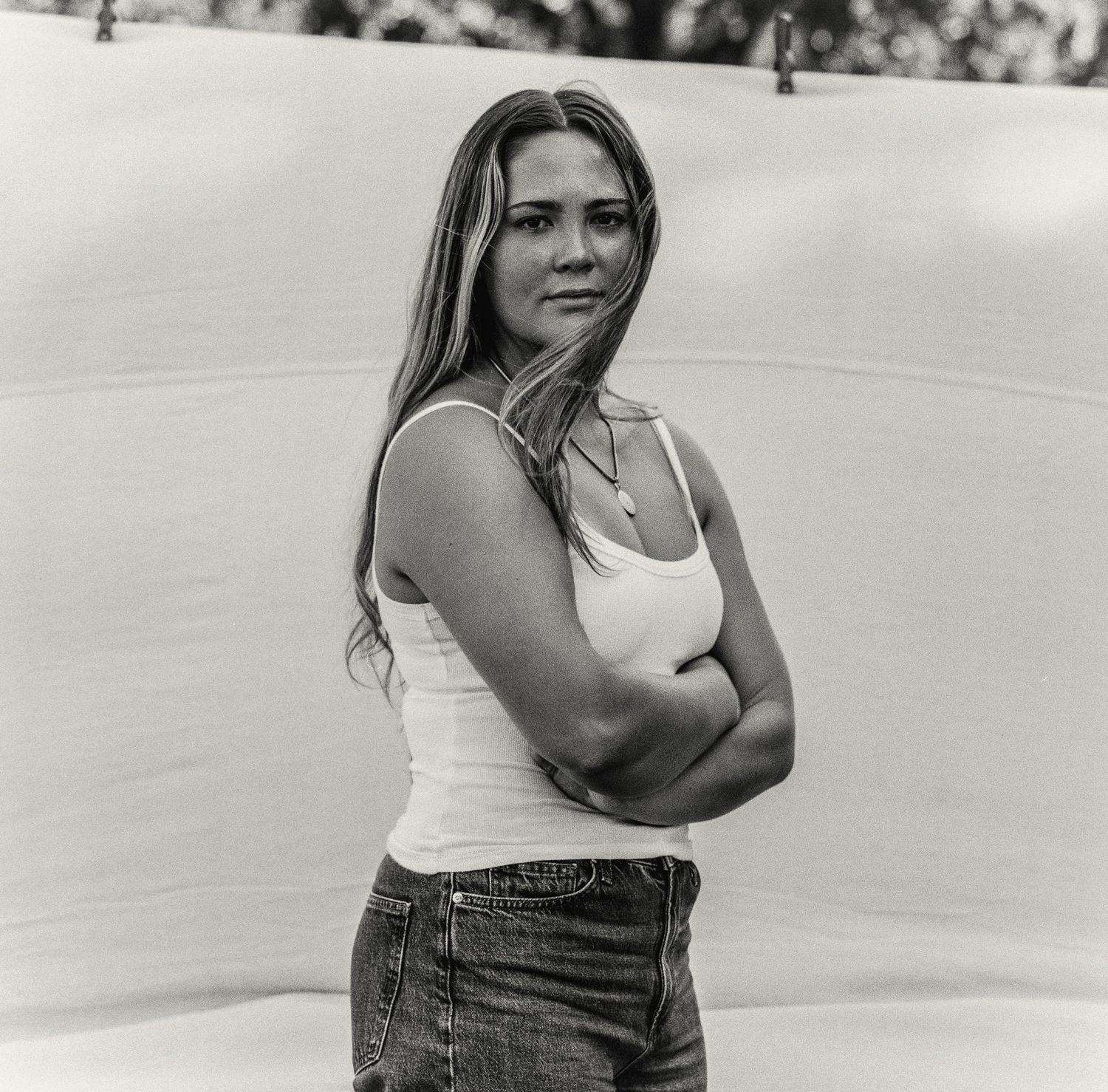
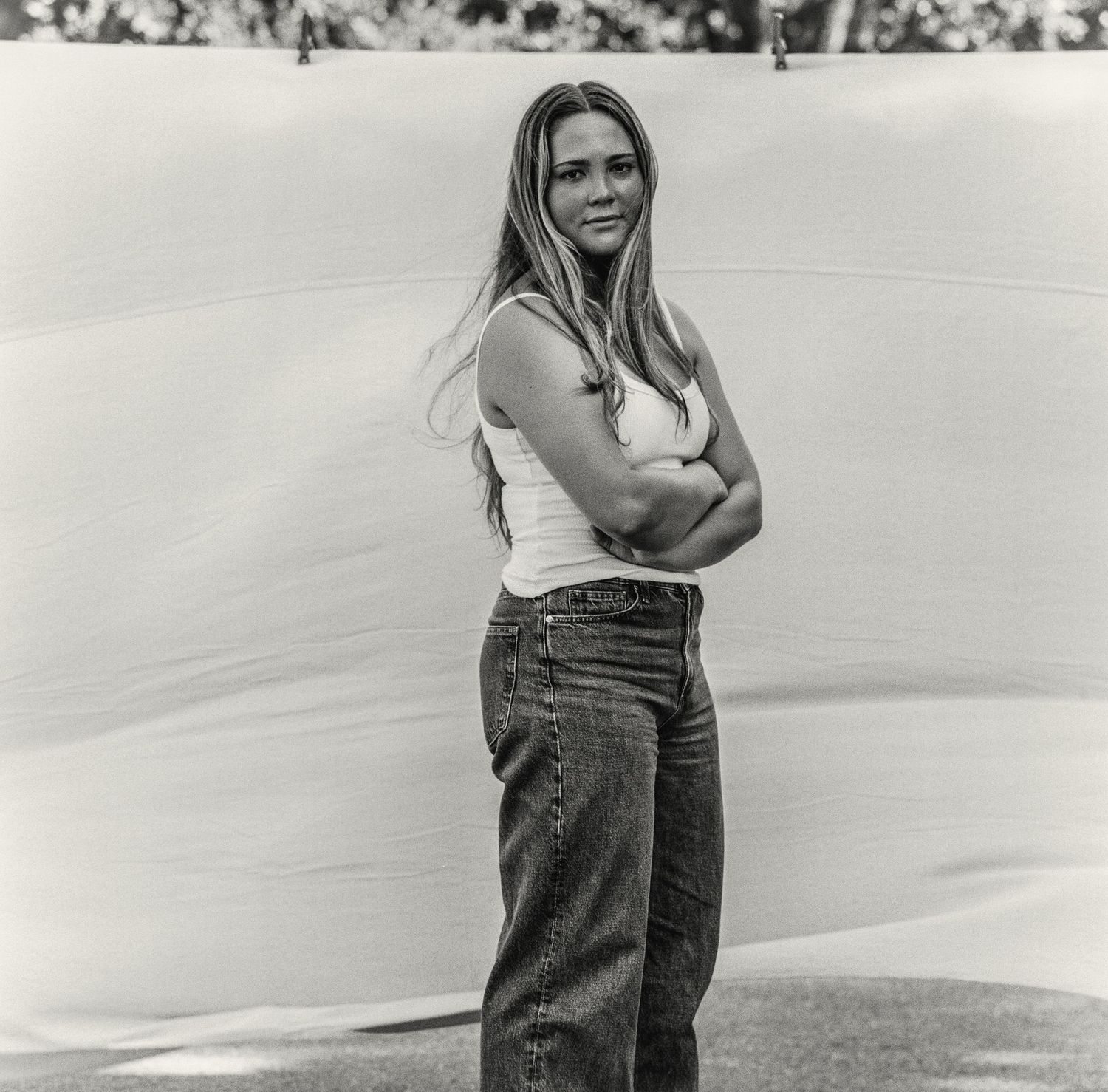
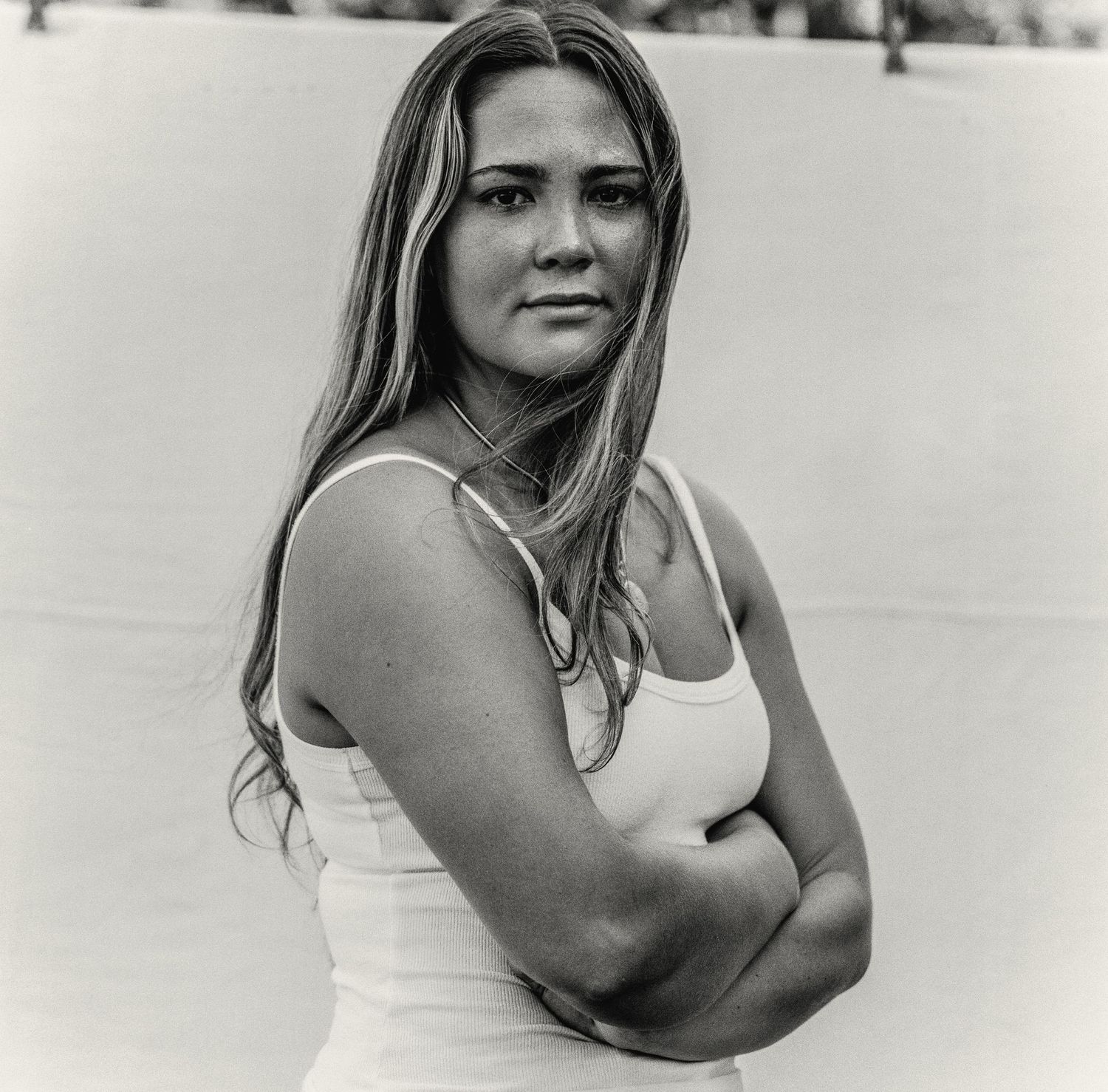
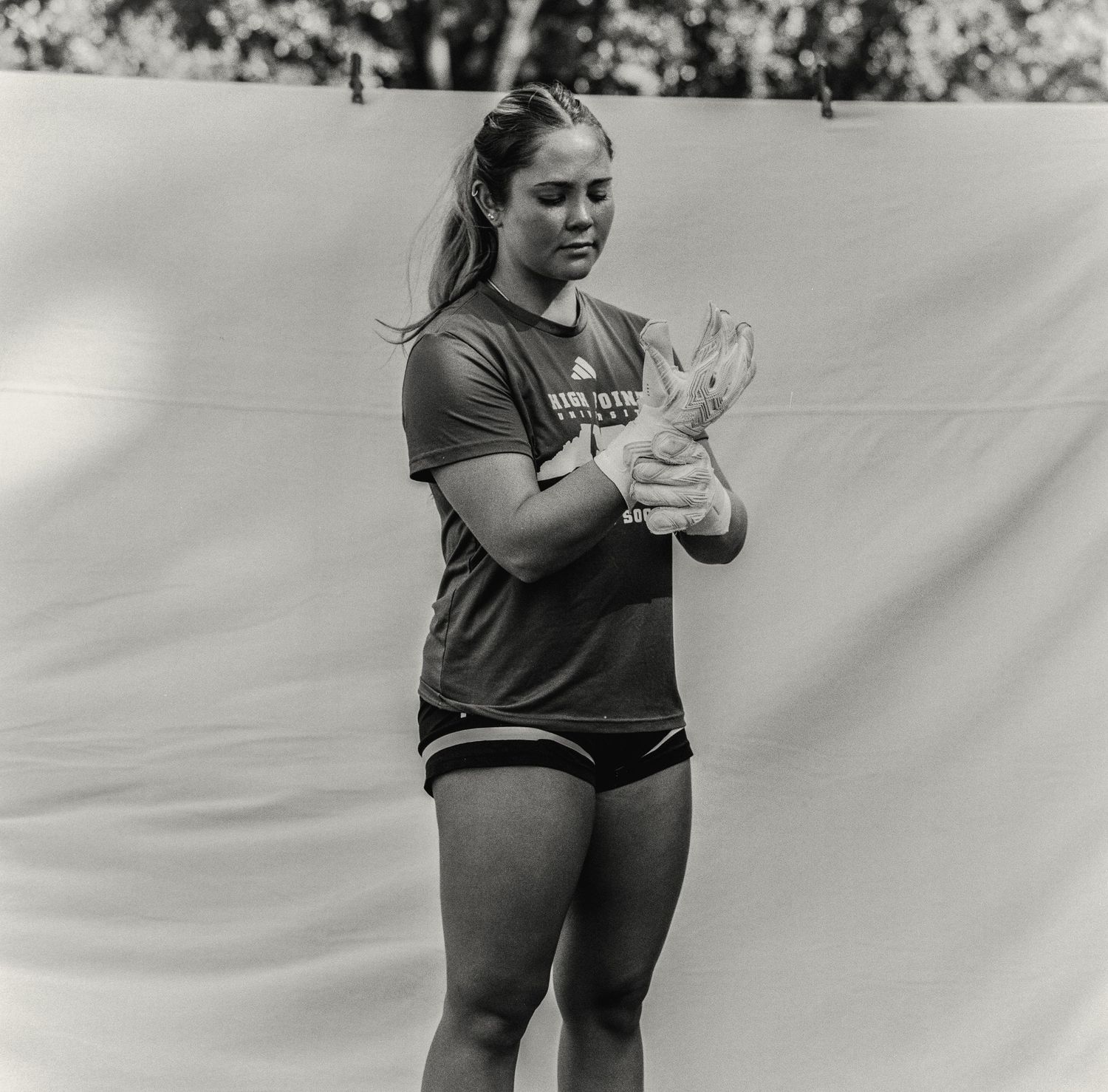
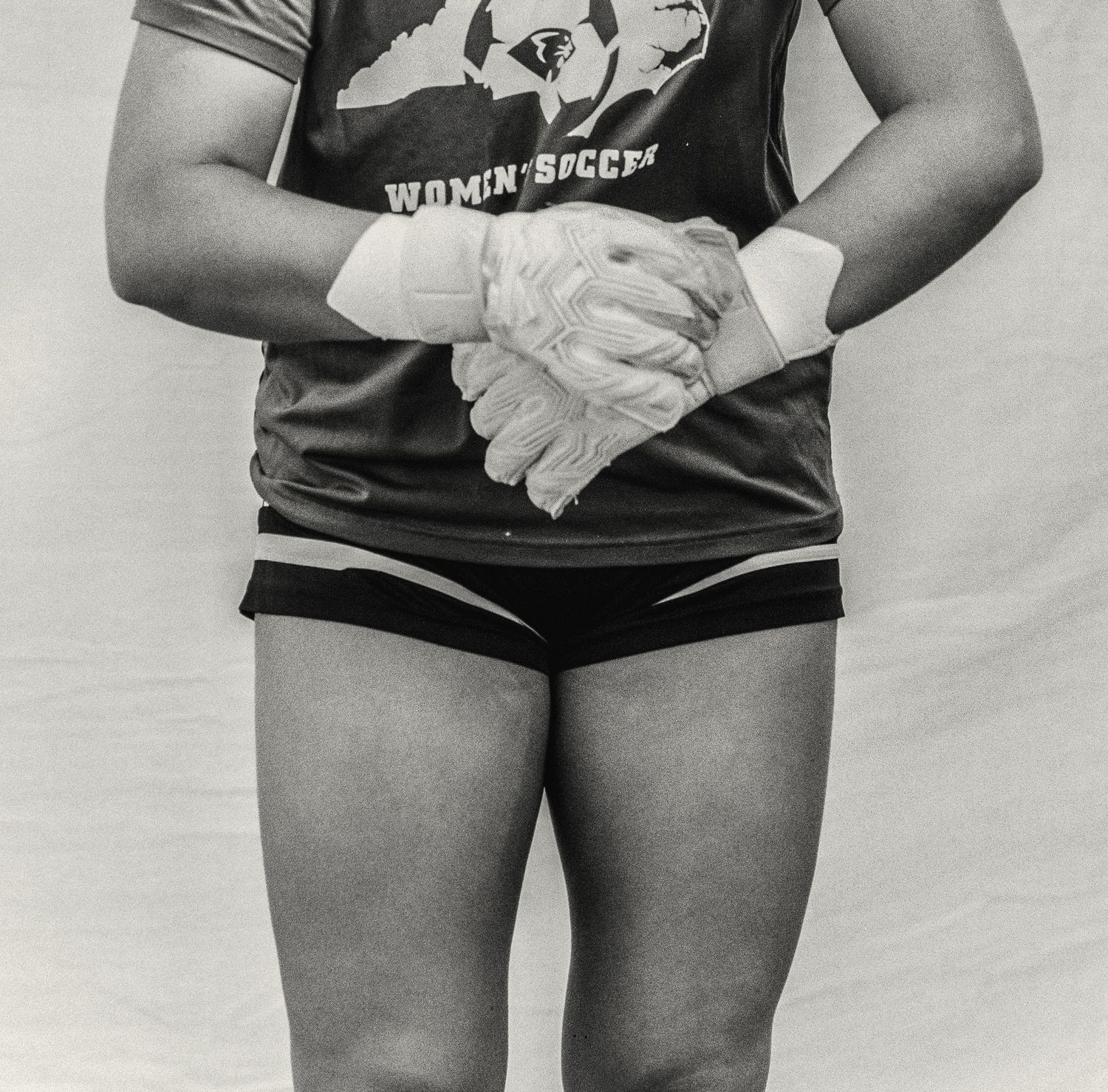
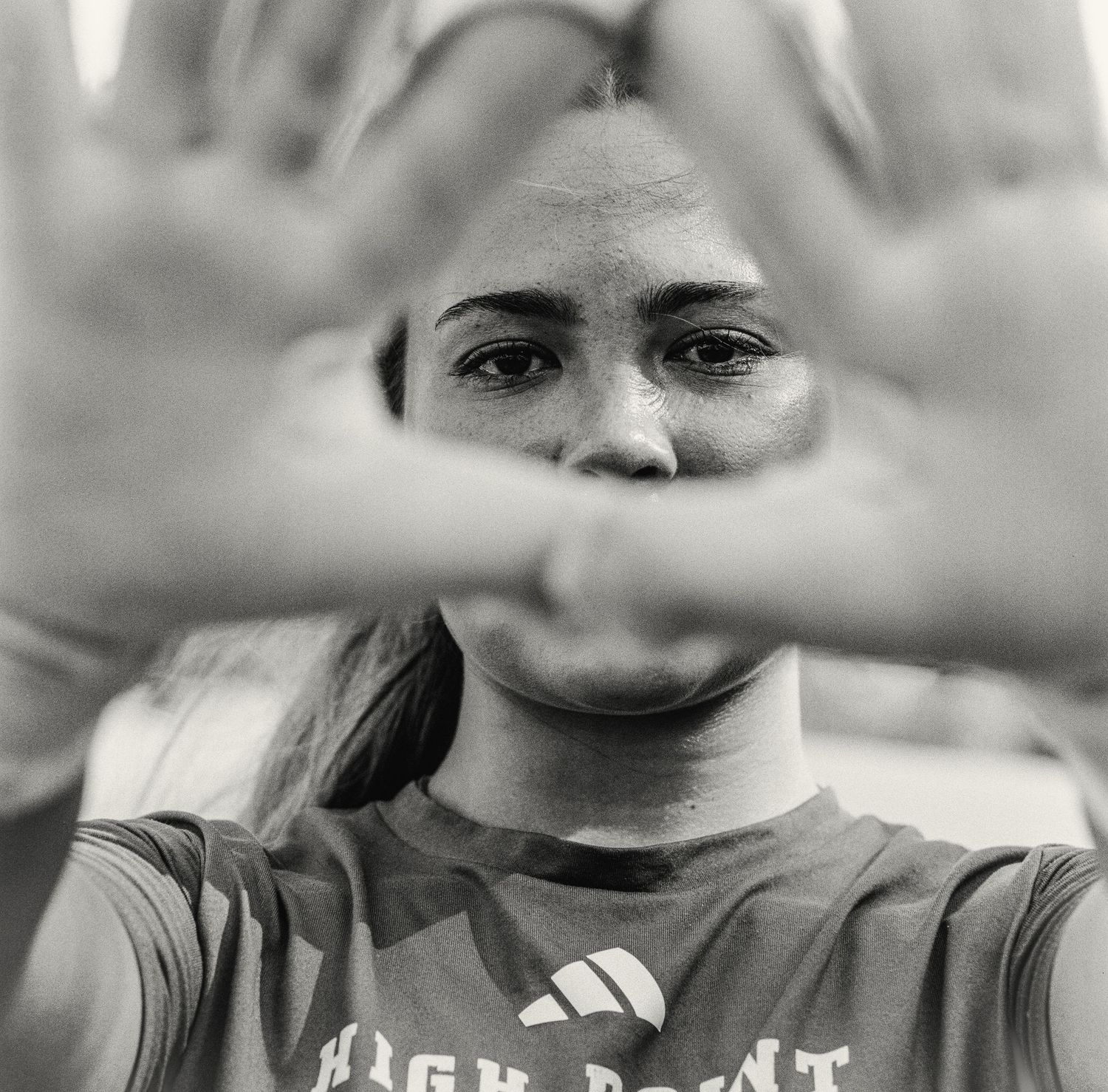
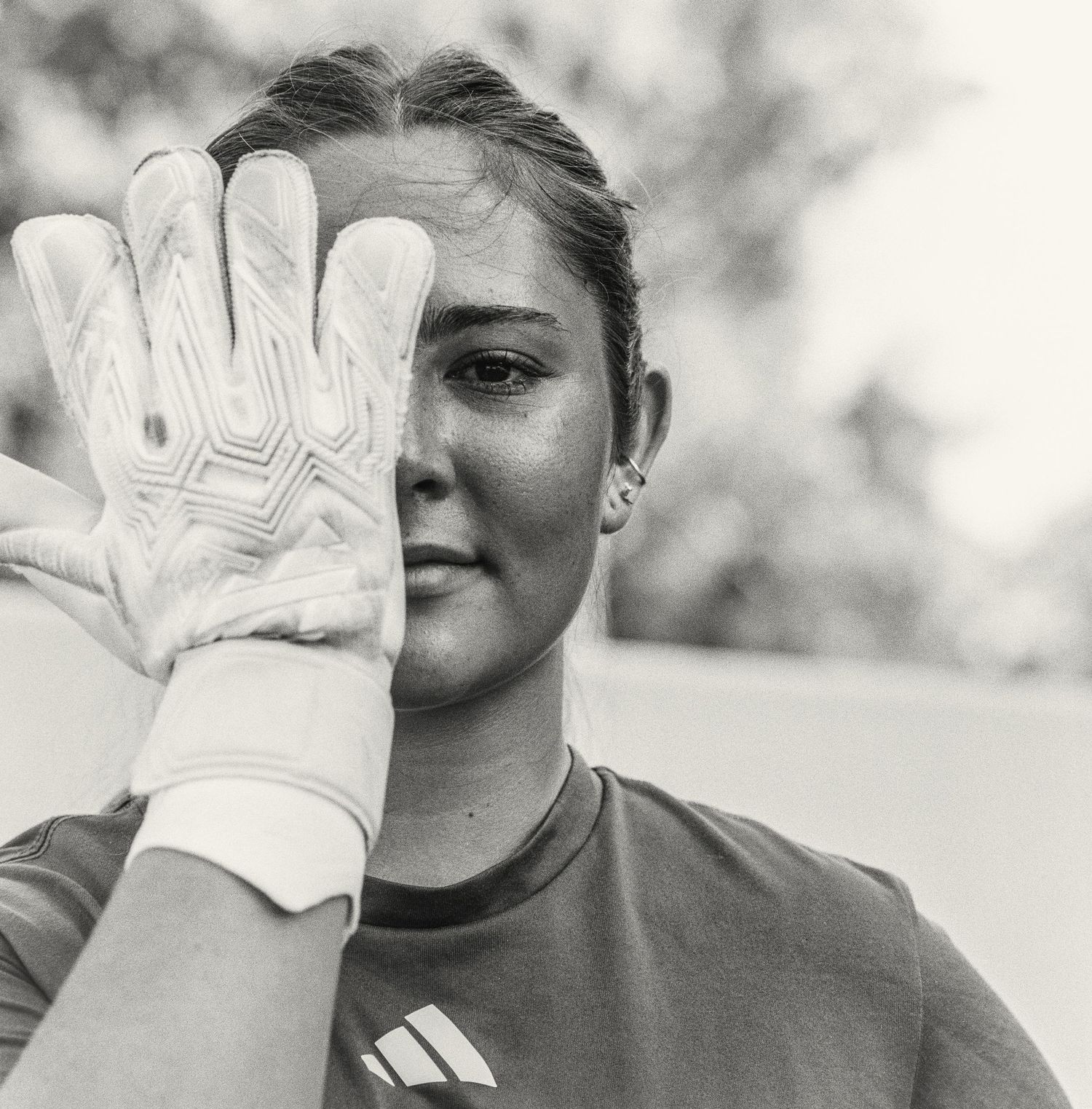
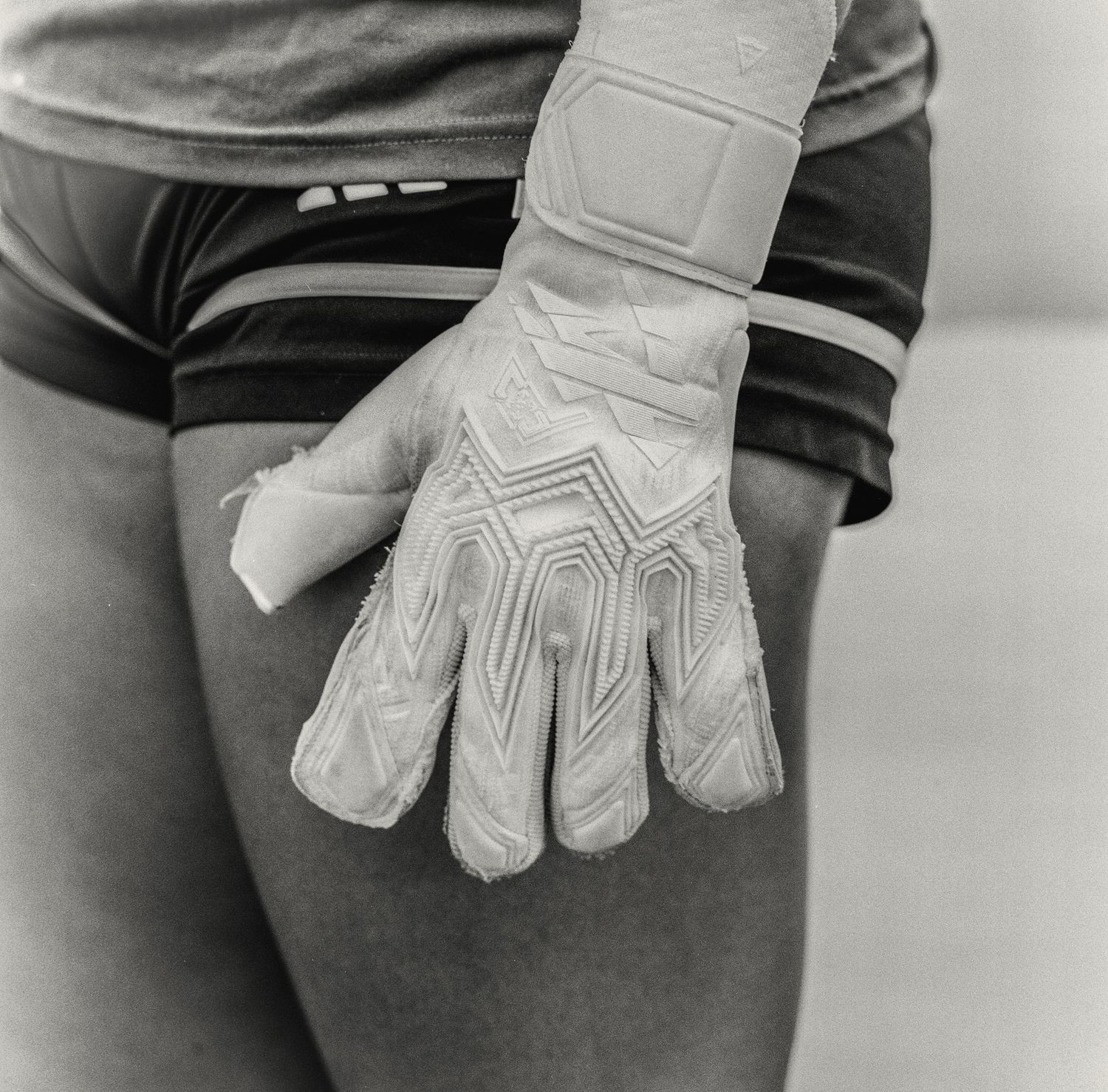
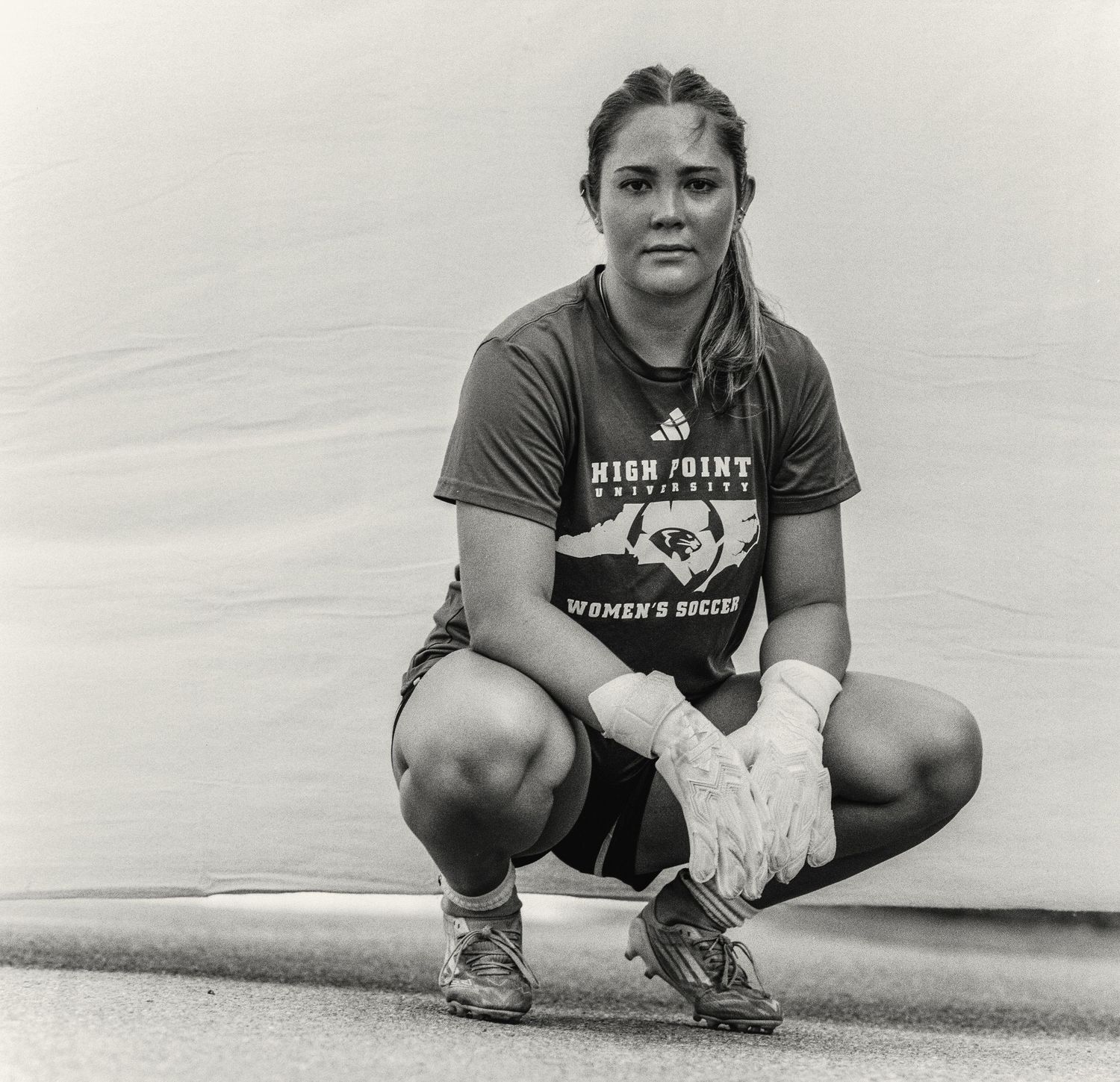
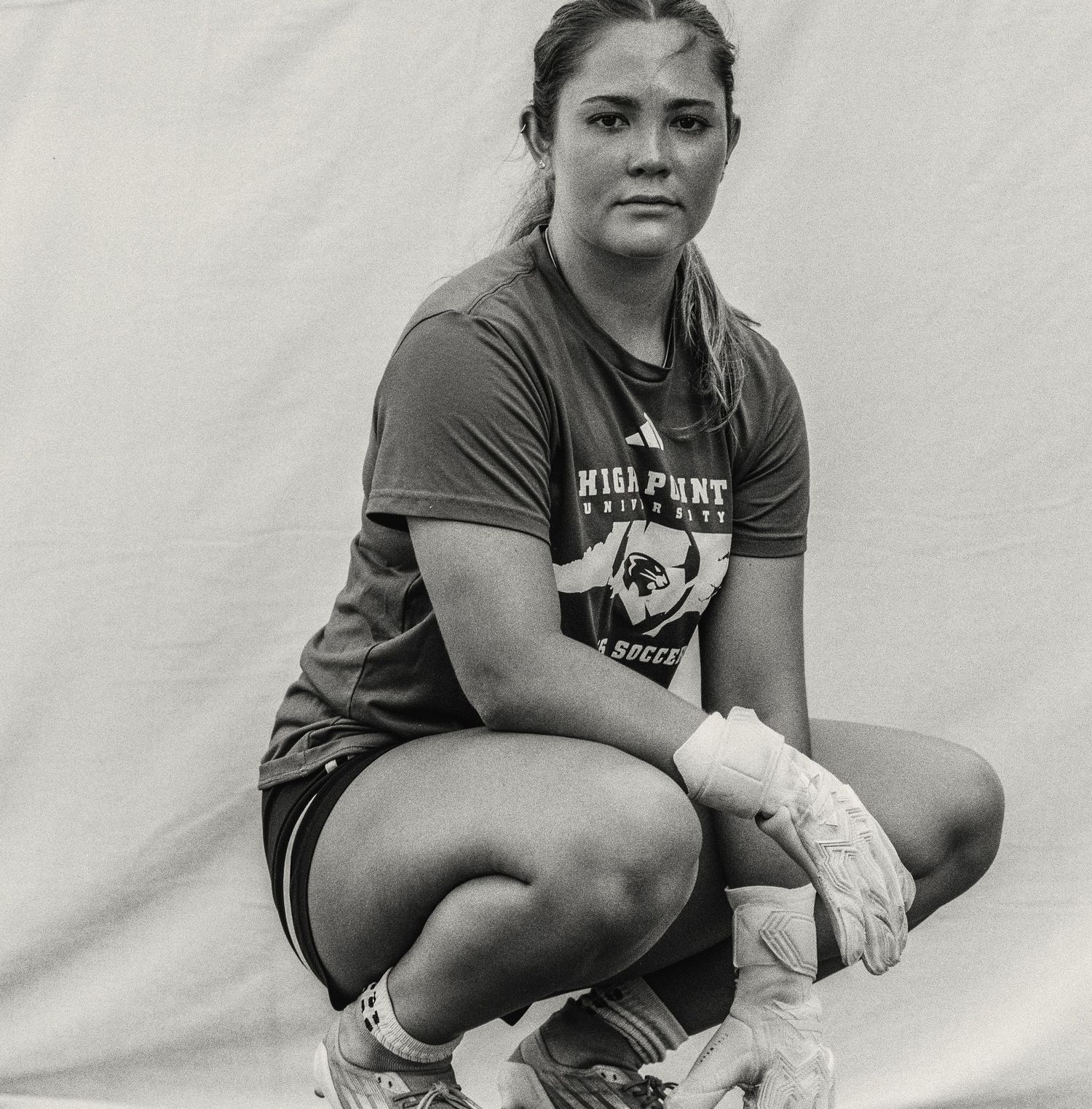
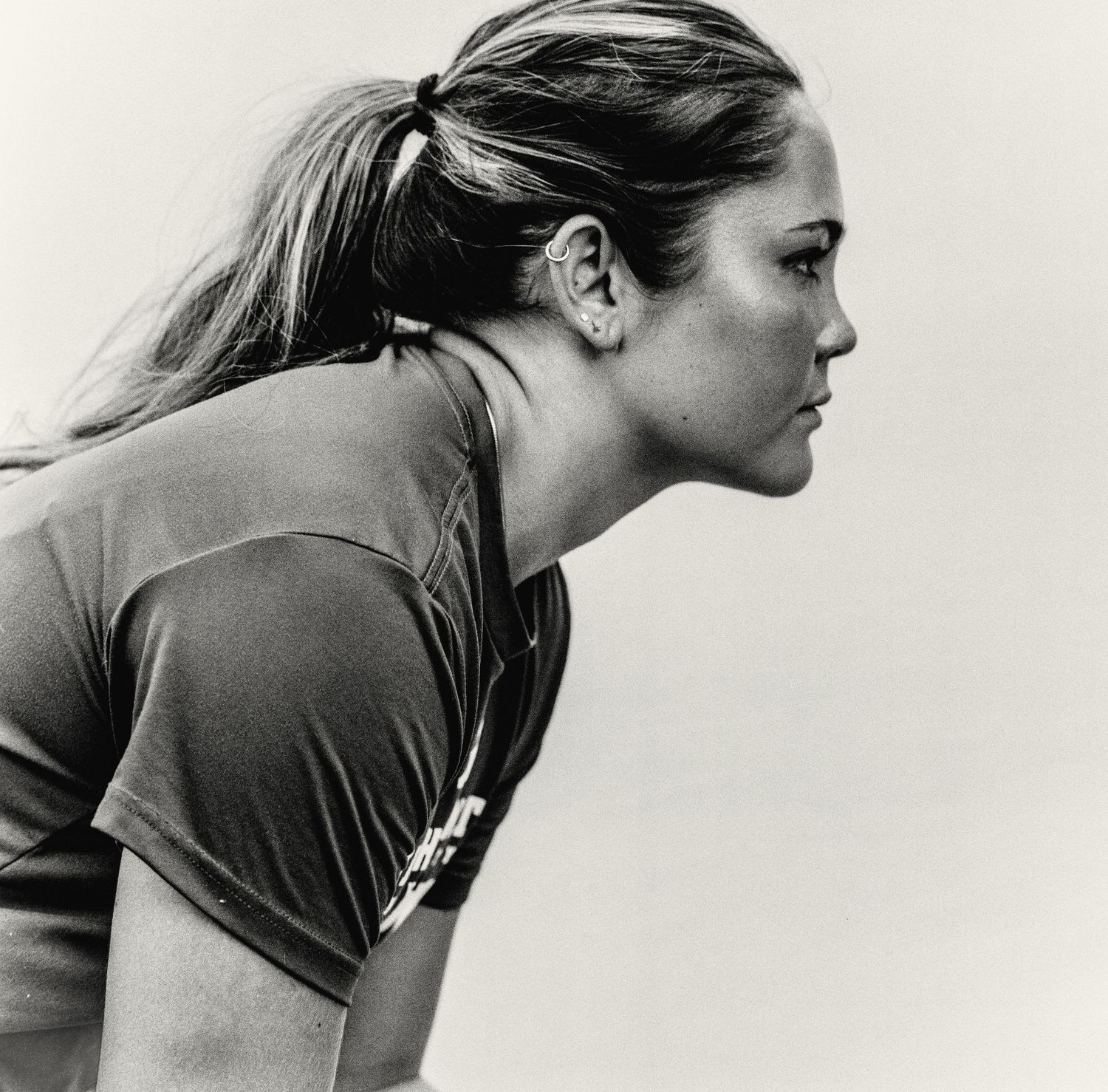
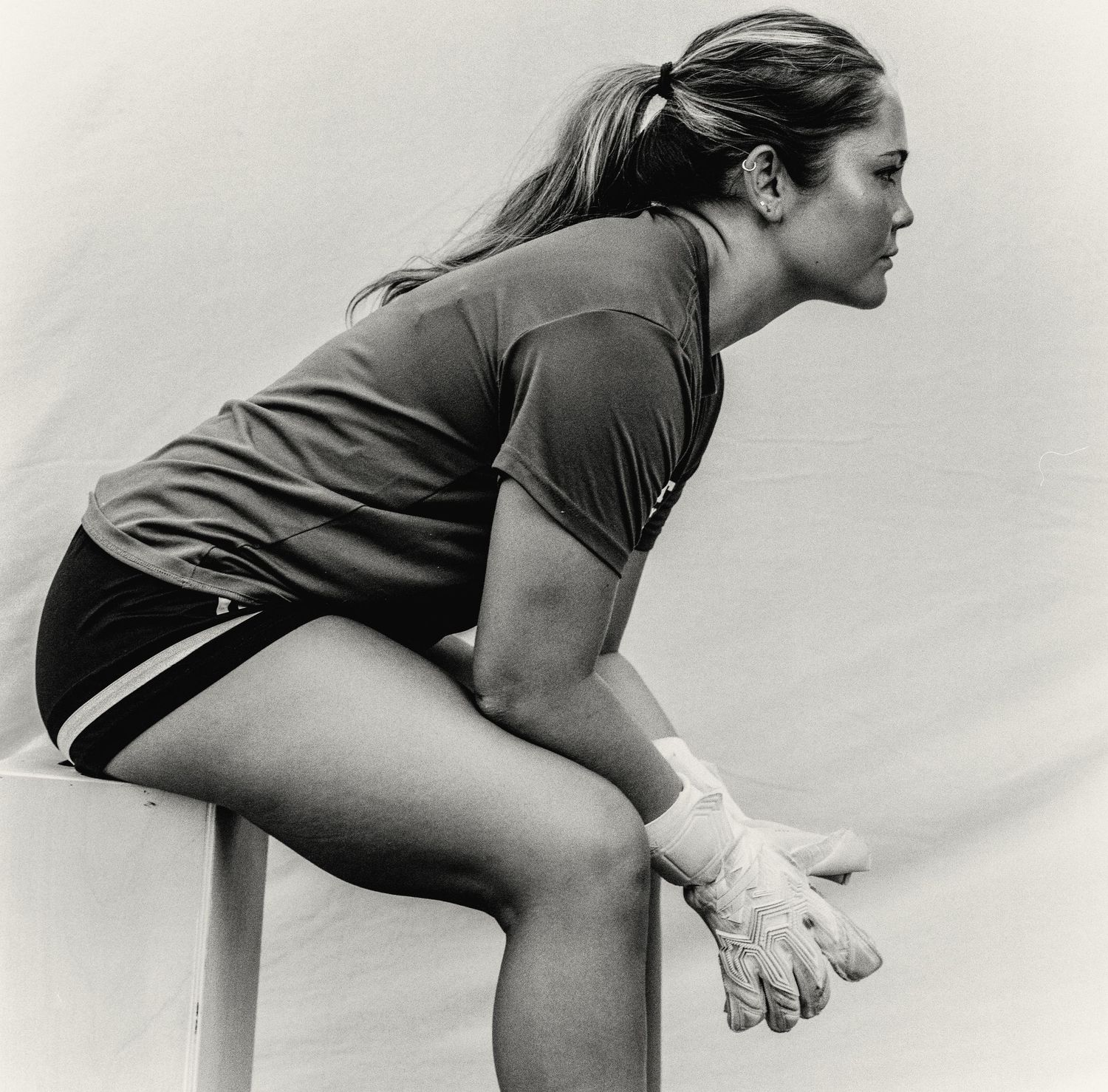
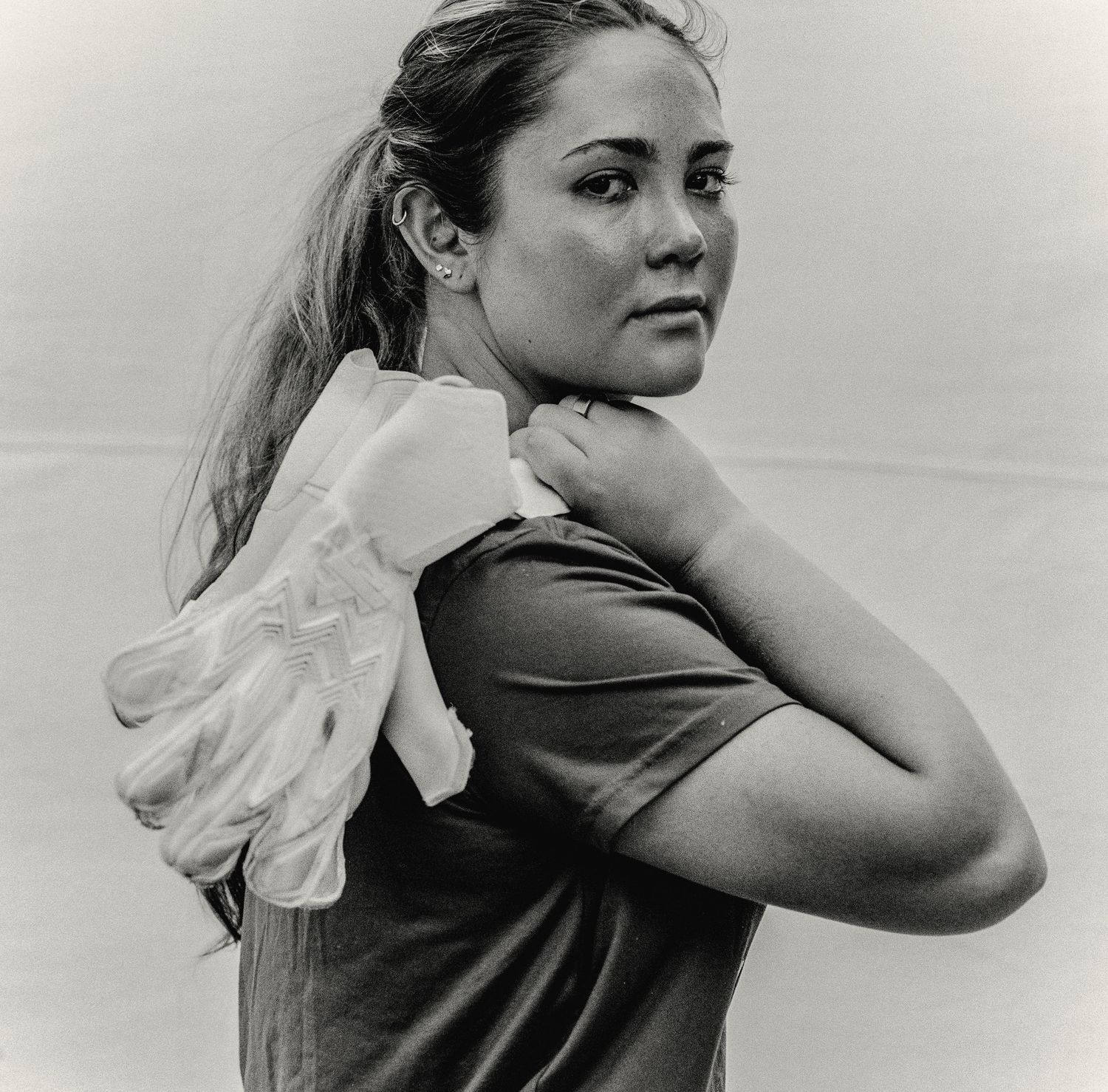
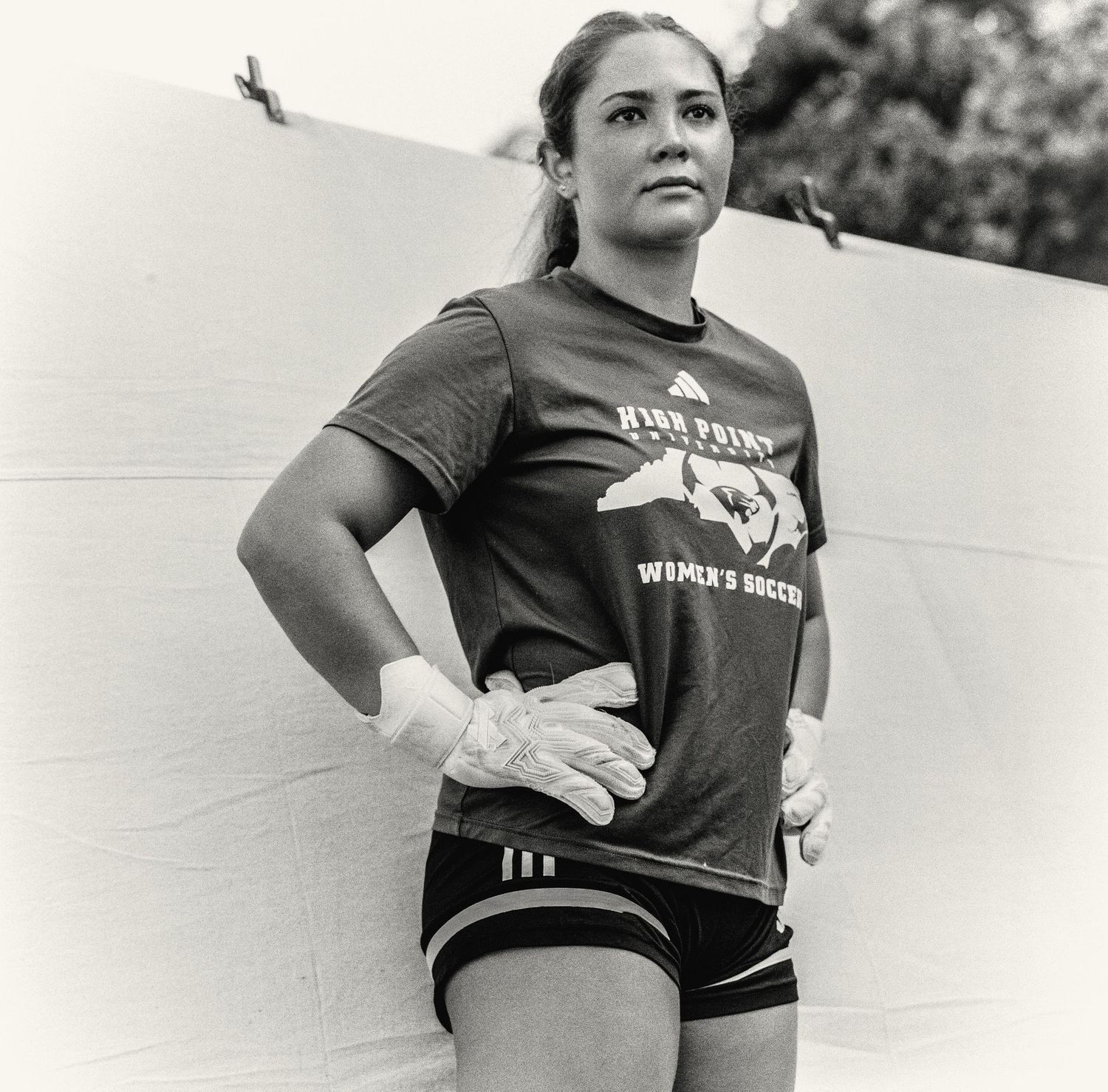
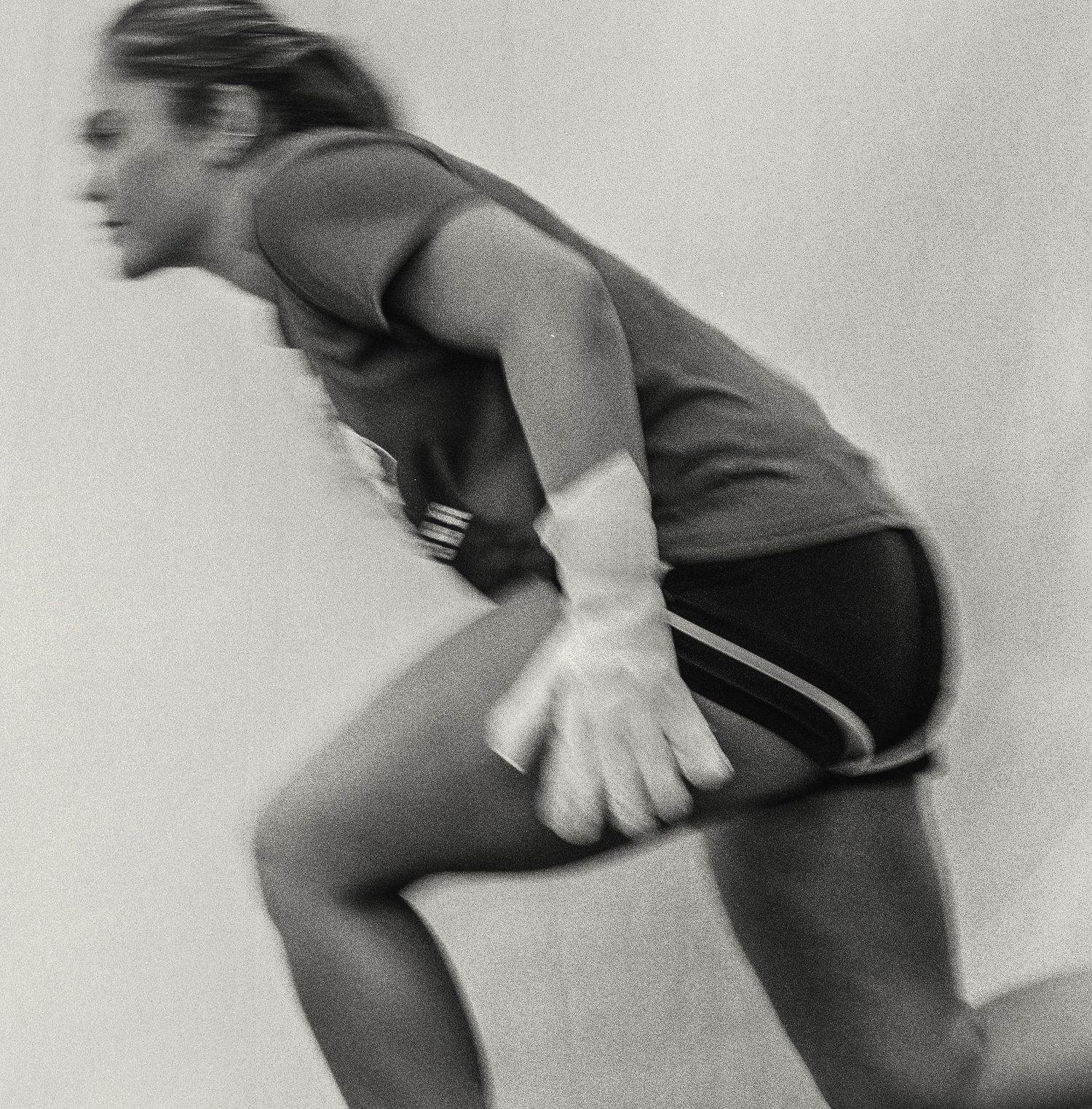
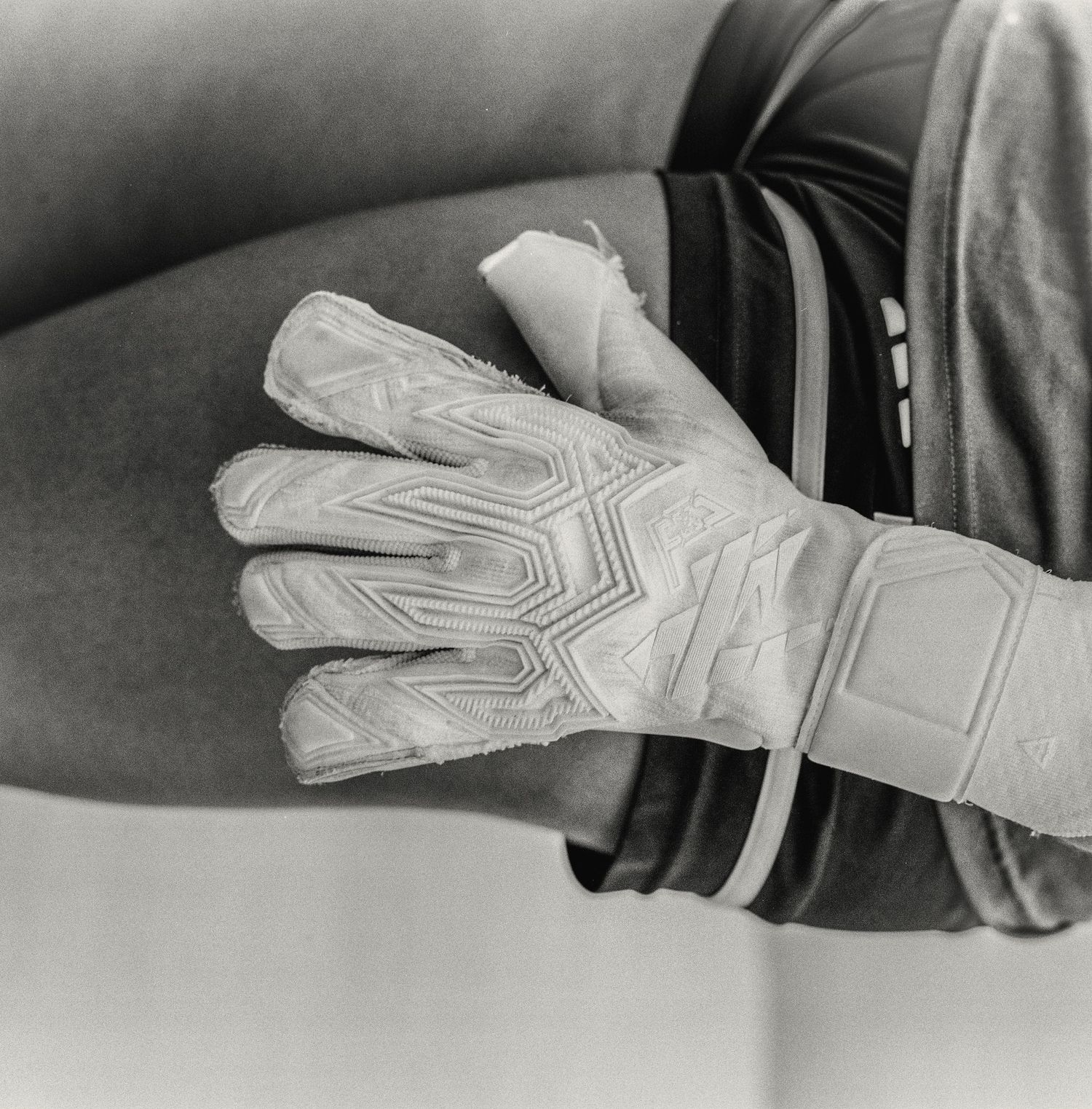
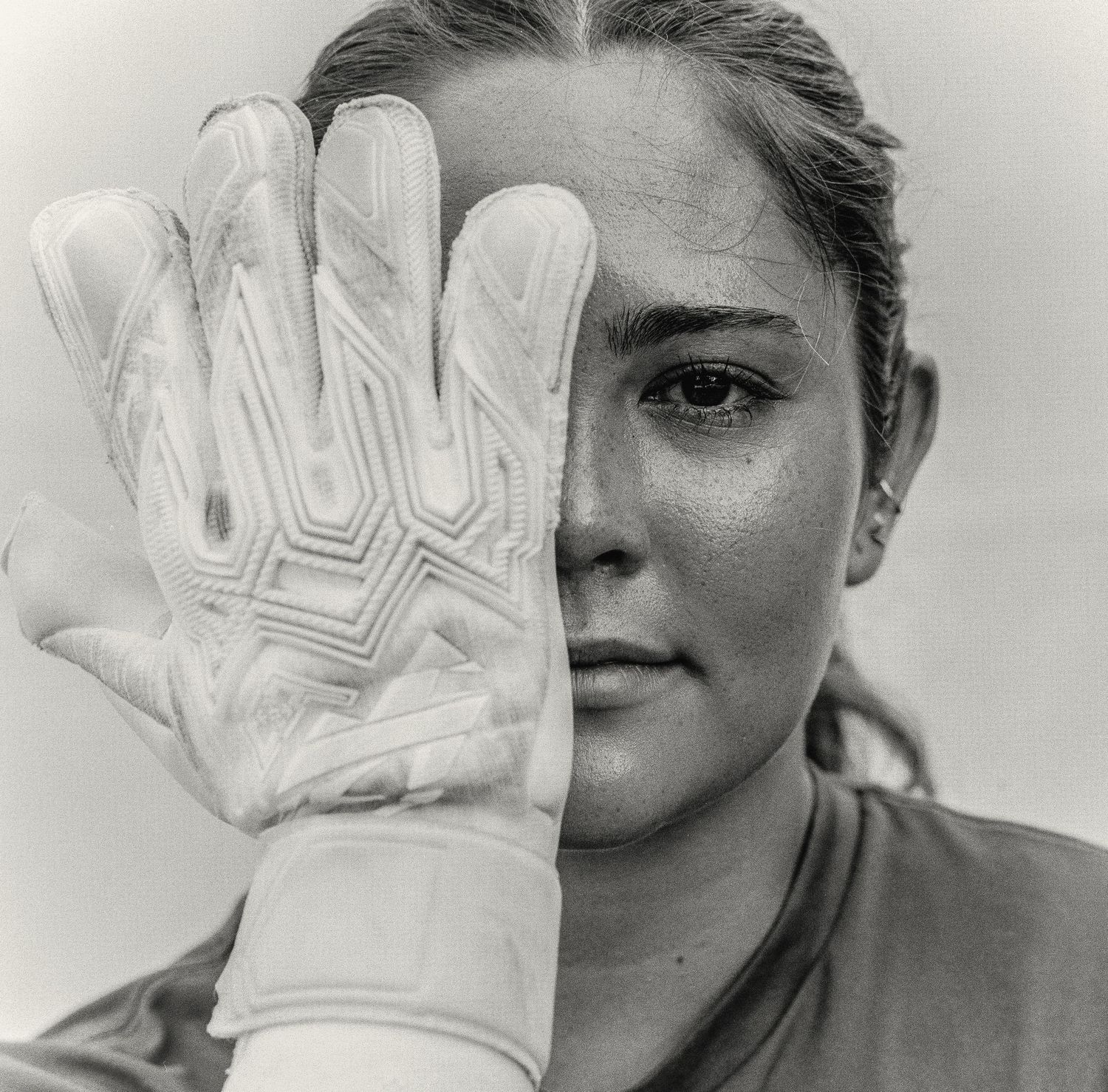
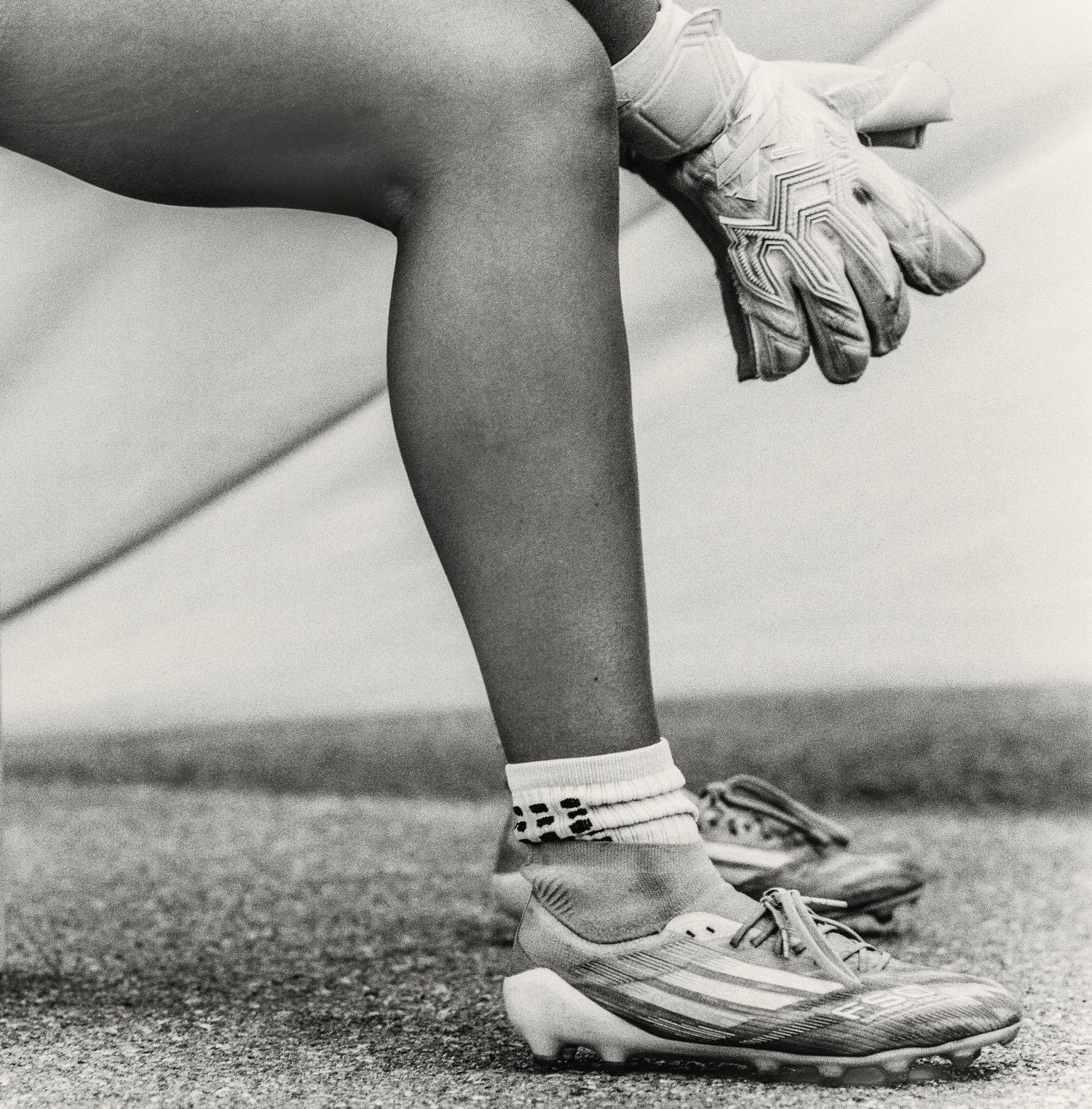
MAMIYA c220 / TRI-X & T-MAX 120 FILM
I Would Say Be Brave.
AN INTERVIEW WITH KYLEE WILLIAMS
by
Respect Their Game
Welcome to the Respect Their Game — a collection of conversations with women athletes about commitment, identity, discipline, and the interior life of sport. These interviews are part of the ongoing portrait project documenting women in sport through film photography and their own words. KylEe Williams shares her journey as a Dallas-born Division I goalkeeper at High Point University, detailing her training, STEM studies, and emotional transfer portal experience.
Please introduce yourself: your name, sport, position, all that stuff.
I’m Kylee Williams. I’m from Dallas, Texas. I am a goalkeeper at High Point University in North Carolina, and I play soccer.
Great. So how did you first get into soccer?
I started at a pretty early age, around probably five or six. We were originally in Allen, and then halfway through kindergarten, we moved up here to Dallas. And then, yeah, I just kind of got thrown into it. I joined a league through my elementary school, and basically they went through each player and was like, who can catch a ball? And I was the only one. So then that was my position that I got thrown into.
Did you just stay with that position your whole career?
Yeah.
Do you remember the moment you realized soccer could take you beyond high school?
I don’t remember the exact moment, but my dad, he played tennis in college at the University of Texas at Austin. And I think just athletics overall was a big drive in our family. And we overall just have a very athletic family. My sister, she’s involved in dance and cheer and all of that. But yeah, there hasn’t been a specific moment, but I would say the turning point was probably COVID, honestly. I think that time it was like, “Hey, we’re getting really serious about it.” And for the longest time I was on a, I guess, classic league team, and I had so many good relationships built with that as well. And we started training with this guy who trains goalies out in Plano, and he was like, “Hey, if you’re really serious about this, we need to change teams. We need to do this, we need to do this, that, and the other.” And that's kind of what the turning point was.
For people who have never played soccer, what makes goalkeeper such a unique position?
I think that’s a great question. I think what makes just a goalie a very unique position overall is just kind of the different aspects of the game. You kind of see it from a different point of view compared to other players. You have people who are constantly running up and down the field and their energy is exerted and they’re exhausted. So a lot of, I guess my job, is not just saving goals. A lot of my job is communicating and that’s really huge during the game especially. And I think just with that communication is very unique and you’re able to see the field from a whole different point of view compared to everyone else.
What are the skills that separate a good goalkeeper from a great one?
I mean, athleticism is definitely huge. Confidence is another key component for sure. But I would say those are the top two. And discipline is also a very huge thing that’s part of it.
Do you see goalkeeping more physical, mental, or technical?
I mean, you can definitely see it through all those different lenses. I think overall, I dunno. I mean at the college level, I would say it’s very technical. Technical and mental are probably the biggest too.
I remember playing goalkeeper as a kid ,and I hated it because I felt so responsible every time the other team scored on us. And so for me, I think of it being so mental, being a goalie, and if you’re not mentally tough, it’s a tough position. What’s something people misunderstand about the position?
I think there is a lot of pressure, especially at the college level. There is a lot of pressure, especially if you’re the number one compared to the number three or something like that. But I would say yeah, pressure is just a huge thing overall.
How many goalkeepers, on average, do college programs carry on a squad?
Three to four. This past fall we had three. And then this up and coming fall, we’ll have four.
Goalkeepers often spend long stretches waiting for action and then have to react instantly. How do you stay mentally engaged?
I mean, what’s also emphasized, especially at the college level, is moving with your defensive line. So if we’re up in the attacking third, you have to be up with them and at a certain distance, I would say. So that’s probably what keeps me mentally sharp for sure. Just making sure I’m moving, positioning myself as the game is going on.
Makes sense. And how do you recover after giving up a goal?
A really big thing, especially with my team, we kind of have this goldfish mentality rule where it’s like, “Hey, if it happens, there’s nothing you can do about it now, but what can you do that will impact the next play?”
Do you think goalkeepers have a different personality than field players?
Yes, actually, this is actually kind of funny. A lot of the time. I would say goalkeepers, personality wise, everyone kind of thinks you’re a little weird, especially like, oh, you voluntarily chose to be here and have 60 mph balls kicked at you. But yeah, no, a lot of the time it’s been that weird, I guess, personality trait. But yeah, when I first transferred over to High Point, it was actually really funny. They were like, yeah, we didn’t know what to expect with you. We didn’t know what you were like, and you’re just funny and normal and a little weird.
What's your favorite part of playing the position?
I think, honestly, like I said, pressure is a huge thing, but I love playing in the high pressure moments. For some reason I have just loved it and I’ve always done pretty good at it, I hope. But yeah, the high pressure moments, especially if it happens very fast and their attacking third and somehow the ball gets loose and it’s like a counter attack. Those are kind of my favorite, I guess, phases of the game.
Is there a specific save you’ve made that you’ll never forget?
Yeah, actually in high school and to this day, my dad actually will tell me that’s the best game I’ve ever seen you play in high school. It was my senior year and we were playing in the state, I guess not championship, but in the different rounds of that. I think it was round of 32 or something like that. We were in or round of 16. And my high school specifically Woodrow Wilson had never gone past, I think the second or third round, and we were playing Frisco High School, and it was just a huge game, especially Texas, I would say soccer is a huge sport, pretty much like football. So there was a huge crowd there, which was amazing. And it was the second half of the game, and it was tied. It was raining earlier, so we had a lightning delay, and then we finally got to play and I was on the other side of the field, which I normally am not, and I had to serve a ball into the other 18 for my teammates.
I don't know why, but my coach thought that was a good idea. And again, it was raining earlier that day. So I had gone to kick the ball and I was on the other side of the field keep in mind, and I slipped and I was like, holy crap, what am I going to do? And the ball went straight to the forward that was right in front of me. Oh no. So I basically just booked it to the back of my goal, and I had two of my offenders stole her and she kicked it from the 50 yard line. And to this day, I actually dunno how I saved it, but I timed it perfectly where I was super manning in the air and I tapped it where it wouldn’t go in the goal, but I had just made it in time to get back to my 18.
It was insane. Yeah, one of those “Uh oh, my bad guys.”
So on the training and development, what does a typical training week look like for you?
I think it’s different whenever I’m in school versus home. At school, we’re training every single day. We’ll maybe get one or two off days depending on what the game schedule is like. Sunday we would have off, because usually for my conference, our games are Wednesdays and Saturdays. So Sunday we would have off, Monday would be kind of our hardest training day. And then Tuesday would be match day minus one, and then Wednesday would be a game. And usually on the Mondays, and I want to say, yeah, Mondays and Thursdays are usually our weight training days as well. So we're doing soccer on top of weight training. And then Thursday comes, it’s kind of like a low minutes practice. If you didn’t get enough or didn’t get a certain amount of minutes, about 45, you’re training and pretty much getting back intact with the rest of the group. And then Fridays would be match day minus one where it’s pretty light and you’re going over just a few things like corner kicks and stuff like that. Friday or Saturday would be another game. And then yeah, Sunday we would have off.
Is there an aspect of your game that you are always trying to improve?
Distribution has actually been a huge part of goalkeeping, and a lot of people may not think that, but it’s definitely huge. So that’s one aspect that I’m constantly trying to get better at. When I’m, I'm home, I’m training three to four times a week down in Plano and I’m kicking balls, I’m catching balls, I’m throwing them. It is everything.
Are there any professional goalkeepers you study or admire?
I would say the top two that I really admired growing up were Tim Howard and Hope Solo. Those were my top two.
What part of goalkeeping took you the longest to learn?
Longest to learn, probably either crosses or extension diving. Just with extension diving, it requires a lot of power and you kind of have to just time it perfectly. Same thing with crosses, it’s just about being patient and just kind of timing it and making sure you’re getting there before anyone else.
What is extension diving? What does that mean?
Basic diving where you’re diving to the ground or it’s something within two to three feet distance. And then extension diving, I would say is kind of like a mid-height ball or an upper 90 kind of ball. So those are definitely hard to train in.
What surprised you most about the jump from youth soccer or high school to D1 soccer?
The amount of talent was actually pretty crazy to me. And the way that I’ve always really liked the fast pace of soccer. And then once I got to the college level, it was even crazier than I thought. So I would say, yeah, when I got to college and made that jump, the pace of the game was just completely different.
What does the average fan not see about being a college athlete?
I would say the amount of personal training you go through. I mean, we’re training with the team, and we’re training with the goalie coach in our team, but it’s also what are you doing to put in the work and what are you training yourself to be better at?
And people just think that you just go through the motions of going to practice, going to games, doing school, but you actually have to do even a little bit more.
And how do you balance academics, training, travel, and everyday life? That seems like a lot.
It is, especially in my major. I am a STEM major, so it’s definitely harder, honestly. I go through a calendar and I put things in my schedule to make sure, oh, I have time for this, I have time for that. And I guess just discipline. Discipline. Especially with my roommates, we have to keep each other in line and be like, Hey, did you do this yet? And you're like, oh, no, I haven’t. But yeah,
So are your roommates athletes too?
Yeah, they're all on my team.
Is that pretty common?
Yeah, majority of the time it is pretty common. Or sometimes, I know a lot of schools will room you with a tennis player or a golf girl or a volleyball girl. Whenever I first went to High Point, there were no other soccer rooms available, so I roomed with three volleyball players.
What has college soccer taught you about yourself?
Probably that I can take a lot more than I think I would say. It does get pretty emotional at times, and especially at the college level, it gets very emotional. So I think just dealing with that has been the biggest change in everything.
You’ve experienced transferring as a college athlete. What was that process like the first time?
Yeah, so I only went through it once, but it was incredibly emotional. I mean, I remember I hadn’t even made a decision yet if I was leaving my previous school and I was like, I don’t know. I love all my friends here. I love the school. Do I really want to step out of my comfort zone? And ultimately that ended up being the best decision for myself, especially for my mental health. But yeah, going through that was incredibly emotional. There are probably a handful of times where I was just sobbing, crying like, oh my gosh, what if this doesn’t work out? What am I going to do? I mean, doubt kind of creeps itself in for sure.
Are there any misconceptions people have about the transfer portal?
Just because you went to a big school doesn’t mean you’re also going to end up at another big school, if that makes sense. I mean, it’s different for everyone. Especially my original class at the University of Houston, there were 10 of us, and now going into my senior year, there’s only one from the original class, which is insane,
Yeah, but I mean, it was a new coaching staff and everything, so a bunch of girls from everywhere. But yeah, that's been crazy, but it’s different. So one of my friends, she was at the University of Houston, and then she ended up transferring to Tulsa, which is a pretty good and pretty big school.
And then me and another girl, we went to a smaller D1 school. She ended up going to Elon University up in North Carolina, and now I'm at High Point, but we get to see each other sometimes. So it’s kind of different for everyone,
What are the factors that matter most when deciding whether school is the right fit for you?
I mean, your major is definitely huge. I mean, you’re going to be playing soccer for sure, but what are you going to do after that? So I would say your major is very key, kind of how you fit in with the girls. Culture is very big, and that’s a really big focus, kind of wherever you go. So whenever I was having calls with different coaches and stuff like that, one of my first questions was like, what’s your team culture and who are the girls, what do they like to do? What are their interests? So it was, yeah, academics, culture, and just kind of how I vibed with the coaching staff whenever I would call with them. Those were my big three whenever I was deciding.
What advice would you give a younger athlete who’s considering entering the portal?
My advice would probably be take a chance on anything. Don’t hesitate to reach out to literally everyone. That’s pretty much what I did too. I mean, yeah, you’re getting emails in, but it’s also good to kind of get yourself out there. So I would say just be brave in emailing as many schools as possible that fit your agenda and what you’re kind of interested in. But yeah, I would say be brave.
Okay. So when you enter the portal, it’s not as if you’re just waiting for people to contact you. You have to take some initiative. Can you just sit there and wait?
You can. That’s what I did for a little bit. Honestly, I was just kind of like, I don’t know what to do. I don’t know what to think. So on the first two days I kind of just sat there and let some come in and I would kind of be like, okay, well this sounds good, but this school hasn’t reached out. Let me reach out to them.
Is there anything you wish you had known before going through the process?
Honestly, there wasn’t anything that I wish I had known. My team at Houston, there were a bunch of girls that had transferred in and I asked them for their guidance and help, and they had email templates for me. They were like, just use this, just change your name and whatever. But yeah, a lot of my old teammates were really helpful in that area
What has soccer required you to give up that most people don’t see?
I had to give up, I guess a lot of personal time with friends, sometimes even with family. I would say those were a lot of conflicts. I would have a tournament around Thanksgiving or something like that where we have to stay close to home. So yeah, a lot of sacrifice. In your personal life,
Are there any moments when the sport feels lonely?
I mean, there’s always going to be, I guess that kind of feeling. Especially if something was your fault in a game. I think that can easily turn the brain to like, oh, this was your fault. You need to be alone. You don’t deserve to do X, Y, Z. But even if I’m in that kind of funk, my roommates have just been exceptional, honestly, and they’ve really pulled me out of like, Hey, it’s fine. Don't worry about it. We’re moving on to the next game or the next thing. Don’t worry about it.
That’s good. And what keeps you committed when things get difficult?
I would say when I was younger, especially for my height, a lot of people did not consider me to be a good goalie or even be able to go to the next level. There was a lot of doubt in that. So usually what kind of drives me is just people used to doubt me and I kind of liked to prove them wrong.
Do you consider yourself an athlete first, or is soccer just one part of who you are?
I would say soccer is one part of who I am. I ultimately want to be a vet, and right now I’m actually doing an internship, but that’s pretty much my number one concern at the moment. And right now I get the opportunity to play soccer, but there’s a lot more to me than just that.
And what has soccer taught you about resilience?
I guess soccer has taught me to just keep going and keep fighting for what you want and what you’re able to accomplish with your team. And just I guess having that drive overall,
What do you think your teammates would say you bring to a team beyond your play on the field?
I’ve been told that I do bring a lot of culture to the team. I’m really big on relationships and stuff like that, so my number one concern is always me checking in on a teammate or like, Hey, let’s go get lunch. If we have a class together, let’s sit together. Culture has always been a big thing for me.
What do you hope people understand about goalkeepers after hearing your story?
I hope people understand that it takes a lot of work and a lot of resilience in everything you do, and it takes a lot of sacrifice, believe it or not.
Is there a looking forward after college for you and soccer?
As of right now, I have a fifth year. There hasn’t been a full decision whether I take it or not. I think if the opportunity presents itself, I think I would take it in a heartbeat.
Right now you’re in the portal for a fifth year, or that’s in addition to?
That’s in addition. And with the fifth year, there’s also a new rule that the NCAA just passed where everyone gets a fifth year now, they’re trying to prevent 26 year olds playing with 22 year olds and stuff like that. So that’s a new role, but I have guess now two years of eligibility with that. But yeah, I mean, haven’t had the talk with my coaches yet, but I’m able to play there. If I want to get a couple of my pre-reqs before vet school or I can go to somewhere else where I’m able to get whatever I need, I’d still go into vet school with that.
What does respect their game mean to you?
I think overall that it just means honestly everything. Like, yeah, we’re women and stuff like that, but we can do easily what men can do.
Thank you to KYLEE for her time and trust. If you know an athlete whose story deserves documentation learn more about the project here. Respect Their Game remains reader-supported. If you value this work, consider pledging support to help expand the archive.