14

SPRINTER / COLLEGIATE / RICE UNIVERSITY
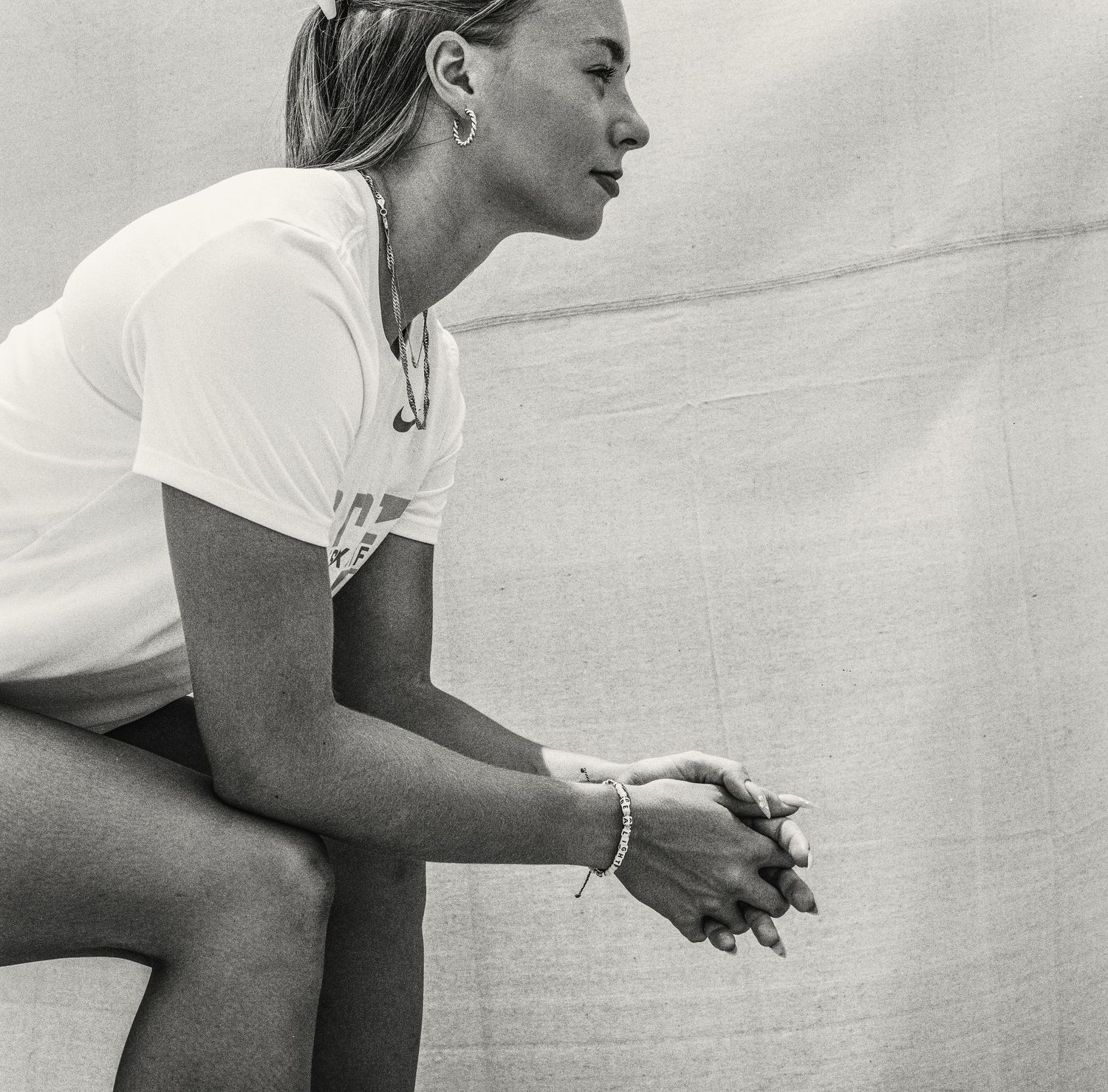
Petra
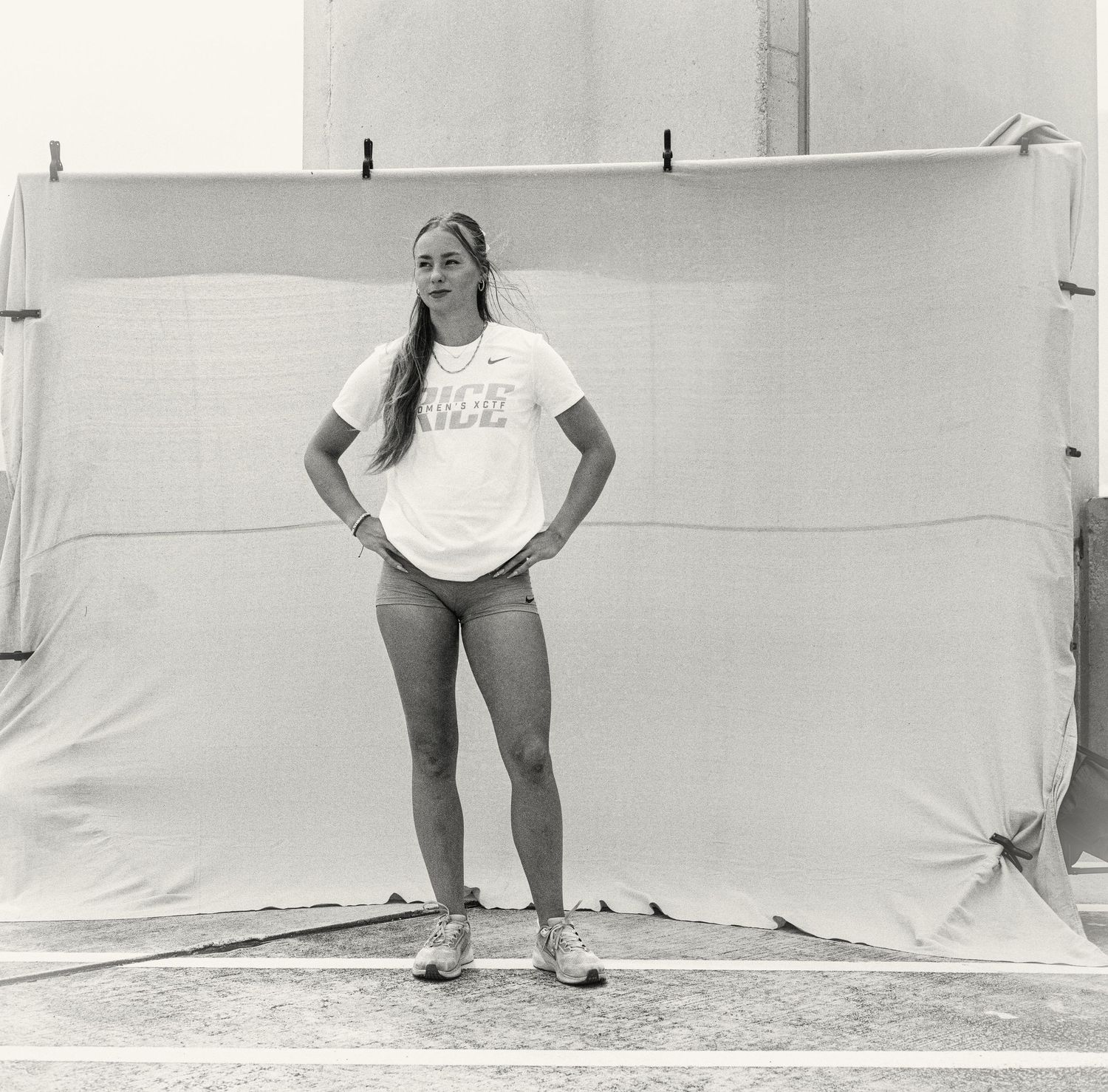
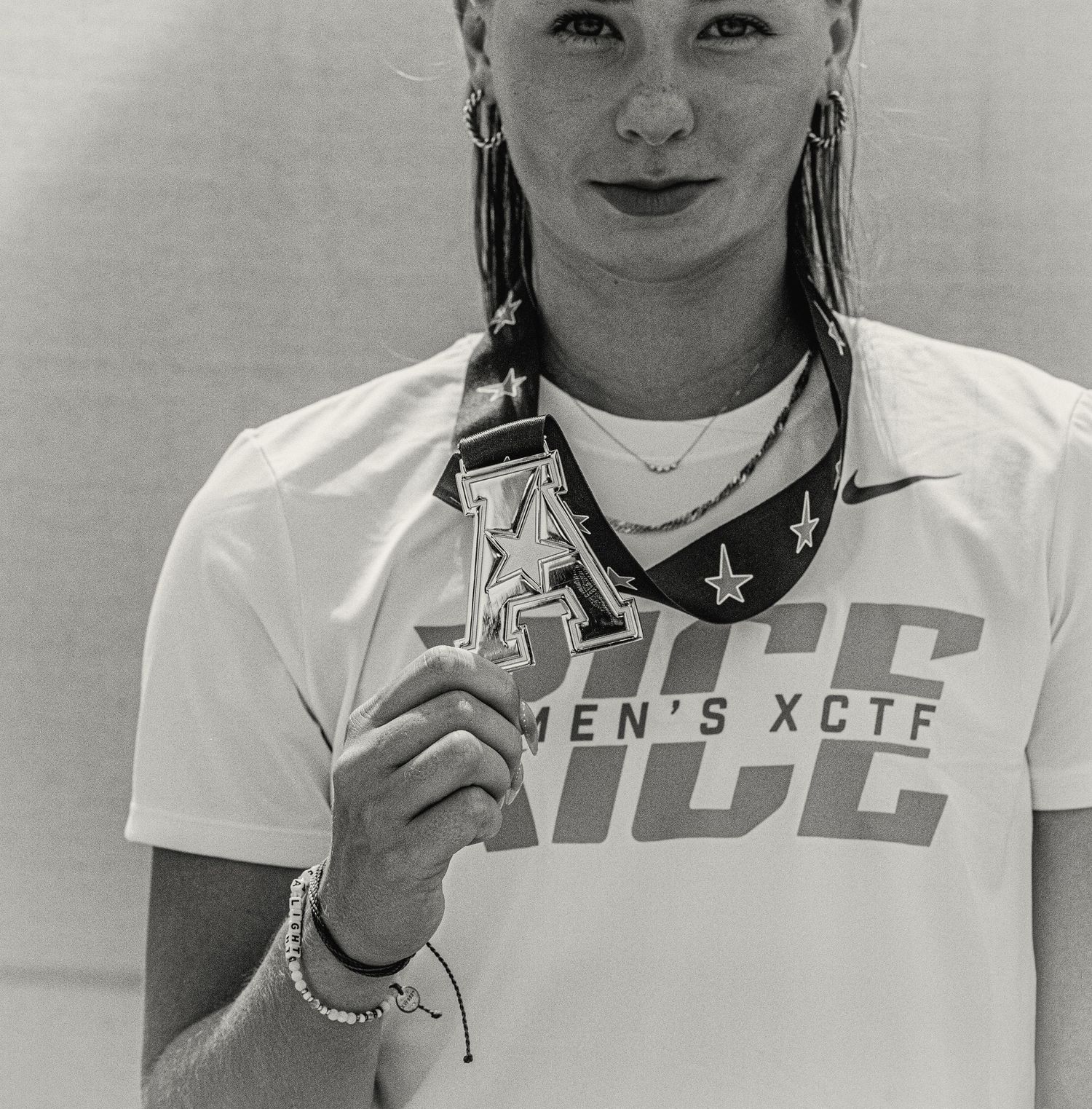
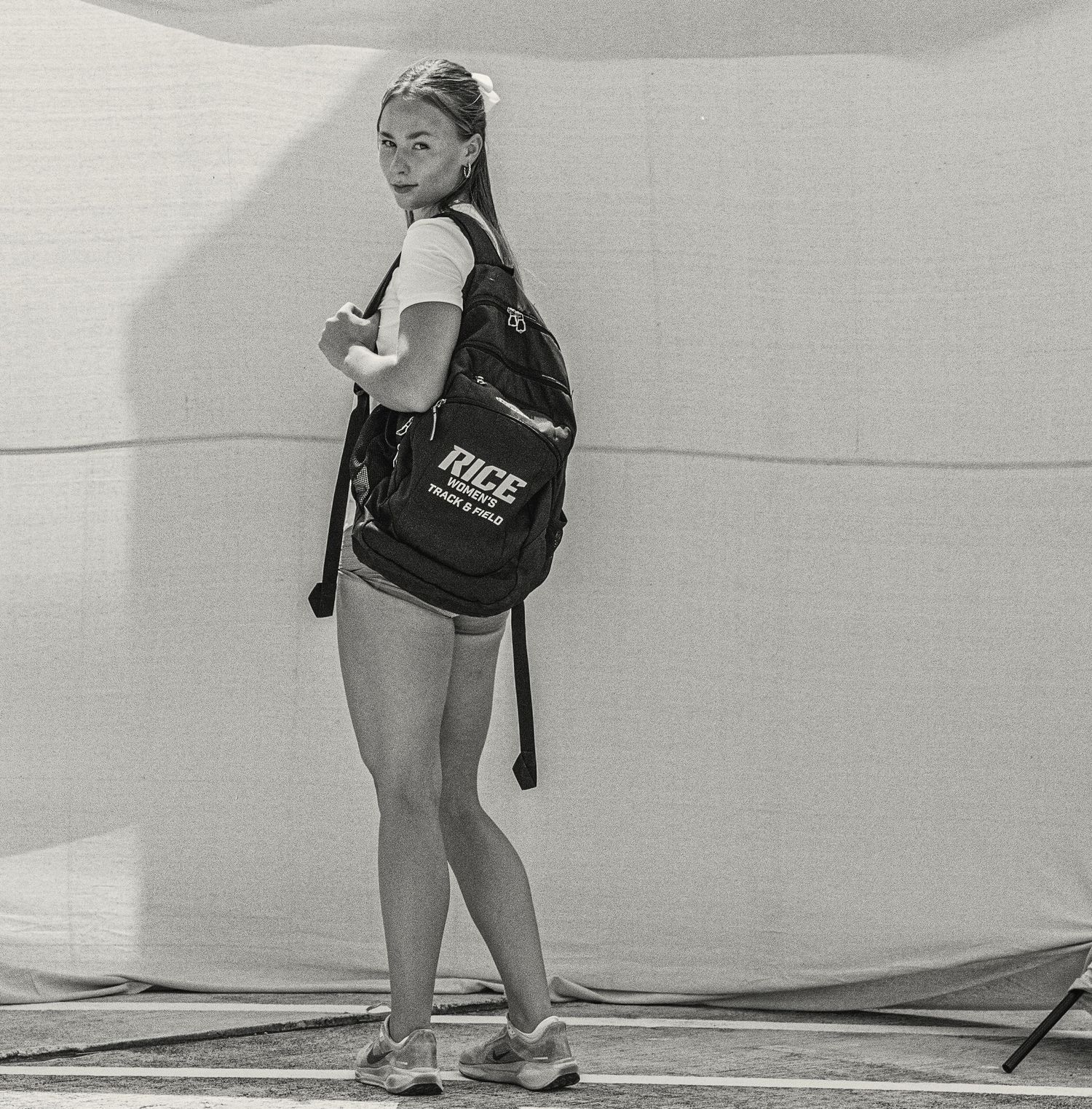
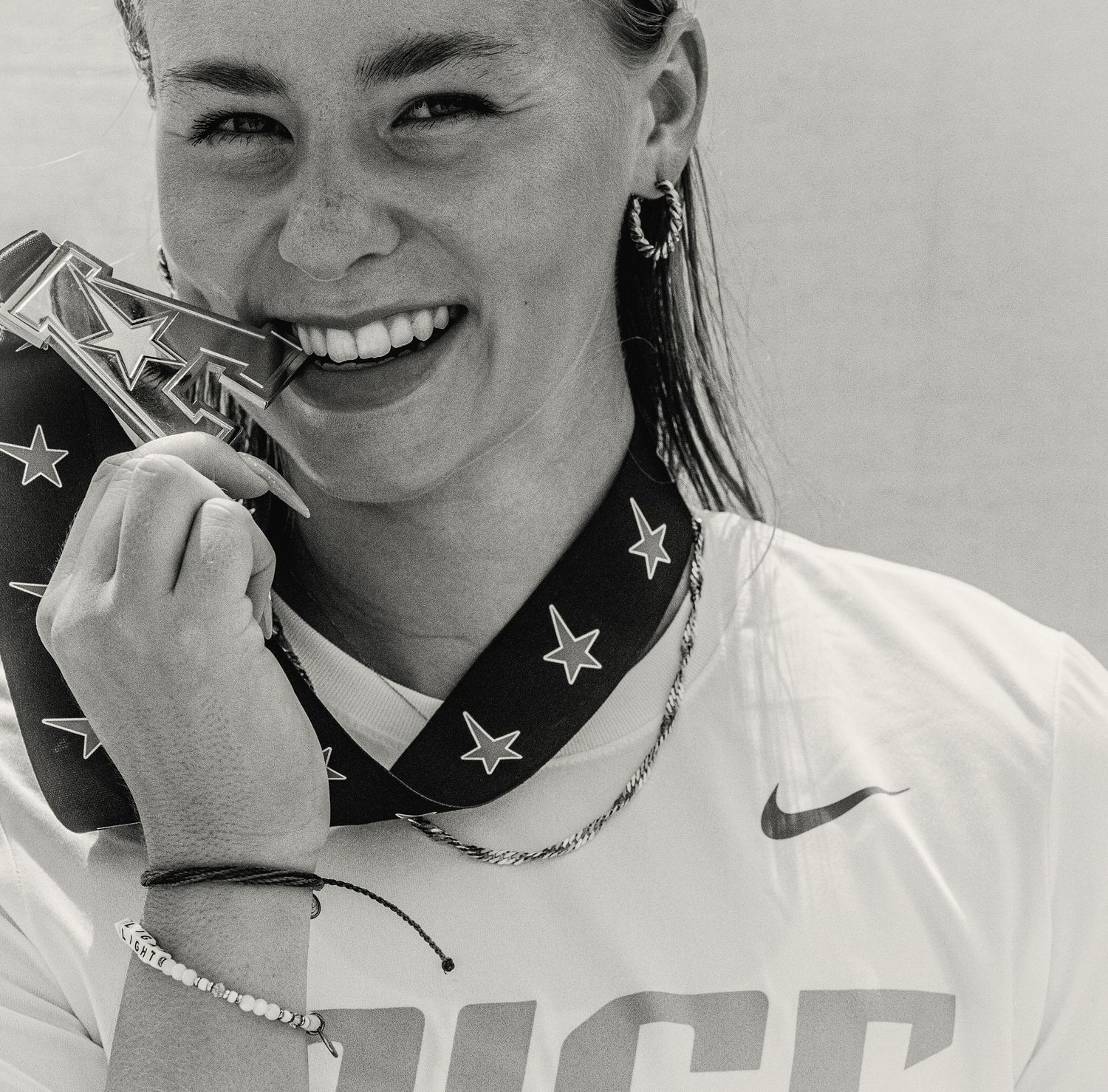
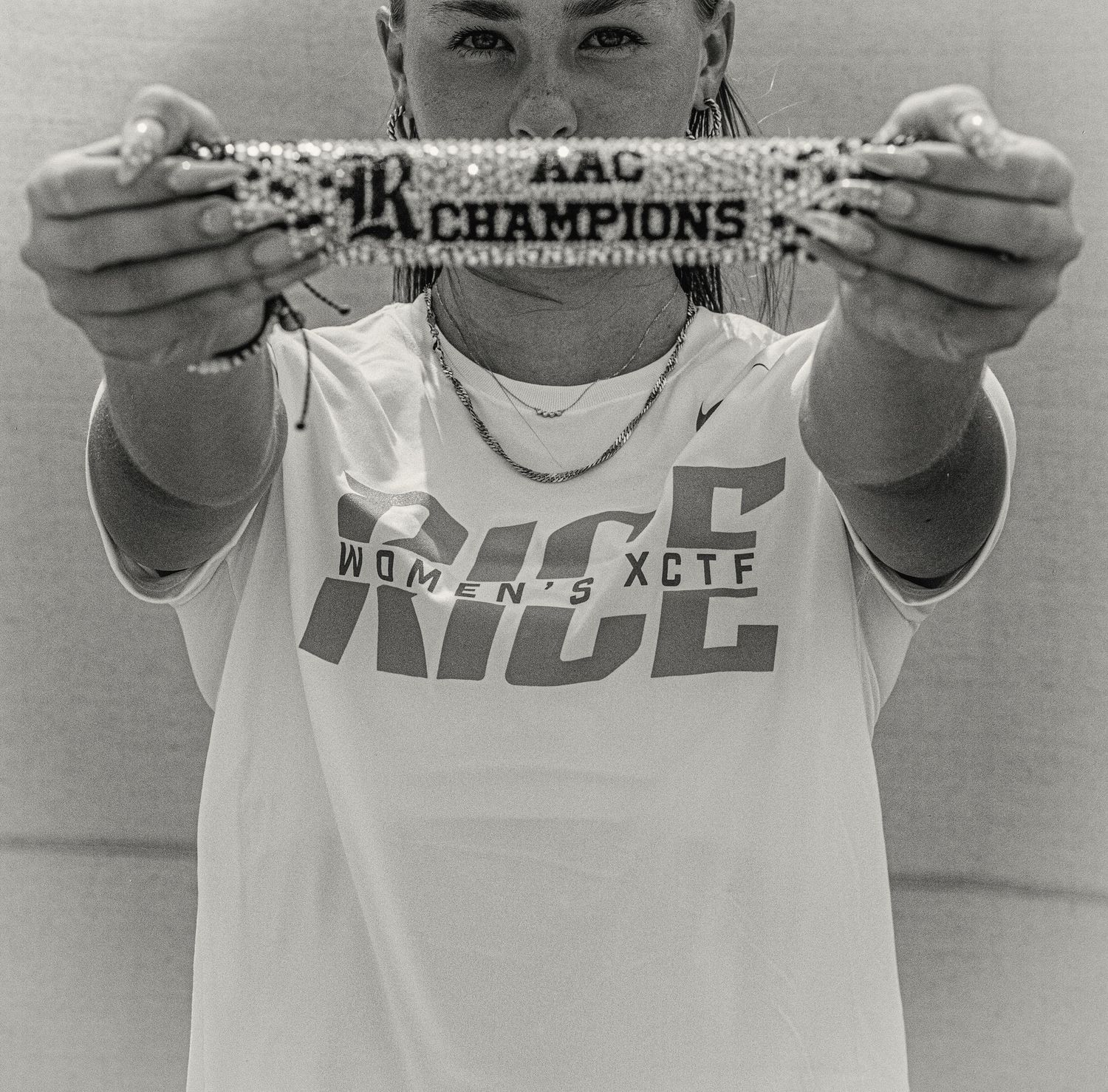
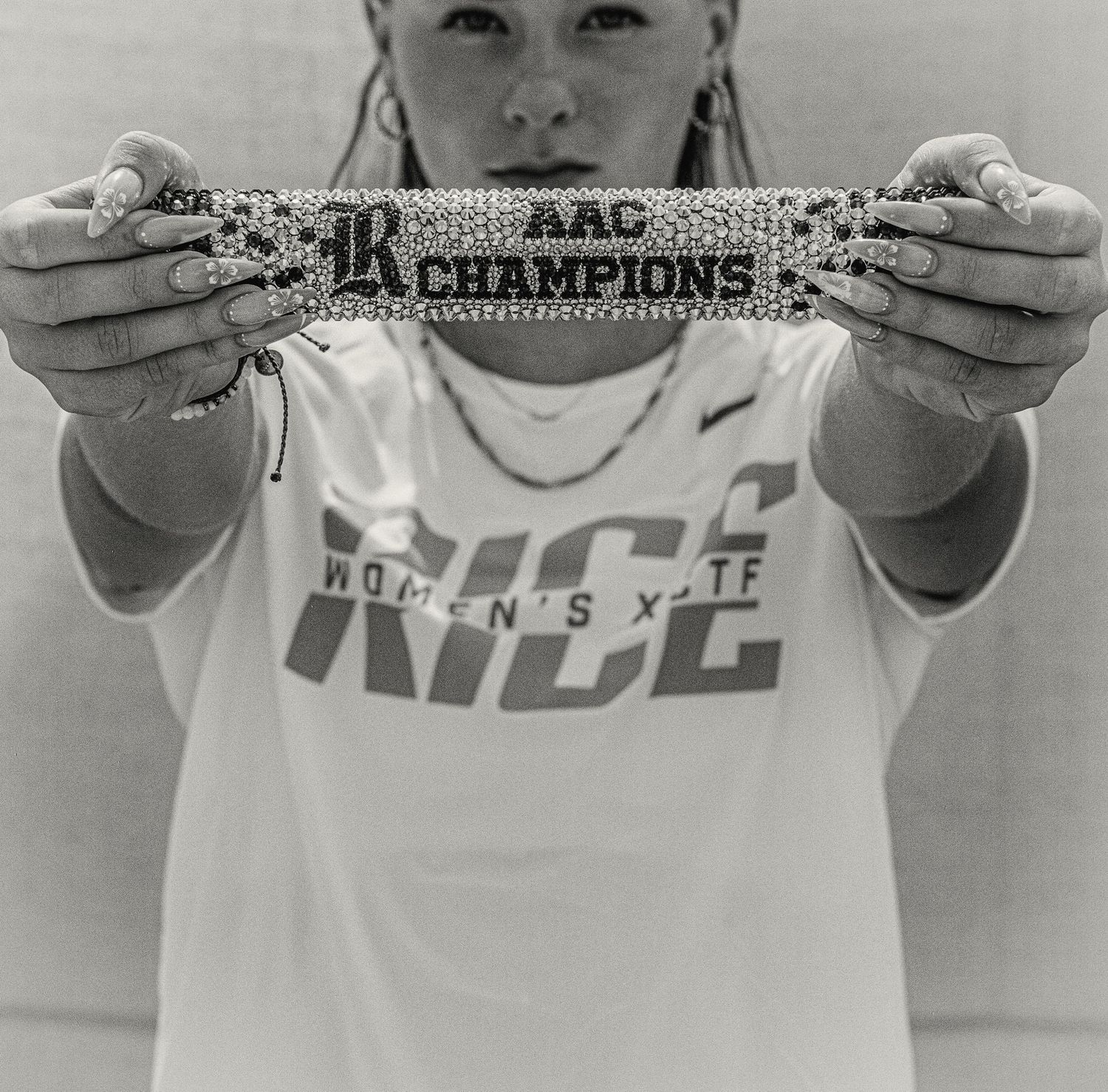
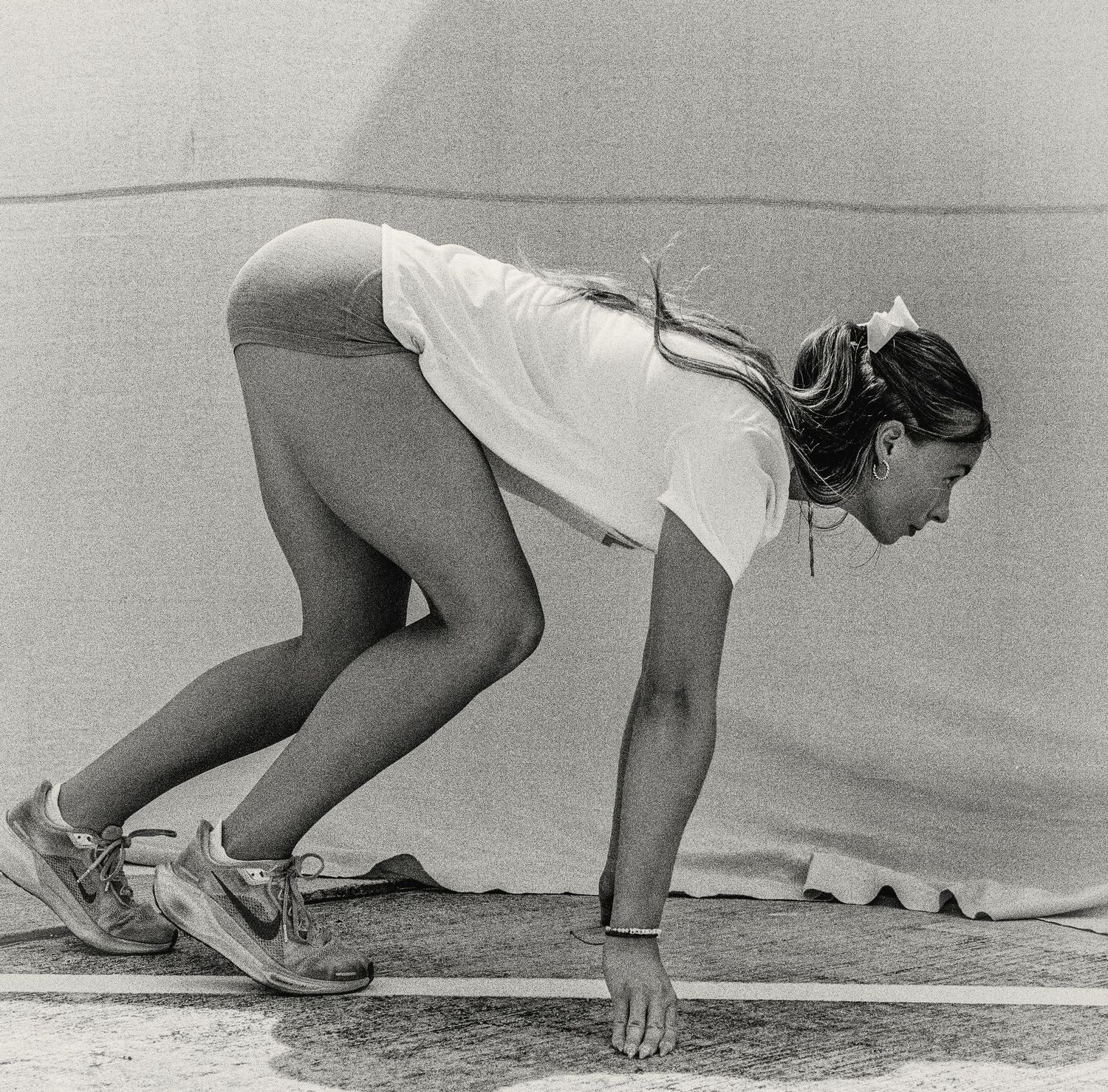

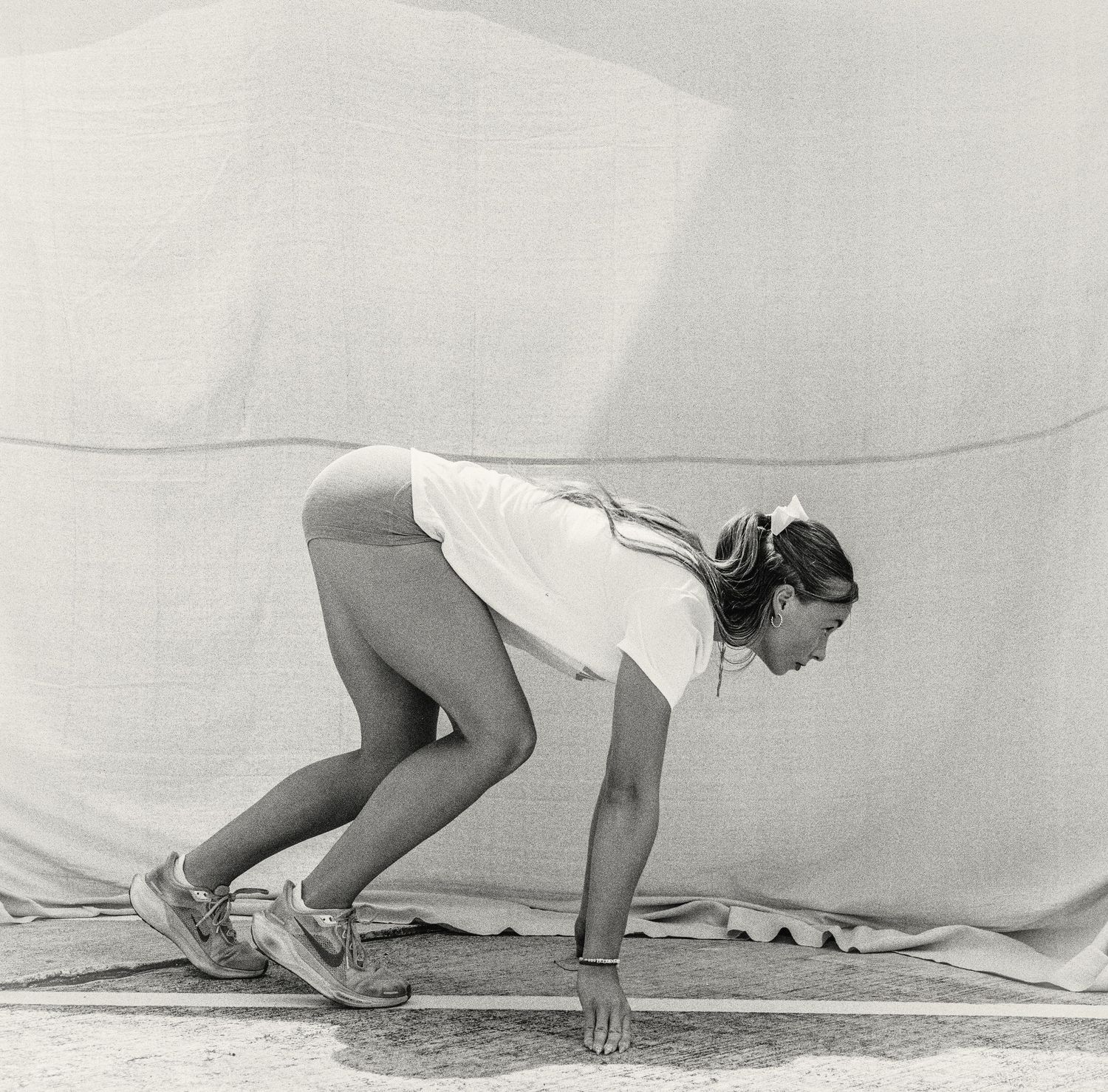
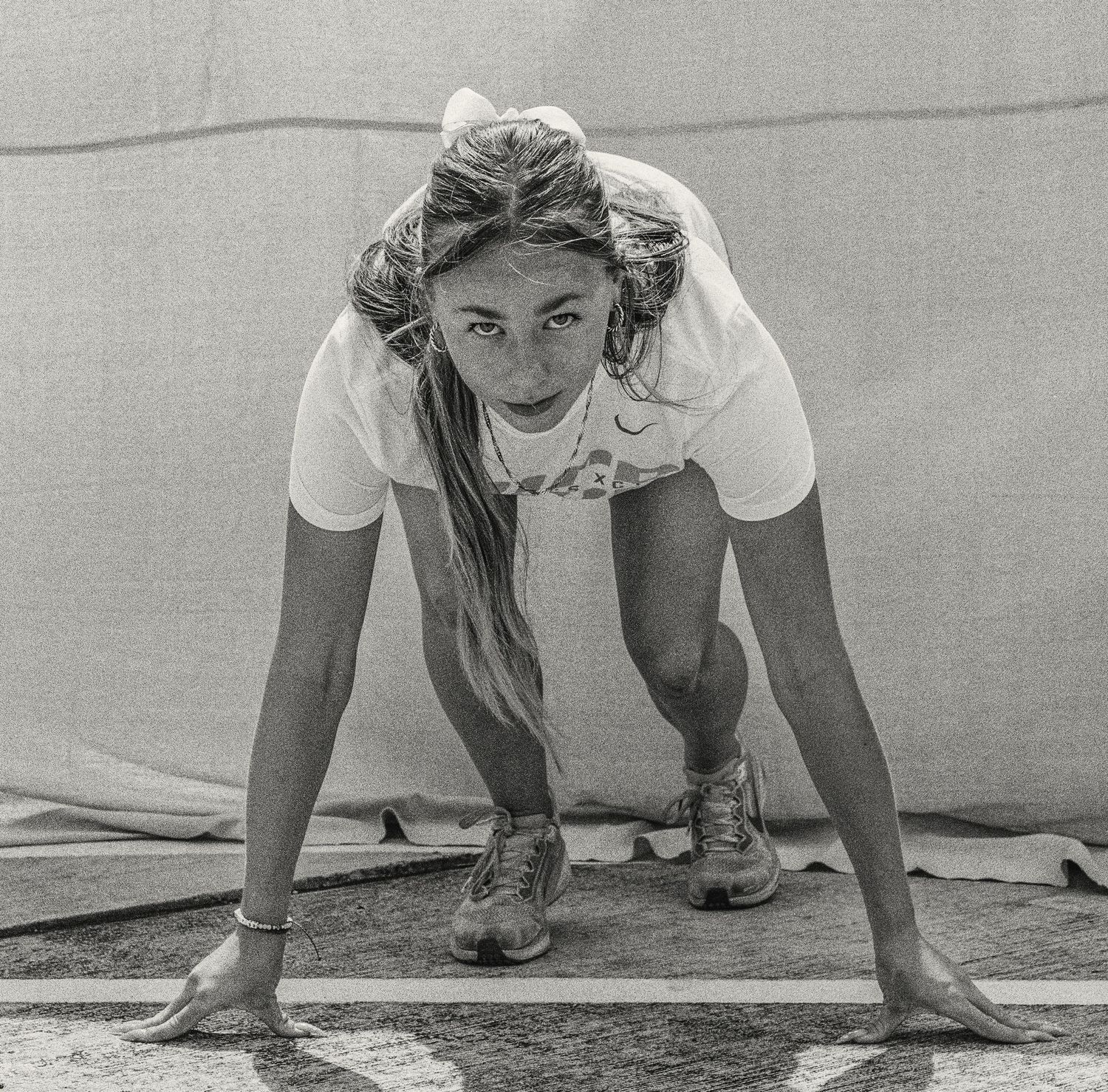
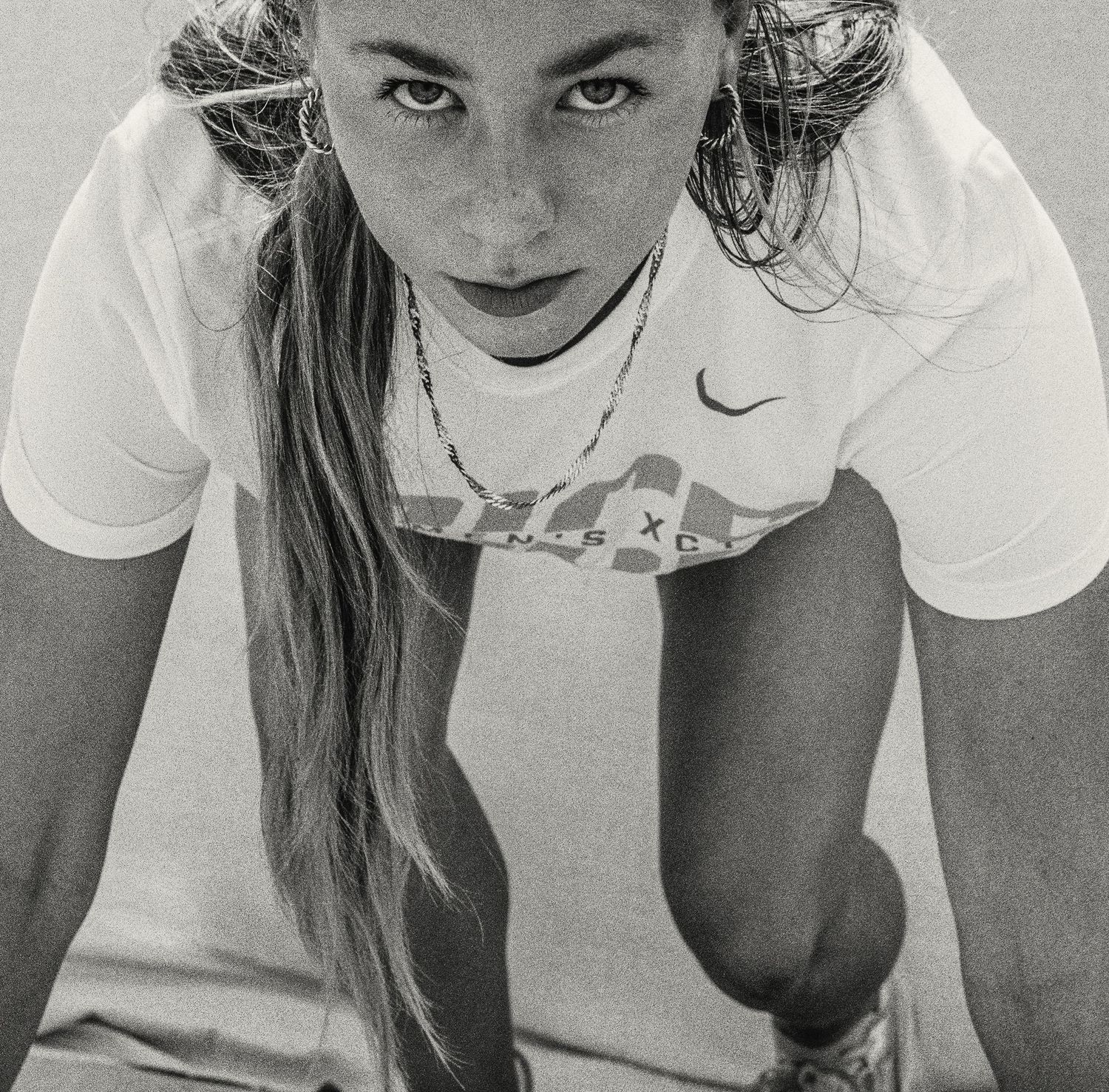

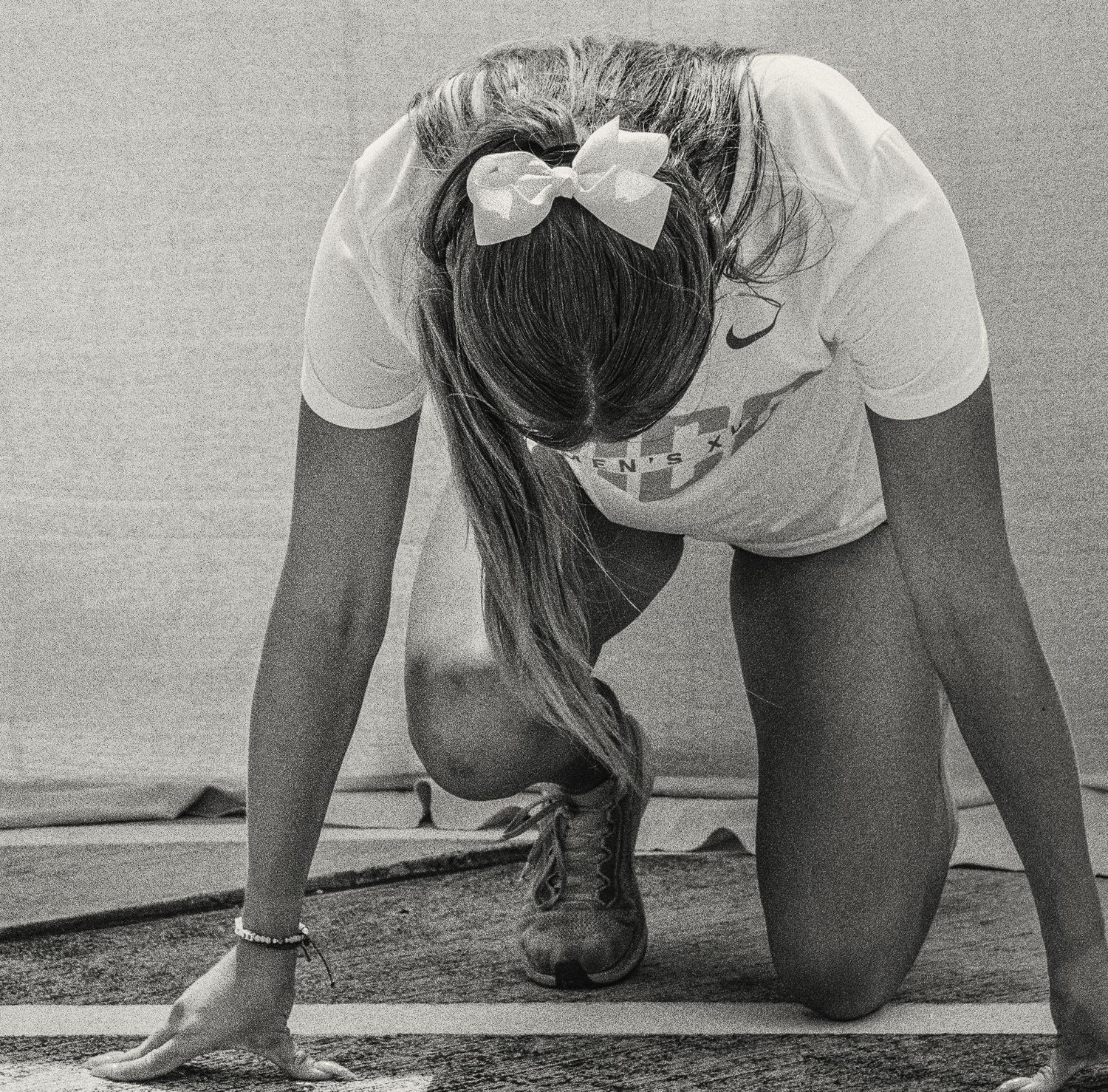

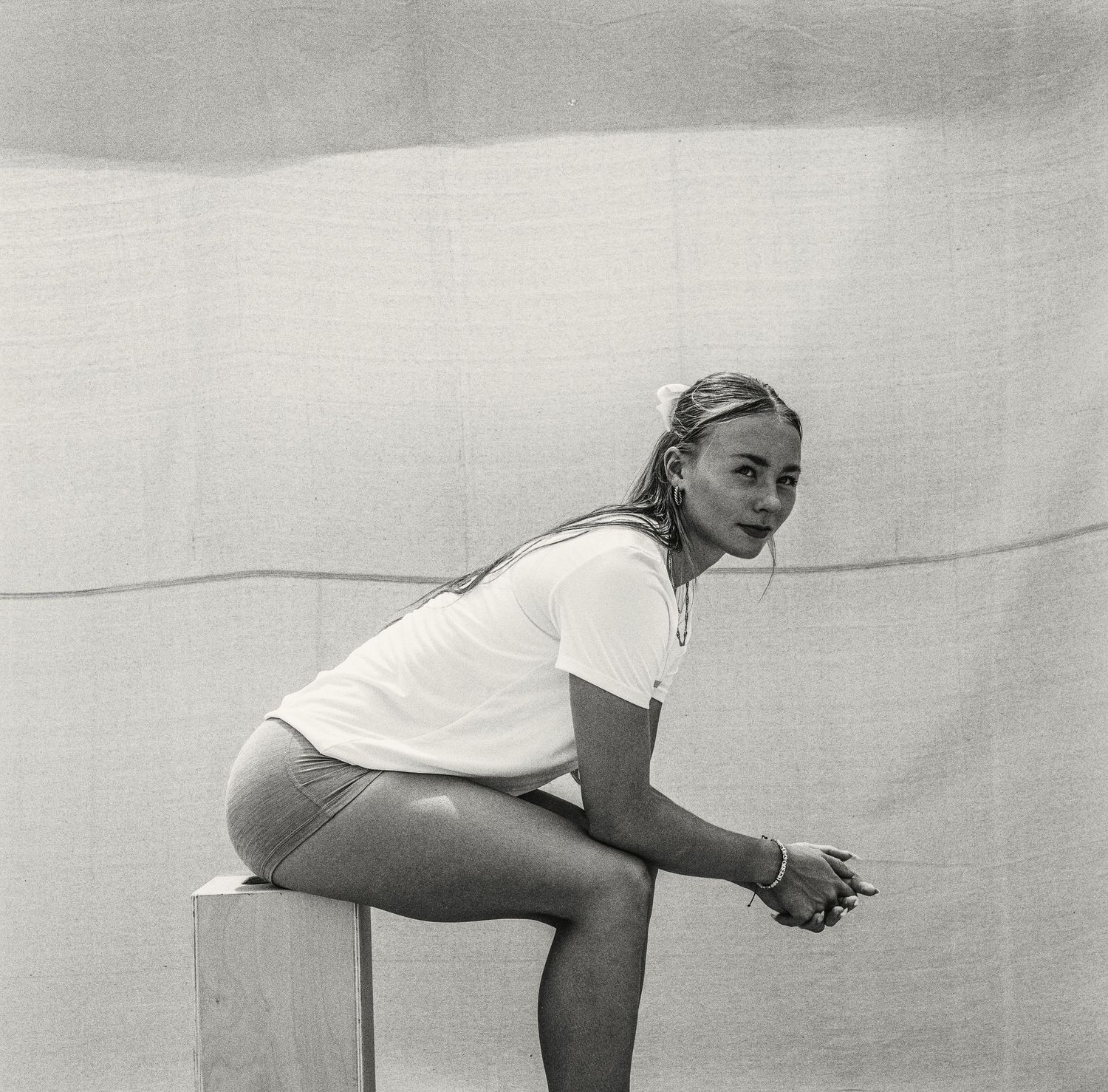
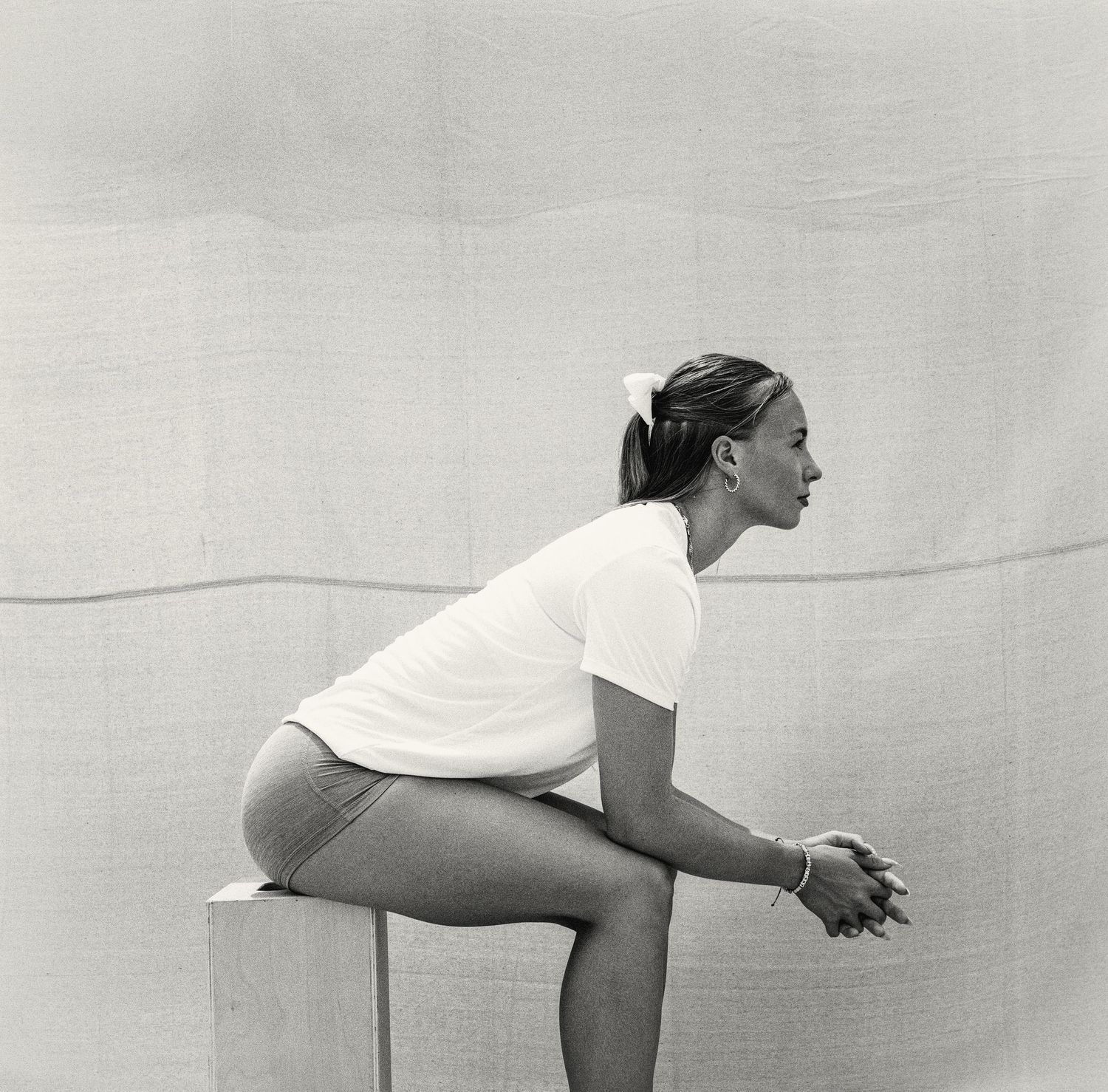

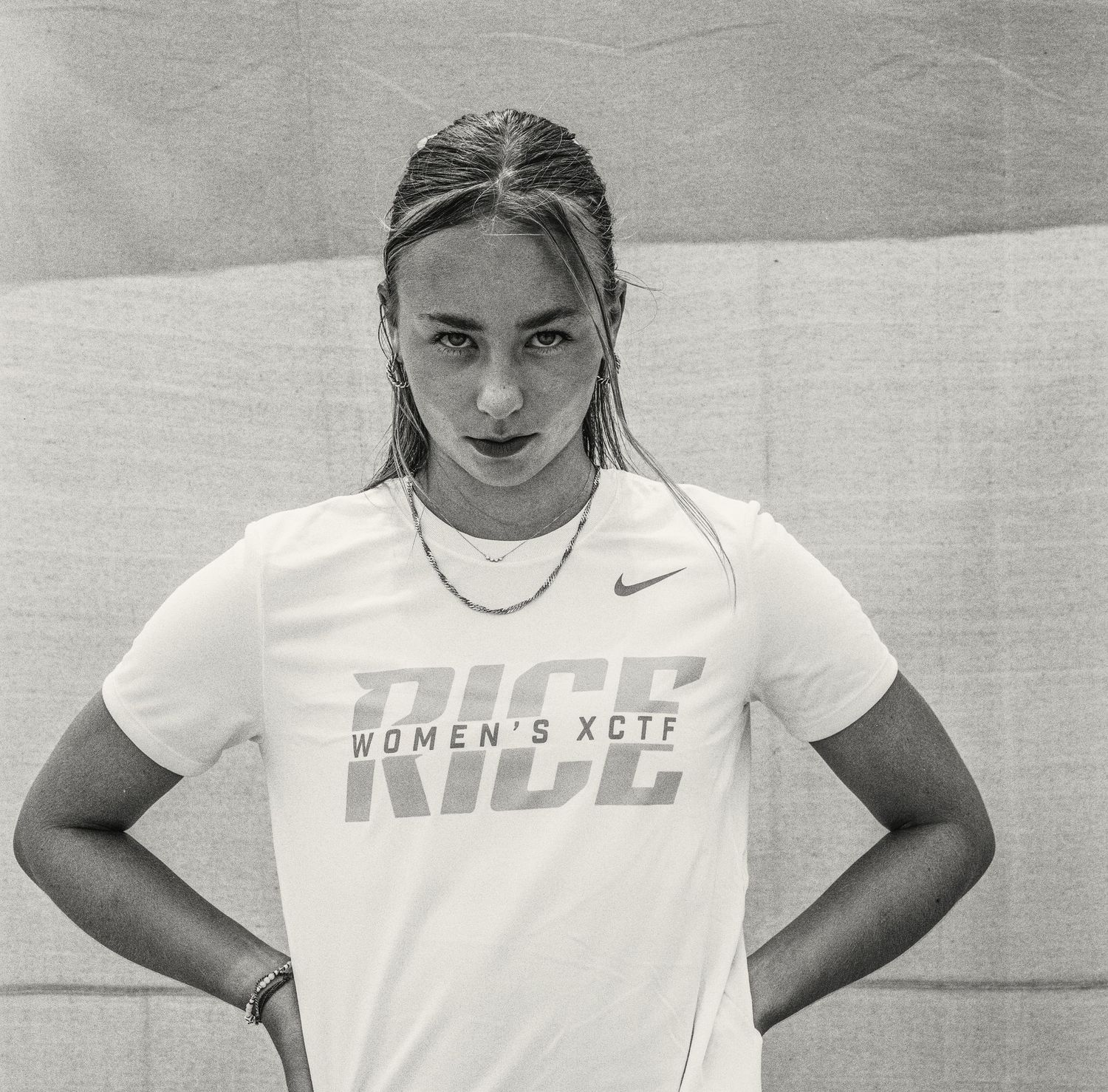

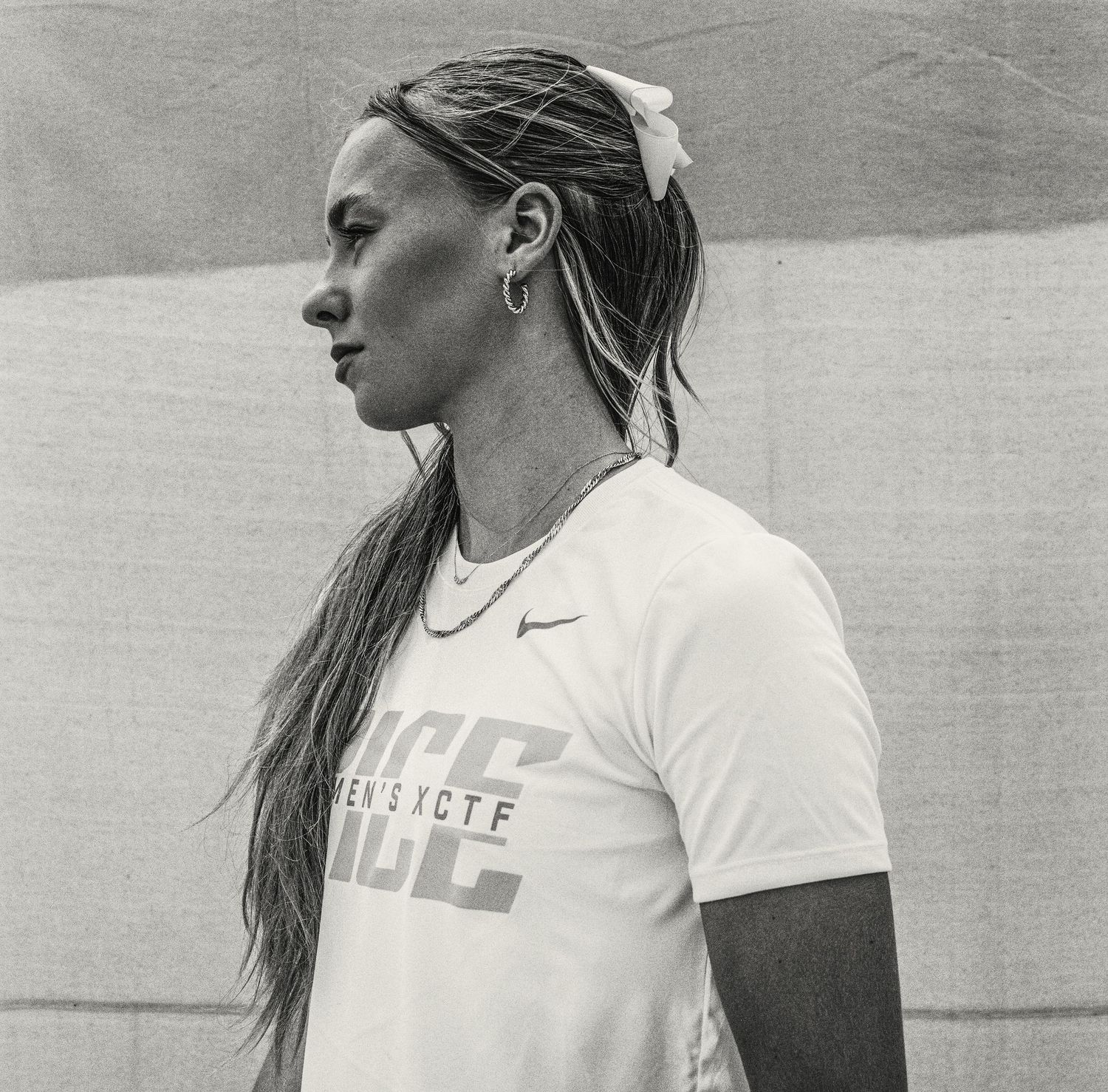


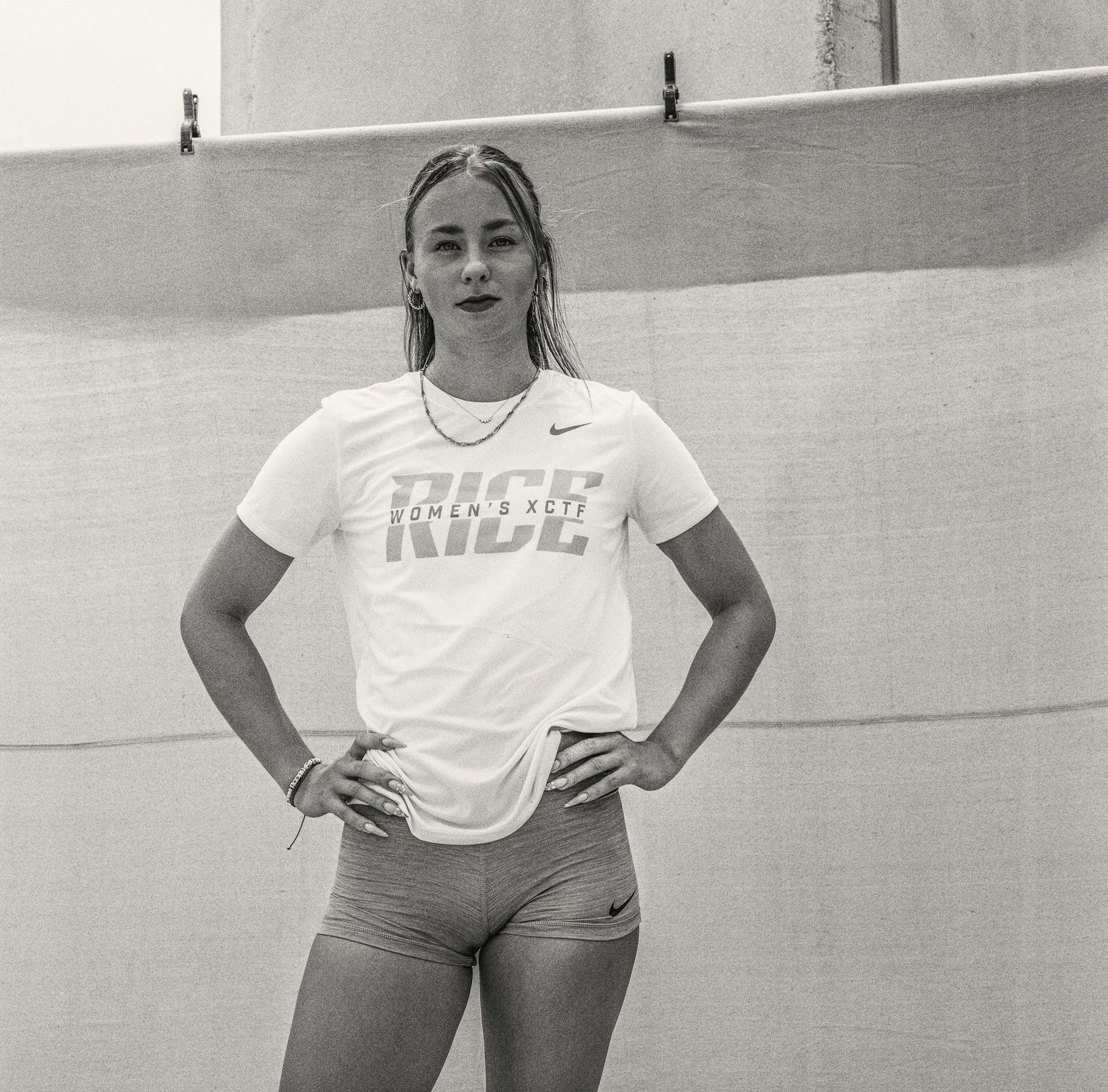
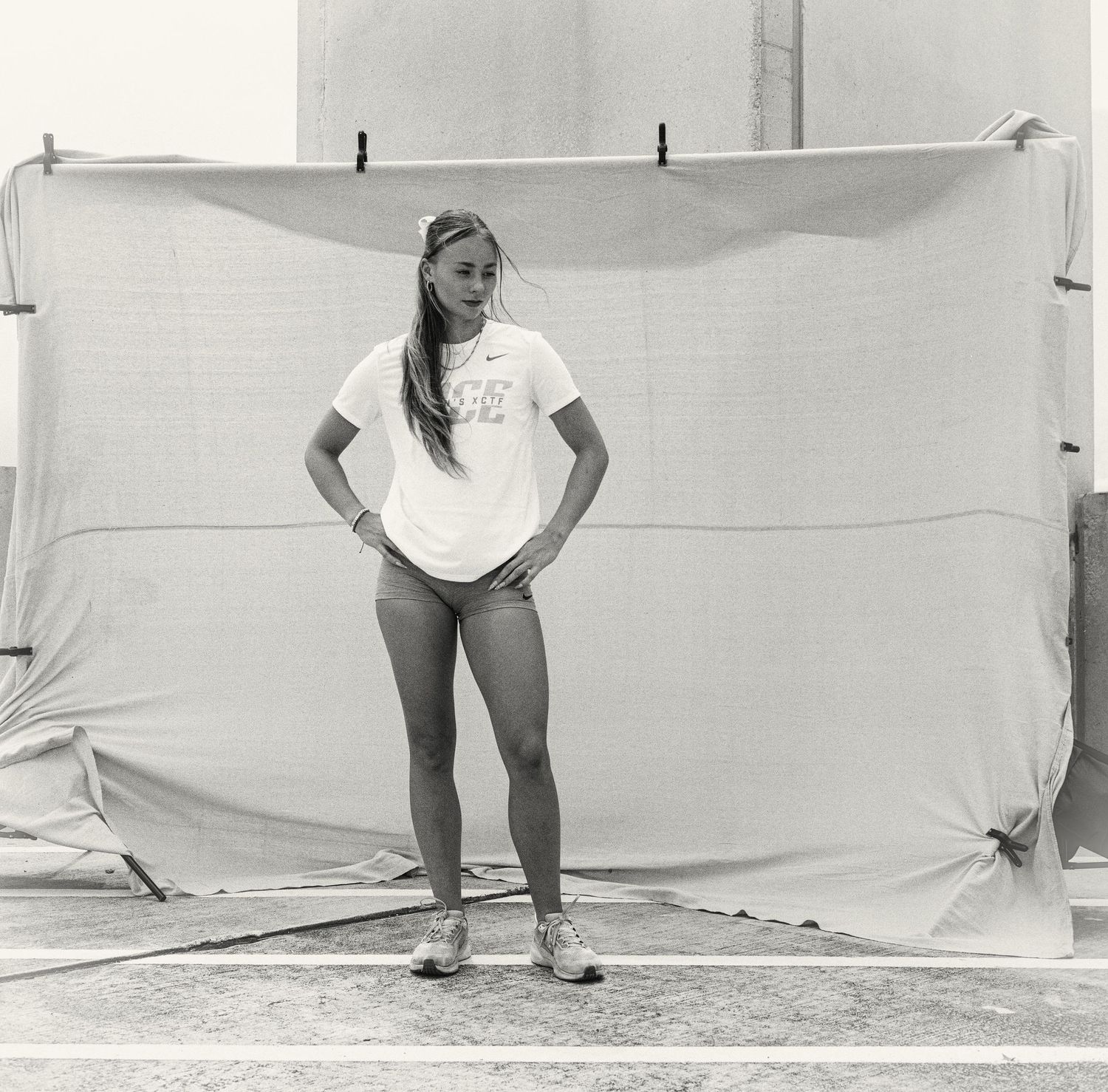
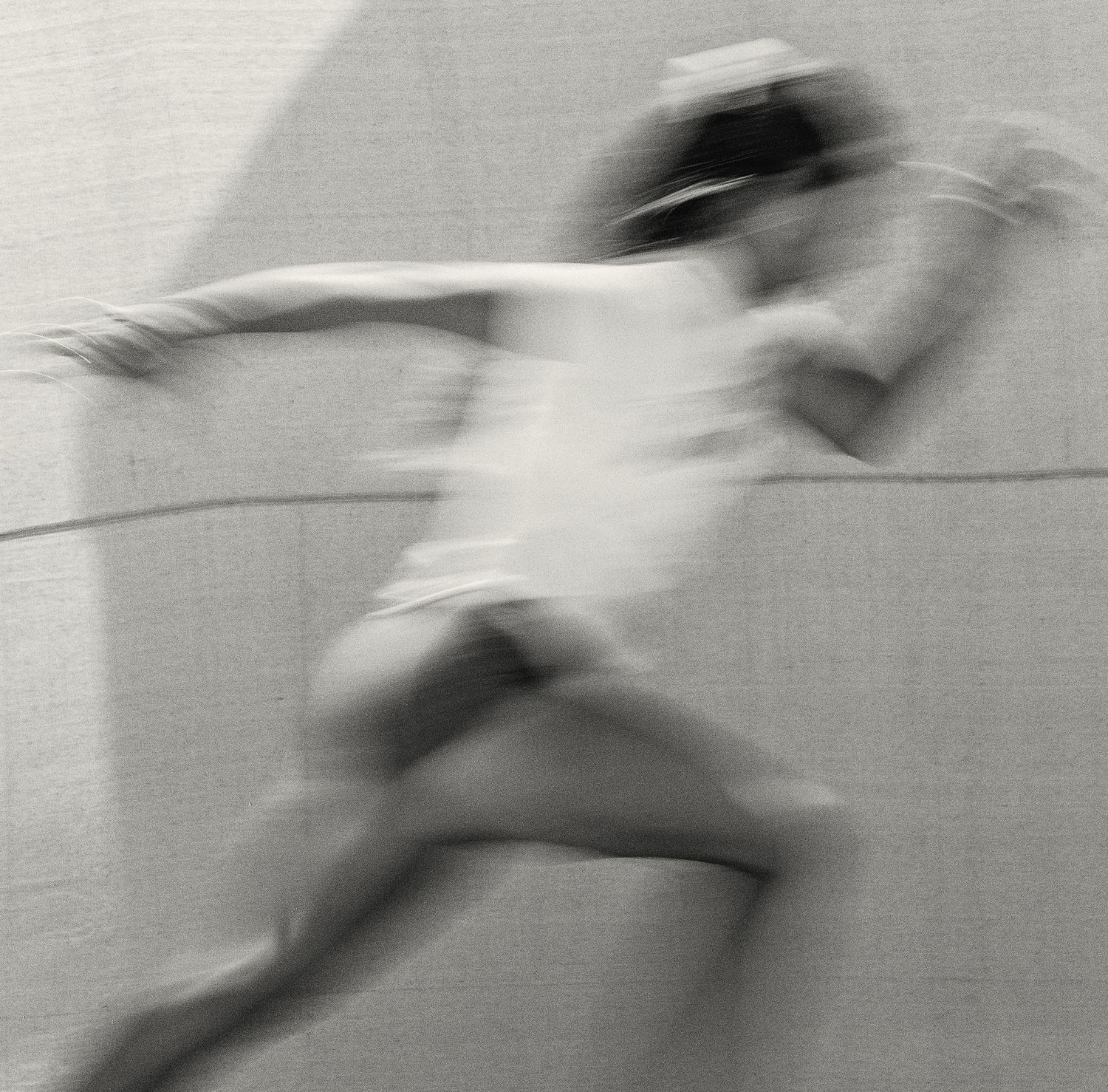
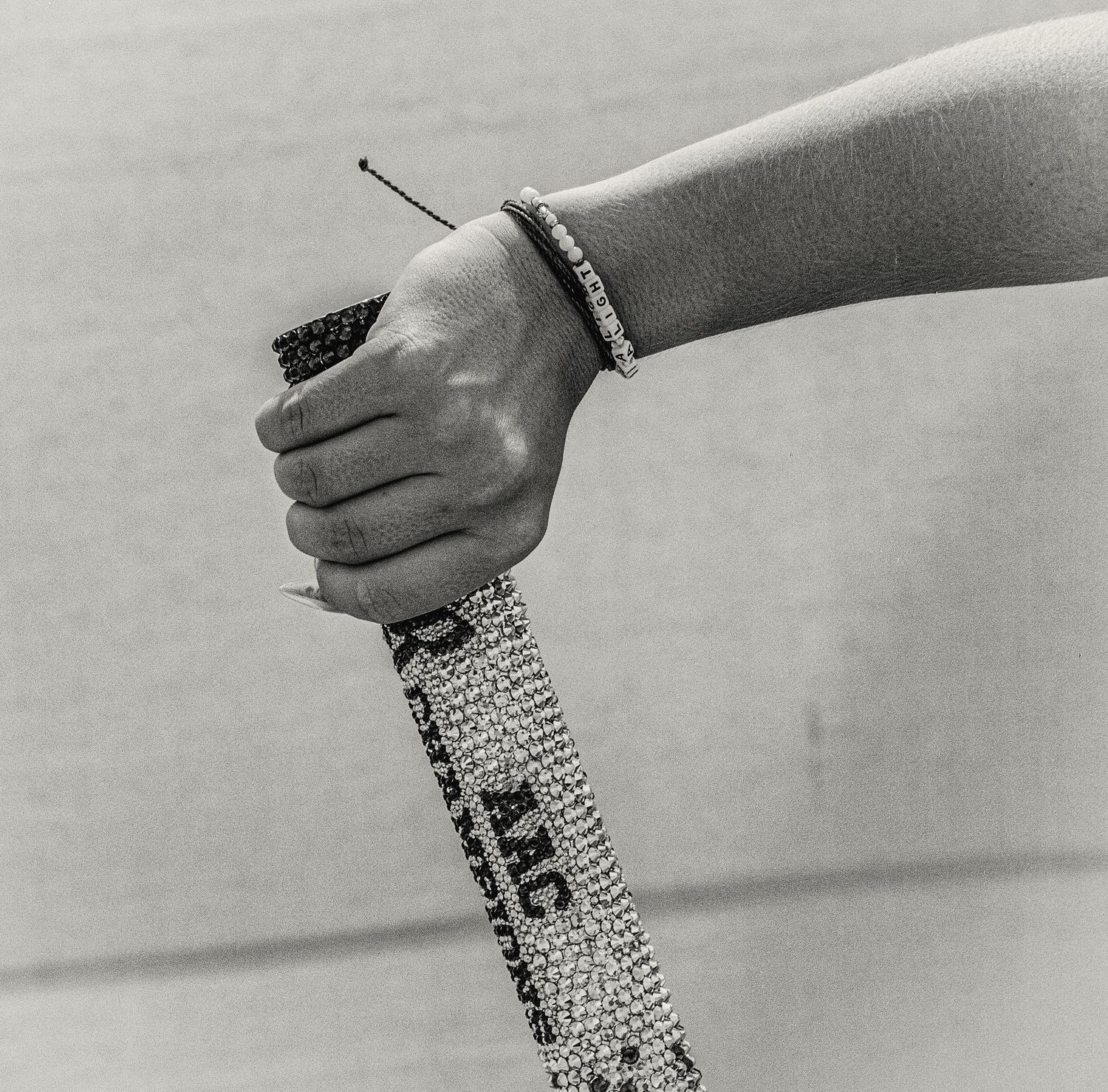
MAMIYA c220 / TRI-X & T-MAX 120 FILM
Stop Thinking About Time
AN INTERVIEW WITH PETRA TAYLOR
by
Respect Their Game
Welcome to the Respect Their Game — a collection of conversations with women athletes about commitment, identity, discipline, and the interior life of sport. These interviews are part of the ongoing portrait project documenting women in sport through film photography and their own words. Rice University D1 sprinter Petra shares how she transitioned from competitive swimming to specializing in the 200m and 400m, balancing intense training with a double major in business and sport management while launching Plates by Petra to promote affordable healthy eating and basic cooking skills.
So if you could just introduce yourself, what sport you play, and any details you want to start with.
Okay. Hi, my name is Petra. I run at Rice University. I’m a D1 track and field athlete, and I mostly run the 200m and 400m.
So how did you first discover sprinting, and when did you realize that you could seriously pursue it?
I was a swimmer for a long time. I swam on a really competitive swim team. My mom swam in college. So that was my motivation there, but I was kind of feeling burnt out, and then when COVID hit, it kind of allowed me to transition into track. I started with cross country, and I just had a really natural knack for running. And then I got to do track, and I really took it seriously my sophomore year of high school. I just loved the way that I could push myself through track and field. That’s when I realized I want to do this in college, and it’s when I stopped swimming and switched my focus. So sophomore year of high school is when I would say I really took it seriously. And that’s when I started looking for colleges to run at.
How did you transition from cross country to track and field knowing that you were going to be more of a speed athlete than distance?
I think I never really loved cross country because I find it a little bit boring to just like keep going at one pace for a really long time. Where I feel like sprinting’s more exhilarating, but I still love to run, and I liked the team chemistry I had on my cross country team. So I still continued and ran cross country through my senior year. I was also a captain junior and senior year for both cross country and track, but I had a deal with my head cross country coach that I could stay away from our super long runs and do shorter runs because the muscle fibers between cross country and track are very different. And so in order to not get injured and to help keep my fast switch muscles, I just kind of switched certain workouts around. And then I was good enough to just run the three miles at the high school level without the long, long distance training.
And besides just enjoying it more than swimming and realizing that’s a sport you liked better when you transitioned, what made you realize that you were good enough to pursue it in college?
I feel like, without sounding arrogant, I was just the fastest girl at my high school. And that made me a little cockier in my own head. But by no means was I like a national champion right away. I just think I knew that I could do it, and I liked pushing myself in practice. I knew that I liked doing the workouts, and that I would like doing it at a harder level. And I think that also led me to like my actual college decision because when I was choosing colleges in the end, I was choosing between Emory and Rice. Emory’s a D3 school, and I could have gone there and been one of the best athletes there my freshman year, or I could have gone to Rice and been at the bottom of the totem pole. So I decided I didn't want it to be easy. I want to be challenged and be around people who are better than me. And so that was my decision of between D3 versus D1.
So you mostly specialize in 400 meter. Is that correct?
400 is probably my niche, yeah. I mostly run the 400, especially indoors, and then the 200, and I might be doing 400 hurdles this upcoming outdoor season. We kind of started it last year, but the timing was just off, so I only ended up doing one race. But I think 400 hurdles might end up being something that for the outdoor season I take pretty seriously. Other than that, I run the four by four, and if they need me, I’ll run the four by one. Like this year at conference I ran the four by one.
So what makes all of those different distances unique besides just relay versus individual? And why do you prefer the 400m most?
I think the 400 is a race that chooses you. I don’t think people can really choose the 400 necessarily. I think it’s one of the hardest events in track because it’s so mentally challenging. The whole point of the 400 is that it’s an all out sprint, but the distance is further than the human body’s physically capable of sprinting. So you have to learn when to turn into certain gears and when not to. And I think it’s a really challenging race to just learn how to do, so I feel like it kind of chose me a little bit. I think I really found a way with it last indoor season when I opened up with a lifetime best last year. And I think that when you’re good at something that also like makes you want to do it more.
And then with the relay it’s just completely different because you have a completely different mindset. Track is so individual, but when you’re in a relay, you’re actually competing for your team, which I think it takes a lot of the pressure off of it. Which is why a lot of people like running the four by four better than the open four because it almost doesn’t feel like a 400, it feels a little bit easier. When you’re by yourself in the 400, it can be really daunting, so I think it’s one of the hardest races to do.
Does each runner have a secret strategy to the 400? Like is your strategy unique to you and it’s a secret?
I don’t know about secret, but I do think that everyone runs it a little bit differently. I think coaches like to start with the basics, which is get out fast, relax on the back straight, and then start to build and finish strong. And then I think once you get into it, then you realize like how you specifically need to do that, whether it’s like push the first 10 steps or not. I think I just try to get out, and like in indoor, I don’t really think about it 'til I’m 200 meters in. I think outdoor’s a little bit different. In outdoor, I try to just push out hard and then, I have trouble relaxing on the back, so I always have to try and get my shoulders to relax. And because it’s not about slowing down, it’s about literally relaxing your muscles while still moving really fast.
Then once you get to 200, that’s when I kind of look, where is everybody? Where am I in my race? And then 150 is turning up speed because you feel like you’re getting faster, but you’re technically not—your body’s slowing down. So it’s just like, how can you slow down the slowing down, if that makes sense. You just try to push and then that last hundred meters is just grit. So it’s like, what do you have left?
So you said that these relays take a little bit of individual pressure off, but is there that added pressure of people relying on you? And how is that pressure between the individual races and the relays different? How do you deal with each of those different types of pressure?
So indoor conference last year was a good example because I ran on the four by four and we won conference. And I think for me, it was a lot of pressure to get on that relay because we had a set best three runners, and then it was kind of up in the air on who’s gonna run that fourth spot. And then ultimately coach chose me to run it. And so I think it was a little bit of pressure to be like, okay, I can’t let my teammates down or my coach think that she made the wrong decision. Running for your team is more energetic, and also the four by four is the culmination, or end of the track meet. So everything kind of rides on that race to finish out the meet.
So I think you kind of forget about yourself, and you just like focus on the actual race, like who’s around you, who you’re competing against, and then like getting the baton and passing it to your teammate. Whereas like individually I think people can, including myself, can get in my own head a little bit more because it’s exactly the time on the board are your results. Even though you do get official splits in the relays so you know exactly how fast everybody ran, which is a little ironic. Individually I think there's a little bit more intense pressure focused on you. Whereas I feel like my coach always says that track athletes like to think in their races that it’s the end all be all. Like it’s the most important thing in the world, but in reality, like we’re not saving lives. You have to like learn to relax a little bit. I think that’s where track athletes sometimes go wrong. It’s like everything feels like pressure because you’re an individual athlete.
How do you find your place in the lineup for a relay? How does that change for you? Are you stuck in that second spot? How do you find which spot you're best at running?
I think it’s a little bit of strategy. Like your fastest runner is usually the anchor. It’s just like the strongest person on the team. But that could be switched because maybe you just have a really strong team—maybe your fastest runner’s first, maybe they’re second. It kind of just depends on the flow of all four people you have. First, no matter what, is usually your strongest starter. So if you have someone who’s just really good and really aggressive out of the blocks, that’s going to be your first runner. And then second and third’s kind of interchangeable. It just, again, depends on the flow of everything. Or the other teams are going to have weaker end legs or forward legs, then you can kind of switch it around.
And that’s usually up to your coach, right? Do athletes get input?
Not really. I mean, I could say I really don’t want to run first, but if that’s ultimately what coach thinks is going to win, you’re going to run first.
What’s a typical training week look like for you when you’re in school?
I’ll give you two different answers. The first is preseason. So we go in 20 hours a week, which is like when we practice on Sunday or Saturday as well. This semester on Monday, Wednesday, Friday we have lifts. And then after lifts we’d go out and run. I think Wednesday will probably be our off day from running. So we’ll lift and then we won’t have runs. But yeah, then Monday through Saturday we’ll do morning runs or workouts. And then if we’re in season, it’s kind of the same except we lift Tuesday, Thursday instead. So we take one day off because the lifting structure changes. In off season it’s more like building up base strength. Whereas in season, all you’re doing is moving weight fast. Then if we’re traveling, then that switches up our schedule a little bit. So usually Thursday we lift and then like we could travel Friday and then you, you have a shakeout when you get there and then you start on Saturday’s competition. Saturday, Sunday, come back.
Is there a misconception that as a runner you only do legs?
We definitely bench a lot. Our lifts are kind of like two big main lifts each time and then like supplemental lifts, like smaller circuit type things. And so one day bench is one of those lifts. Another day it might be squats and then another day we’re doing maybe cleans, or like RDLs, or like the main sets. We do a lot of shoulder press, a lot of stuff like that. I think especially for sprinters, like you can only run as fast as your arms can move. So if your arms are getting tired, then you’re not gonna run as fast. A lot of the power and the drive comes from the arms. Or like when you’re in the blocks, you want your arms to be as big and as explosive as possible because that’s like starting your moment.
What is your both physical and mental pre-race routine? And what are you feeling in those like few seconds right before the starter’s gun?
I feel like in high school, a lot of the time you run early on in the day. But then with college you have to learn how to run late. Like 90% of our track meets start like after 5:00 PM, you always have to learn. It’s a very different schedule. I think freshman year that was hard for me. This year I kind of got it more under control. And I think with that, it’s like learning that you do have to like get up and move around, shake your legs out, go walk, make sure you’re eating a certain way. But still relaxing and keeping your body like under control. And then when I’m in the facility, I like to be there on the earlier end. And I just like to lay down or like sit in a very comfortable position for a little while and just take deep breaths or think about my race plan, but also not overthink it too much. So if I catch myself really hammering in the details, I like to try and think about something random because I know I’m overthinking it. Physically just trying to be relaxed, and then once warm up happens, it’s same kind of thing. Like my head’s just trying to not be overly hyperfocused, but then I’m also like never going to be too distracted either. So it’s finding that balance.
As for the seconds before the race, I feel like that’s where like my head kind of goes blank. Walking up to the blocks I'm probably telling myself something like, oh, I got this. Or maybe I need to relax. I remember my first race last season. I was like, just treat it like it’s a practice or just pretend it’s a time trial. If you can say something to yourself that calms you down a little bit, it makes you feel like it’s a little less serious, that helps. But then once I’m in the blocks, I feel like it’s all quiet until the gun goes off, and then you just got to take off.
What types of sacrifices are you making behind the scenes that people usually don’t see?
I think it’s just the time commitment in general. People don’t realize how much of a time commitment being an athlete in college is. Obviously there’s practice and stuff, but then everyone’s always in the training room before and after. So if practice is two hours, then you can tack on another hour because there’s 30 minutes, at least 30 minutes before and 30 minutes after of like prehab, rehab, whatever. And then even after every morning and night, I made a commitment—my strength coach and I are keeping each other accountable to like stretch 20 minutes every morning and night. So I think that’s also something that you’re just adding 40 minutes to your day already. It’s devoted to stretching. And then you gotta roll out. And then also eating, right? I think people in college like to just like go out and eat.
I meal prep everything. So those days during the year it used to be Sunday. So I’d go grocery shop, and then I meal prep everything. It’s a good three hours of your day just devoted to that and then cleaning everything up. My coach, Coach Bevin, who just retired from Rice, always said there’s three buckets of things in your life as an athlete. And it’s academics, the athletics, and then social. And because Rice is such an academic school, you have to fill the academic bucket. Our team GPA is really high. I don’t know like the exact average, but I think it’s around 3.8. So everyone’s really driven on our team, which is also a good environment to be around because you know that like everyone around you is trying really hard in all aspects of life. So it's going to school and going to classes and studying for all those tests the same way any normal student would, but then also having all those hours your sport. And then I think sleeping is a really big thing for me. I love sleep, and I need like nine hours—and I know I need nine hours. So I will always prioritize that, but most people are more willing to give that up. Whereas I know that I can’t or everything else will suffer. So I’ll like take away from the social bucket when I need to, and then on top of that, like how am I preparing myself for life after college? So I have an internship during the year. Last year. I was with the Owl Club, which is how we get all of our donations for Rice Athletics.
So I worked with them all year, and I would go to the football or basketball games and talk to donors. So doing the little things outside of it, like I also work at our performance nutrition center. It’s not like a taxing job, but $10 an hour just to like be there and pass out snacks to other athletes, and those are always three hour shifts. So I know that’s three hours of my day to do that. That’s kind of like what my life is, and I feel like it’s just a lot more busy than people really realize. I also do certain things where I’m involved in our academic offices. I’m a peer academic advisor and double major in business and sports management. So I help people with class schedules and things like that. Just doing a bunch of things which I feel like to be involved is like very taxing. Whereas like you wouldn’t normally think of it as taxing, You know?
And you also founded Plates by Petra, right? .
Yeah. it’s something that I’m working on. The idea came to me early last year. I have social media for it now, and I need to get a little bit more focused on it again. My goal is to educate people that eating healthy is not something that’s super expensive, and it’s something that’s just better for your lifestyle. And also to give back to the community because I feel like 90% of the time when people are donating food to people who are homeless or just food insecure, it’s canned food or things that are unhealthy, and that’s not always fun to eat. So giving back in a way where people can have homemade, healthy food that feels good and tastes good. It’s always nice to have someone else cook for you, or you go home and mom cooks the thing that you grew up on, you know?
So I feel like spreading that wherever I can. I have a lot of goals for it that I have to figure out like the logistics for, but down the road I want to help out maybe with a women’s shelter. And teach them basic cooking skills because I think a lot of people think cooking’s really hard when in reality, it’s really not. You just have to start learning the basics. So getting people comfortable with the basics so they can do it on their own. Just educating people on how to meal prep. I want to look at food stamp budgets and to meal prep around that so that people can recreate for their own household.
Relay races like really require trust between you and your teammates. So what makes a great teammate in a relay?
I feel like the best teammate is probably someone who’s just like there for you before and after the race. Like you can be happy after the race and celebrating, but doesn’t feel as authentic. Whereas like if someone who before the race looks at you and is like, “Yeah, we got this.” That’s who you’re like, “All right, I’m happy to get the baton from you, or I’m happy to give it to you or like whatever.” One of my teammates, her name’s Riana Green, is very trustworthy in that way where I know if I had a bad race, then she’ll be cool with it. And you can talk through it with her. Or if you have a great race, she’ll be there for you either way. Or like going into the relay she can be like, “Yeah, we got this.” Because negative energy is really easy to spread, and positive energy is hard to spread. So one person says something negative, it can kind of bring the whole group down. So you want the teammates who are gonna like either refrain their negative thoughts, or just not think them at all.
So just connecting and relying on people as people and not just as teammates is kind of key. Yeah. So because, you know, a lot of your races are like happening extremely quickly and are over fast, but it’s like kind of the results of months and months of preparation. How do you kind of make peace with the fact that a lot of your season and practice comes down to these like short little moments?
Yeah, I think sometimes that’s hard because if you’re not succeeding in those little moments, but you’re working really hard or practice seems like it’s going really well. That’s where it can be really difficult because you’re like, what am I doing wrong? And sometimes you’re not. Sometimes your body just needs a break because track is so abrasive, specifically sprinting, but the thing is you have another race. And like I said, it’s not the end of the world to lose. And I think too, sometimes you just have to realize that you have to lose to win. It’s hard because a lot of the time you don’t always think about winning as beating your heat. You think of it as beating yourself, which I think is hard with track because all you care about is that time.
Whereas our coach, Coach Bevin, used to say in our pre-meeting, “stop thinking about the time.” Think about who you’re racing against, and win the race. But then again, like you could win the race and still not PR—then it doesn’t feel as good. Sometimes losing a race and doing your personal best can feel better.
Do you have a favorite or least favorite lane? And why?
I think it depends on the event. Anytime I’m running a curve, so 200 or 400, I don’t like lane one. I hate it. And lane one is closest to the inside, and it’s unpopular because people usually switch with me. It’s usually people don’t like lane eight. And I would say I prefer lane eight to lane one. I don’t like how everyone’s in front, like catching people. I’d rather, especially the 200, run lane eight because the 200’s pure speed at the end of the day. And I’d rather just not see anyone and keep it that way than have to slowly reel people in.
How do you deal with the pressure of like both setting the tone for the people that you’re passing the baton to and also like keeping the moment going for whoever passed it to you? How do you balance that out?
I feel like when someone’s coming to you, you’re in more of an antsy kind of zone because you’re getting ready to go. So I feel like it’s about like really paying attention to their cadence. How fast their steps are going, how they’re coming in, especially in the four by four. If someone’s trained, you’re not gonna rocket out as fast. But you always wanna pull them out. The idea is you wanna pull your teammate so they can give it to you while you’re building speed. And so I think it’s about just being in control those first couple steps. Whereas when you’re getting ready to hand it off, it’s all about finishing with power. And so how fast can you get to them? And if you’re in a tight spot with your four by four, there’s someone right next to you, and you gotta find where they are because they’re not always allowed to switch where they’re standing when do that.
So if I pass someone, and I’m on the inside, then I need to get out to the outside without necessarily cutting the other person off. So it’s just kind of articulating where I need to be, and then I’m doing it as forcefully as I can to get them going on their run.
If you could put your races in slow motion, is there one specific moment that’s this picture perfect moment that would show the most about you as a sprinter? Something that captures your technique?
I feel like it kind of just depends on the race. If a perfect race happened from the start, then you just have an explosive block start. I would say that’s not my personal best part of my racing style, so if that does go well, then I know I’m in a good position. In the 400, a longer race, I know that if I do that first hundred in the way I’m supposed to then I’m set up for the rest of the race.
The other place I would say is coming off the curve into the home stretch. Like in the 200, if you do that well because you’re moving so fast, you kind of feel the speed going with you off the curve. And so I feel like that’s a good moment where you know where you are in the race. You know how you can push yourself to the end and you kind of like whip off that curve. And then the 400 is now like a fight to the end.
And to that extent, do you feel like your personality comes through when you’re running? Like if somebody watched you and they had no idea who you were as a person, would they be able to kind of like tell things about you as a person?
I think to some extent because I always like to get a little fancy for races. I always have bows in my hair and generally have my nails done. So I feel like those are things you can see really easily. And then I feel like I fight pretty hard in my races, but I don’t know if it always shines through. I think it would, but I don’t know, so it’s hard to say. I feel like with track, it’s such a black and white sport. So the time’s either there, or it’s not. That's what people look at mostly,
How do you disconnect that from your self-worth because it is a very black and white sport? How do you not let that affect your perspective of yourself as a person or an athlete?
I think that’s the hard part because I think a lot. I do place value on myself, like on how fast I can run a certain event. And so that is the letting it go part and learning how to reset yourself for each race because the last race isn’t this race. And it’s a lot easier when you’re doing well than it is when you’re not. Each race is different, and if you have multiple races in a day, it’s one race at a time. So the first one went wrong, but that’s fine, you have the next one. Looking forward rather than backwards so you’re not in your head too much.
Was there ever a moment where the result of a race mattered a lot less than what you were learned from it? A loss that you’re actually grateful happened because of what you gained from it?
In track you don’t win a lot of the time unless you’re one of the nation’s top runners, but even then, you lose a lot. And that’s just what track is, especially sprinting. If everyone’s separated by milliseconds then you’re gonna lose sometimes. Even Quincy Wilson, who is arguably one of the best male sprinters in high school history, and he lost the 400 race yesterday. And he is so dominant, but yet someone is up there. So with everyone always being so close, you never know if you’re gonna win it. There’s learning opportunities all the time and that’s where it goes back to it being an individual sport. Like win or loss. You’re always gonna go back to: What did I do wrong? How/what did I feel? ‘Cause sometimes you win the race, and you felt great, but you’re like, “I should’ve gone faster here, here and here.” Even though you PR’d. So you go back and reanalyze what you did. And I feel like that’s always important. You gotta do it right away. Coach always says go talk to her as soon as possible because you want it all to be fresh before you forget about the details.
Has there ever been a moment in your running career where you questioned if you wanted to continue going, or you thought about quitting, or your heart wasn’t in it anymore?
I wouldn’t say quitting. I think teammates are really important because without the good support, then I feel like that makes it really hard. So I’ve thought about maybe transferring because I felt like my freshman season I didn’t connect very well with all my teammates. And so that made it a lot more frustrating when I didn’t compete well or something didn’t go well. Of even if I did well it’s not what you wanted because it felt like everyone’s competing against each other, if that makes sense. So I’ve never felt like I wanna stop running track, but I felt maybe I wanna switch the place because I think teammates are really important in that aspect.
And do you feel like that’s changed for you sophomore year?
Yeah, I feel like it definitely did change. I think all of our teammates got a bit better at not always letting the competition between us on practice and races come between us. The hardest thing is everyone wants to be in the top four, and if you’re not in that top four, you’re fighting to get there. And if you’re in that top four, you’re fighting to stay there because there’s no saying that you’re gonna be able to race in the good races. No saying you’re gonna go to conference. No saying you’re gonna be in the relay. So it’s just like you always wanna be in that top four. And I think that makes it really hard on D1 programs, especially right now—Rice’s sprint team is pretty stacked.
So just knowing that your best friend is probably your biggest enemy when you step onto the track. That's pretty difficult because you want to be in that four by four so bad, but then your friend is probably the better option. It’s hard to be supportive and still let yourself win. Or, you know, you lost something that you really cared about, but your best friend is in that spot. So it’s hard to maneuver like that, I would say.
And do you feel like this competitive energy is more specific to the fact that you were a freshman and not being able to see the bigger picture and team picture? Or do you think it was more specific to Rice as a whole (being both a very academically and athletically rigorous school)?
I think it’s the whole team, and I think it’ll kind of stay that way just because, and I’m sure it’s similar on everything because like, like a freshman coming in is threatening to the fifth year or the sixth year. My current coach, coach Andy, she was explaining that new class that comes in gets recruited based off their fastest time. So if your best runner is going to be a fifth year next year, they don’t know if the freshman coming in is faster than them. It's just based on who got recruited. Or you can get a transfer student to come in who is trying to find a way to assert themselves. It’s their fifth year and they’re coming to Rice for grad school. And they want to be the best, but you don’t know who else was on that team. So it’s all very competitive through all the levels because it doesn’t matter if you’re a senior, a fifth year, or a freshman. Like if we have four freshmen that are the best on the team, then they’re running that four by four. And that’s the end of the story.
What are some things that running rewards that life usually doesn’t?
I think in one way running is pretty helpful towards general life. I feel like the natural grit and hard work just pays off. I think any aspect, if you’re in a job and you work harder, then that’s pretty good. But I think you could say because we’re so competitive that could almost be a bit of a turn off. A job space can be very competitive with the people around you. But I would say that the general mindset of a student athlete, a track athlete specifically, is pretty applicable to general life because you just have to work harder than everyone else around you. That’s the goal.
At what point during a race do you kind of stop thinking or being in your head and relying on like the prep you did and more so just rely on your intuition and like trust your gut and react to what’s happening around you?
I think that’s where it depends if it’s a good race or not. And that’s all about how you set up the mentality, and it could just be the day. But there’s some races where from the beginning you’re pretty much reacting to your environment, and that’s the perfect set. You don’t really wanna be in your head. You don’t wanna think at all if you can, but then there’s some days where you get out the blocks and you’re like, “oh, I felt like that was wrong.” And then you like start to analyze: I need to push here. I need to do this. I need to do that. And I think that’s where it goes wrong. So I feel like the perfect race is not thinking too much. But I think at any high academic school, you have a lot of thinkers.
Do you really notice that difference between the people you’re competing or practicing against versus when you were in New Jersey?
I mean, I’ve always been at a high academic school. Like my boarding school is like super academic. Everyone strives to go to T20s (Top 20 universities), in general. So I feel like that’s a bit different. But I mean, I can notice it kind of when we talk to people from other schools or even certain teammates who are just better at not thinking as much. If someone doesn't have to think too much then they are better at competing because they just get there, and they do what they have to do. They don’t over-analyze.
Do you run or practice outside at all or are you just indoor?
We practice outside all the time. Rice doesn’t have an indoor facility. We have a bubble with turf in it, so if the weather’s really terrible we can go in there. But we always practice outside, and then indoor season is January to March. And then after that it’s outdoor season again, ending in June.
So what was that transition like? Learning to run in Texas versus New Jersey because the weather is so completely different.
I think specifically in preseason, like in August, the weather is super hot so last year they put out an ice bucket which was the best thing they could ever do. It felt so good to just have something cold to grab onto. But I still don’t know if I’m completely used to it. I don’t know if you can be because when it’s super, super hot your body just overheats, and it’s hard to do things. Yeah, it’s something I never felt before. So it was definitely really difficult. Just the extreme humidity. The other thing is hydrating. You have to hydrate super, super, super well. And even now there are weeks where maybe I didn’t hydrate very well, and then my performance is affected. You can feel the workouts are 10 times harder when you’re not hydrated. If I drink a lot of water one day, that doesn’t mean I’m hydrated that day. It means I’m hydrated three days later. So you gotta think ahead.
And do you think it gives you a competitive advantage to have been running in the heat against other schools who have not?
I think it would if we went further out of the heat more often or if those far away schools came to Texas more often. Texas A&M hosts a lot of meets and even though there’s a lot of teams there, they’re mostly from the southern states or California, which is still hot. So it’s not as big of a difference. Or when we host our meets a lot of schools are Houston-based or like McNeese, which is Louisiana—mostly Southern schools. So I’m sure they’re used to it too.
What aspects of running do you think you will stay with you for the rest of your life, even after you stop competing?
I think the biggest one is work ethic and drive. ‘Cause being a collegiate athlete teaches you things like hard you work, knowing how to have that drive, and feeling the amount of effort you need to put in to be a student athlete. Having that feeling just prepares you even more for life outside of college.
Is there a competitor that you are grateful for or respect because they changed the way you compete?
I don’t know because we compete against so many people all the time. Usually, unless it’s my teammates, I don’t really know who my competitors are that well. My freshman year we had an assistant coach, her name was Kyra, and she ran at USC in the 400, too. She was also an Olympian for Team Canada, so having her around hearing her mentality and story was very, very helpful. She's was just like anyone can have it, you just gotta work hard.
Where do you see your future going in terms of running? How do you see it being a part of your life going forward?
I don’t know yet. I feel like there’s just not money in track, so it’s not like I necessarily have big aspirations to go pro. But it’s hard though because I can’t really imagine my life without it at the same time. So it’s like that weird balance. But I feel like no matter what, I can see myself like using sprint techniques, lifting, and training just to stay fit and stay healthy. I also can’t imagine myself not being fit. Maybe even using those tactics to do things like triathlons, or different goal-oriented things that you can do later in life, even if I’m not competing at that high level in track.
I mean you were a swimmer, would you ever do like an Ironman or something?
Maybe. I don’t know about the long distance. <laughs> I think if anything it’d be like sprint tri's which are shorter distances. I just have always been a sprinter, even with swimming. I was in 50 meter freestyle or 100 meter breast stroke, things like that. So I feel like I’m just more sprint oriented, but I could see myself doing like triathlons or even cycling. So maybe I would do that.
Does that bleed over into other aspects of your life? Going fast? <laughs> Do you like to drive fast or ride roller coasters?
Oh, I mean, I have always loved roller coasters since I was little, so I guess so. I don’t really like the driving thing. I don’t know. I just think that’s pretty reckless, pretty dangerous. My coaches like to joke with me and say I’m a little bit of a daredevil or something, but I don’t really think so. I go on jet skis and ATVs and like things like that, so like adventurous maybe. I mean, I went zip-lining. I loved that.
You also said one of your majors is sports management. Will that always be something that's part of your life moving forward?
Yeah. I think currently my long term goal is to be president of business operations for a pro sports team. So that kind of area is what I’m looking for. I love that.
Is there a famous Olympian or sprinter you look up to or admire?
There’s a couple. I grew up watching Allison Felix on the track, and I feel like she was just such a role model. And then once she was done, it became Shelly Ann Frazier Price. She’s a Jamaican sprinter and really fast on the track, and she still did it as a mom. The same thing with Allison Felix. I just think like those are really cool things. Those two are probably the big ones.
Thank you so much.
Yeah. No problem. This was so great.
Thank you to PETRA for her time and trust. If you know an athlete whose story deserves documentation learn more about the project here. Respect Their Game remains reader-supported. If you value this work, consider pledging support to help expand the archive.